Can Pimple Patches Irritate Your Skin?
Date:2026-10-22
Read:17
source: Zoey
Pimple patches are often used to protect blemishes from touching and picking, but sometimes the skin looks worse after a patch is removed. You might notice a red circle around the spot, itching where the adhesive touched your face, or tenderness that wasn't there before.
Can pimple patches irritate your skin? Yes, although the reaction may come from different sources. The adhesive, added skincare ingredients, repeated removal, and condition of the skin beneath the patch can all influence how your skin responds.
Understanding what caused the reaction matters more than simply switching to another brand. Some problems can be reduced by changing how you use a patch, while others are signs that you should stop using the product.
Quick Answer
Yes, pimple patches can irritate skin. Adhesives, active ingredients, repeated removal, or prolonged contact may cause redness, itching, or discomfort. Remove the patch if irritation develops, and seek medical advice for persistent reactions.
Key Takeaways
- Redness after removing a pimple patch does not always mean an allergic reaction.
- Adhesive sensitivity, active ingredients, and repeated removal can cause different kinds of skin irritation.
- Burning, persistent itching, blistering, or worsening redness are reasons to stop using the patch.
- Plain hydrocolloid patches may avoid certain added actives, but they are not automatically suitable for all sensitive skin.
- Material selection, adhesive performance, and comfortable removal are important when developing acne patches for sensitive-skin users.
Why Can Pimple Patches Cause Skin Irritation?
A pimple patch stays in direct contact with the skin for several hours, sometimes overnight. During that time, its adhesive holds the material in place while the outer layer covers the blemish.
Traditional hydrocolloid patches are designed to absorb accessible surface moisture and provide protective coverage. However, the materials that make a patch effective also need to interact with the surrounding skin.
The adhesive may cause irritation in susceptible users. Some patches contain additional skincare ingredients that can trigger dryness, stinging, or sensitivity. Repeated application and removal may also disturb skin that is already inflamed or fragile.
These reactions are not necessarily caused by the hydrocolloid material itself. The complete patch construction, including its adhesive, backing layer, ingredients, and wearing instructions, can affect skin tolerance.
Adhesive Irritation and Allergic Contact Dermatitis
Two different reactions are often confused when someone develops a rash after using a pimple patch.
Irritant contact dermatitis occurs when contact with a substance or repeated physical exposure irritates the skin. It does not require an allergy. Friction, moisture, adhesive contact, or damage during removal may contribute to irritation.
Allergic contact dermatitis involves an immune response to a particular substance. The reaction may develop after repeated exposure, even if the product was previously tolerated.
Both can cause redness and discomfort, so appearance alone may not identify the cause. A dermatologist may recommend professional patch testing when an allergic reaction is suspected.
The American Academy of Dermatology explains the distinction in its guide to contact dermatitis causes.
Can Salicylic Acid or Tea Tree Oil Irritate the Skin?
Yes. Some medicated pimple patches contain ingredients such as salicylic acid or tea tree oil, which may cause irritation in certain users.
Salicylic acid is commonly used in acne care, but the skin's response depends on the formulation, concentration, exposure time, and other products used in the routine. Botanical ingredients, including tea tree oil, should not automatically be assumed to be gentle simply because they come from plants.
Someone who tolerates a plain hydrocolloid patch may react differently to a patch containing additional ingredients.
When irritation occurs, reviewing the complete ingredient list is more useful than assuming every pimple patch has the same formulation.
What Does Pimple Patch Irritation Look Like?
The appearance of the reaction can provide useful clues, although it cannot establish a diagnosis.
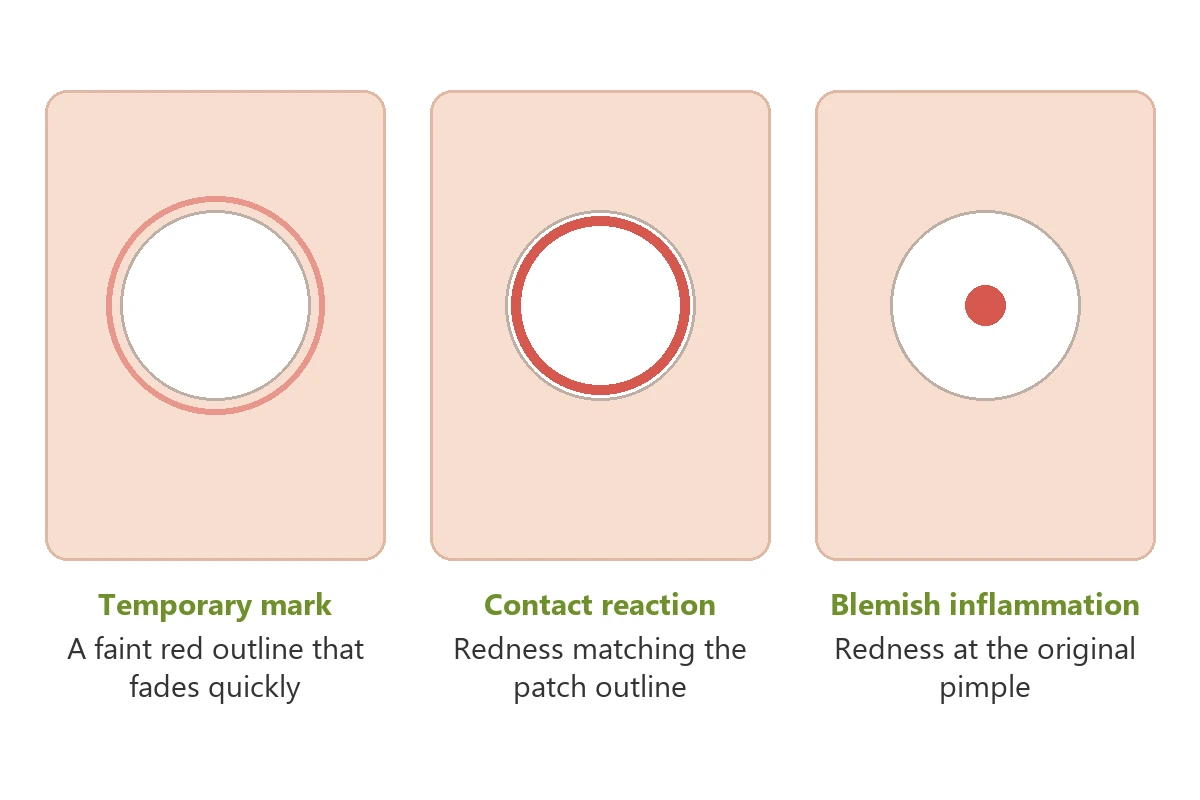
A temporary mark immediately after removal may result from pressure or mechanical contact. Persistent itching, spreading redness, blistering, or increasing pain suggests that something more than a short-lived impression may be happening.
It is also important to distinguish irritation caused by the patch from inflammation associated with the original blemish. A pimple may remain red after fluid has been absorbed because the underlying inflammation has not fully resolved.
Common Skin Reactions After Removing a Pimple Patch
| What you notice | Possible explanation | Recommended next step |
|---|---|---|
| A faint red outline that fades quickly | Temporary pressure or removal-related irritation | Leave the area alone and monitor |
| Itching or a rash matching the patch shape | Possible contact irritation or allergy | Stop using the patch and seek advice if persistent |
| Burning or stinging beneath the patch | Possible ingredient reaction or irritation of compromised skin | Remove the patch and avoid further exposure |
| Raw or tender skin after repeated changes | Possible mechanical damage from repeated adhesive removal | Stop reapplying over the irritated area |
| Blistering, increasing swelling, or persistent redness | More significant skin reaction | Obtain medical assessment |
| Redness confined to the original pimple | The blemish may remain inflamed | Evaluate the acne separately from the patch |
These patterns are general observations, not a diagnostic test. Different reactions can look similar.
Why Does a Pimple Patch Leave a Red Circle?
A red circle following the edge or adhesive area of a pimple patch may indicate that the skin has reacted to contact or removal.
The shape can be an important clue. If the redness matches the outline of the patch rather than the original pimple, consider whether the adhesive, friction, or another component may have contributed.
A brief mark that settles quickly is different from a rash that itches, spreads, or persists. Repeatedly covering the same irritated area may make it harder to identify the cause and allow the skin to recover.
If similar marks appear whenever you use a particular product, stop using it and discuss the reaction with a healthcare professional rather than repeatedly testing it on inflamed facial skin.
Can Removing a Pimple Patch Damage Your Skin?
Yes. Even when a patch's ingredients are well tolerated, removal can irritate the skin.
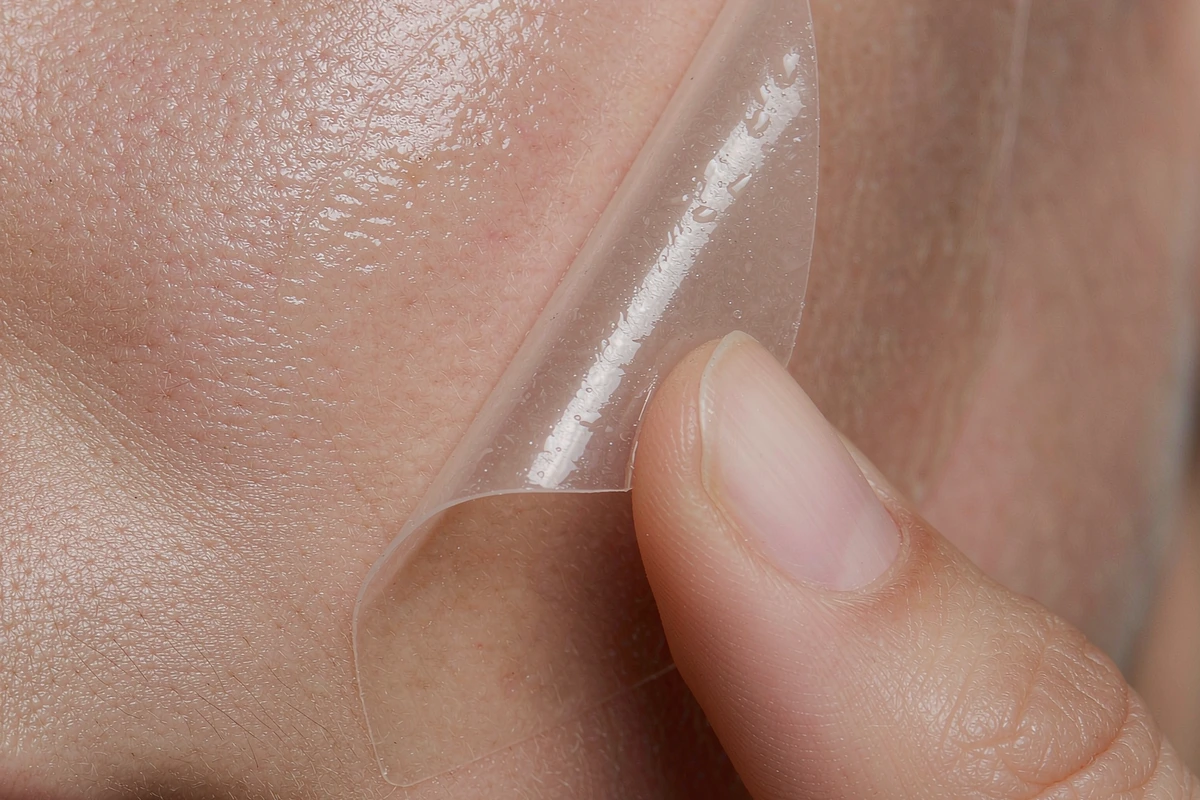
Adhesive patches are designed to stay attached during normal activity. Removing them involves separating the adhesive from the skin, which creates mechanical stress. This can be uncomfortable when the adhesive grips strongly or when the covered area is already sensitive.
The problem becomes more likely when someone repeatedly changes patches over the same blemish, pulls one off quickly, or applies adhesive directly to skin that has already become raw.
Why Repeated Patch Changes Can Make Irritation Worse
Replacing a patch does not necessarily give the skin time to recover from the previous removal.
For example, someone may change a hydrocolloid patch repeatedly because the pimple is still red or because the patch has not turned white. But visible redness does not always mean more fluid is available for the patch to absorb.
Continuing the cycle may expose the same surrounding skin to repeated adhesive contact and removal.
A patch should be replaced according to the product instructions and the condition of the skin, not simply because the blemish has not disappeared.
If the skin becomes painful or damaged, further adhesive application may be inappropriate until it has recovered.
How to Remove a Pimple Patch More Gently
Follow the specific product's removal instructions. In general, avoid pulling the patch sharply away from the skin. Gently support the surrounding area and peel slowly without stretching or scraping the blemish.
If the patch is difficult to remove, do not force it. Check the manufacturer's directions for any recommended removal method.
After removal, avoid aggressive cleansing, exfoliation, or repeated rubbing over irritated skin.
A gentle removal technique may reduce unnecessary mechanical stress, but it cannot eliminate the possibility of an adhesive reaction. Anyone with a suspected allergy should avoid further exposure until the cause has been evaluated.
What Should You Do If a Pimple Patch Causes Redness or Itching?
If a pimple patch causes burning, persistent itching, or unusual discomfort, remove it. Do not leave the patch in place hoping that the irritation will disappear while the product continues touching the skin.
Once the patch is removed, examine the area without rubbing it. Gently cleanse away any residue if needed, and avoid adding multiple new skincare products while the skin is reacting.
For mild irritation, simplifying the routine and avoiding the suspected trigger may help. The American Academy of Dermatology discusses stopping irritating skincare products and using gentle supportive care in its guidance on testing skincare products.
A reaction involving significant pain, blistering, an open wound, spreading redness, or persistent swelling requires professional attention. Severe swelling or breathing difficulties warrant immediate emergency care.
Should You Apply Another Pimple Patch to the Same Spot?
Not if the skin is actively irritated or the patch appears to be contributing to the reaction.
Covering the area again with the same adhesive can prolong exposure to a possible irritant or allergen. Switching immediately to another patch without understanding the cause may not solve the problem either, especially if the products use similar ingredients.
If the original blemish still needs treatment, choose an approach appropriate to its condition rather than automatically continuing hydrocolloid coverage.
Where irritation is recurrent or difficult to explain, a dermatologist can help distinguish an adhesive reaction from another skin problem.
Can Irritation Leave a Dark or Red Mark?
Inflammation can sometimes be followed by persistent changes in skin color. Depending on the skin and underlying process, the area may develop lingering redness or darker pigmentation.
However, a mark appearing after patch removal does not prove that the adhesive caused all the inflammation. The original pimple may also contribute to post-inflammatory skin changes.
Avoid picking, scraping, or aggressively exfoliating the area in an attempt to remove the mark quickly. If discoloration persists or the skin remains inflamed, seek guidance on appropriate care.
How to Choose Pimple Patches for Sensitive Skin
People with sensitive skin may need to pay closer attention to both the patch formulation and the way it is applied and removed.
There is no single material that guarantees irritation-free use for everyone. Even products described as gentle or suitable for sensitive skin can cause reactions in individuals with particular sensitivities.
A good starting point is understanding whether you need a plain absorbent hydrocolloid patch or a product containing additional skincare ingredients.
Plain Hydrocolloid vs Medicated Patches for Sensitive Skin
A plain hydrocolloid patch may be preferable when the main goal is to absorb accessible moisture and protect a surface blemish without introducing additional acne-treatment ingredients.
Medicated patches have different objectives. They may combine protective coverage with ingredients such as salicylic acid or botanical extracts. These additions can be useful for particular product concepts, but they introduce further considerations for skin tolerance.
Neither category is universally safer. The adhesive system, entire ingredient composition, intended contact time, and condition of the skin all matter.
For users who repeatedly react to adhesive bandages or cosmetic patches, switching to a different active ingredient may not address the underlying problem. Professional allergy evaluation may be more appropriate.
What to Check Before Trying Another Patch
| Selection factor | What to consider |
|---|---|
| Adhesive composition | Whether the manufacturer provides suitable material information |
| Added active ingredients | Whether the formula contains ingredients you have previously found irritating |
| Intended wearing time | Whether the product instructions are appropriate for your use |
| Patch flexibility | Whether the patch conforms without excessive pulling |
| Patch size | Whether the adhesive extends unnecessarily over unaffected skin |
| Removal instructions | Whether the product provides clear guidance for comfortable removal |
| Skin-tolerance claims | Whether claims such as hypoallergenic or dermatologist tested have relevant supporting evidence |
If you have experienced a significant reaction, do not attempt to verify the safety of a new adhesive by repeatedly applying it to damaged skin. Seek professional advice on whether and how to try an alternative.
How Can Skincare Brands Reduce Pimple Patch Irritation Risks?
Consumer complaints about redness, itching, or uncomfortable removal are important feedback for brands developing acne patches.
These complaints should not automatically be interpreted as manufacturing defects. They may reflect individual sensitivity, product misuse, unsuitable ingredients, or a mismatch between adhesive performance and the intended wearing conditions.
For a skincare brand, however, repeated reports can highlight areas that deserve further formulation review and finished-product evaluation.
An adhesive needs to hold the patch in place, but adhesion alone is not a sufficient measure of product quality. Comfortable removal, flexibility, material compatibility, and clear instructions contribute to the overall wearing experience.
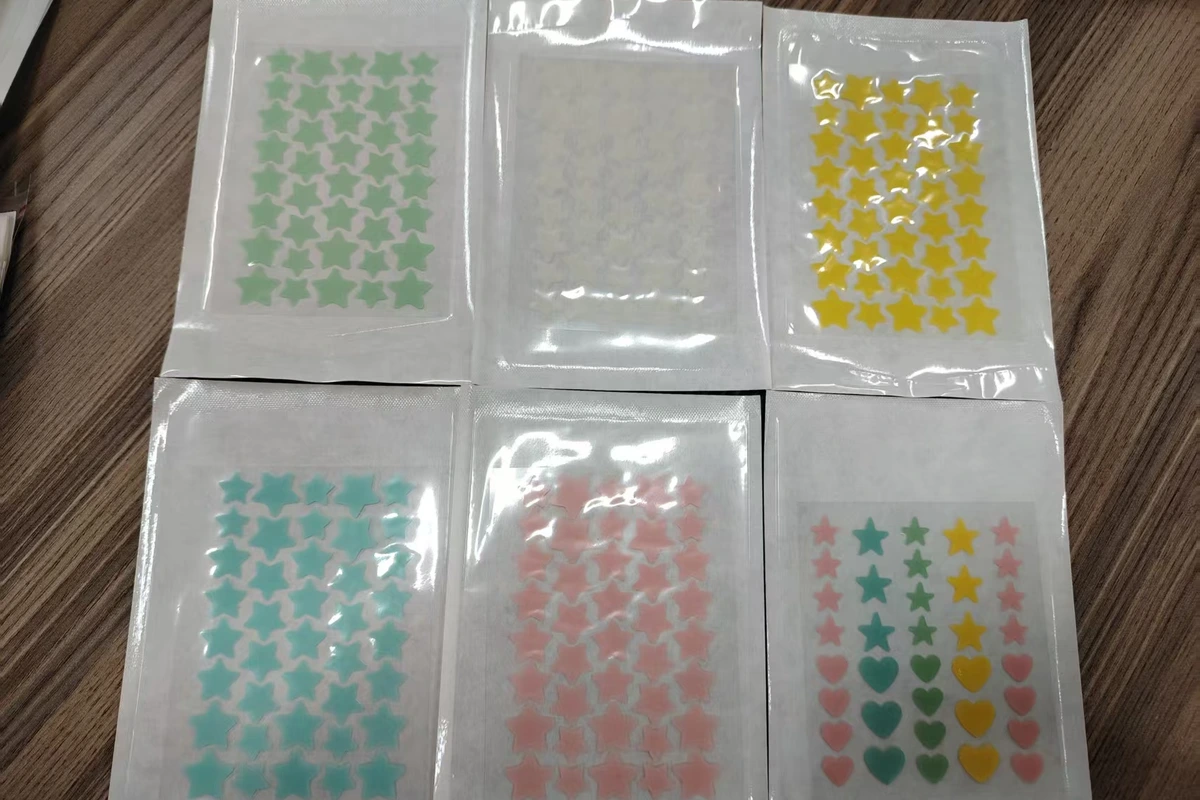
Material and Adhesive Considerations for Custom Acne Patches
Athena offers OEM/ODM acne patch solutions, including hydrocolloid patches, microdart formats, material options, and customizable formulations, shapes, sizes, and packaging.
For brands considering a sensitive-skin product line, the development discussion can include whether a plain hydrocolloid construction better fits the intended concept or whether additional ingredients are necessary.
Transparent and flexible material options, patch dimensions, and adhesive requirements can also be reviewed in relation to the intended application area and wearing conditions.
These choices require appropriate evaluation. A different adhesive formulation or thinner patch cannot be assumed to eliminate irritation, and sensitive-skin positioning should be supported by suitable evidence.
What Should Brands Evaluate Before Finalizing a Patch?
For an acne patch intended to emphasize comfortable skin contact, sample evaluation should look beyond basic adhesion.
Relevant considerations include whether the patch remains attached for its intended wearing period, how it conforms to facial movement, how it behaves during removal, and whether the ingredient and material documentation supports the proposed product claims.
Brands should also define how adverse user feedback will be assessed and which product instructions are necessary to reduce foreseeable misuse.
If your brand is exploring a new acne care collection, Athena's custom acne patch solutions provide options for discussing hydrocolloid materials, product formats, formulation preferences, and private-label packaging.
A clear product brief should describe the target users, expected wearing time, ingredient preferences, adhesive requirements, and intended claims before sampling begins.
Frequently Asked Questions
Can Hydrocolloid Patches Cause an Allergic Reaction?
Yes, some users may react to adhesive components or other materials in a hydrocolloid patch. However, redness alone does not confirm an allergy. A dermatologist may recommend professional testing if allergic contact dermatitis is suspected.
Why Does My Skin Itch Under a Pimple Patch?
Itching may occur because of contact irritation, sensitivity to an ingredient, or a developing allergic reaction. Remove the patch if itching persists or becomes uncomfortable. Avoid repeated use if the same reaction returns.
Are Fragrance-Free Pimple Patches Better for Sensitive Skin?
Avoiding fragrance may reduce exposure to one possible source of irritation, but fragrance-free does not mean allergy-free. The adhesive and other formulation components still need consideration.
Can I Use a Pimple Patch on Already Irritated Skin?
It depends on the condition of the skin and the product's intended use. If irritation was caused by a patch, avoid applying another over the affected area. Broken, infected, or significantly inflamed skin may require professional care rather than cosmetic patching.
How Long Does Pimple Patch Irritation Last?
Mild temporary marks may fade relatively quickly, while contact dermatitis or mechanical damage can take longer to settle. There is no single reliable timeline. Seek medical advice if symptoms are severe, persistent, or worsening.
Do Hypoallergenic Pimple Patches Guarantee No Reaction?
No. A hypoallergenic claim does not guarantee that every user will tolerate the product. Brands should substantiate relevant claims, and people with known adhesive sensitivities should consider professional advice before using another patch.
Final Thoughts
Pimple patches can irritate the skin, but not every red mark represents an allergy. Adhesive contact, active ingredients, repeated removal, and pre-existing skin inflammation can all influence what happens beneath a patch.
If irritation develops, stop using the product and allow the skin to be assessed rather than repeatedly covering the same area. Choosing a suitable patch also means considering ingredient tolerance, adhesive behavior, and comfortable removal—not absorption alone.
For skincare brands, these same concerns offer a practical starting point for product development. Athena supports custom hydrocolloid and microdart acne patch solutions, helping brands explore material, formulation, shape, and packaging options that align with their product requirements.
Planning a private-label acne patch line? Explore Athena's custom acne patch solutions to discuss material selection, sample requirements, and customization options.