Why Isn’t My Pimple Patch Absorbing Anything?
Date:2026-10-22
Read:16
source: Zoey
You put a pimple patch on before bed, expecting it to collect fluid from your breakout. By morning, the patch looks almost exactly the same. There's no cloudy center, no visible swelling, and the pimple hasn't changed much either.
If your pimple patch isn't absorbing anything, it doesn't automatically mean the product is defective. The blemish may not have enough accessible fluid, the patch may not be making proper contact with your skin, or the product may simply be designed for a different purpose.
Understanding these differences can help you avoid wasting patches, irritating your skin, or expecting results that a hydrocolloid patch cannot provide.
Quick Answer
A pimple patch may not absorb anything because the blemish has little accessible surface fluid, the patch isn't adhering properly, or it's the wrong type. A clear patch doesn't necessarily mean failure.
Key Takeaways
- Hydrocolloid patches absorb accessible moisture, not material trapped deep beneath intact skin.
- A patch that stays clear may still protect the blemish from touching and picking.
- Skincare residue, facial oil, and poor edge contact can interfere with adhesion.
- Repeatedly applying new patches will not necessarily help a deep or closed blemish.
- If a patch consistently performs poorly on suitable surface blemishes, its material and adhesive quality may deserve closer attention.
Why Isn’t My Pimple Patch Absorbing Anything?
The most common explanation is that the patch has little fluid available to absorb.
Traditional hydrocolloid patches contain moisture-absorbing materials that form a gel when they encounter fluid. They are particularly useful for surface blemishes that have come to a head or are releasing fluid.
However, a red bump beneath intact skin may contain inflammation without providing an opening through which a hydrocolloid patch can absorb material. Even when the blemish is visible and uncomfortable, the patch may remain transparent because there is no accessible drainage.
A patch can also appear unchanged when it has absorbed only a small amount of moisture. The white or cloudy center commonly seen after use reflects gel formation, but the degree of whitening varies with the amount of fluid available and the patch's construction.
In other words, a pimple patch not turning white is not, by itself, proof that the patch failed.
The important question is whether the patch was suitable for the blemish and whether it maintained adequate contact with the skin.
Five Reasons Your Pimple Patch May Not Be Working
Several different issues can produce the same result: a patch that looks clear after hours of wear. Identifying the likely cause is more useful than immediately applying another patch.
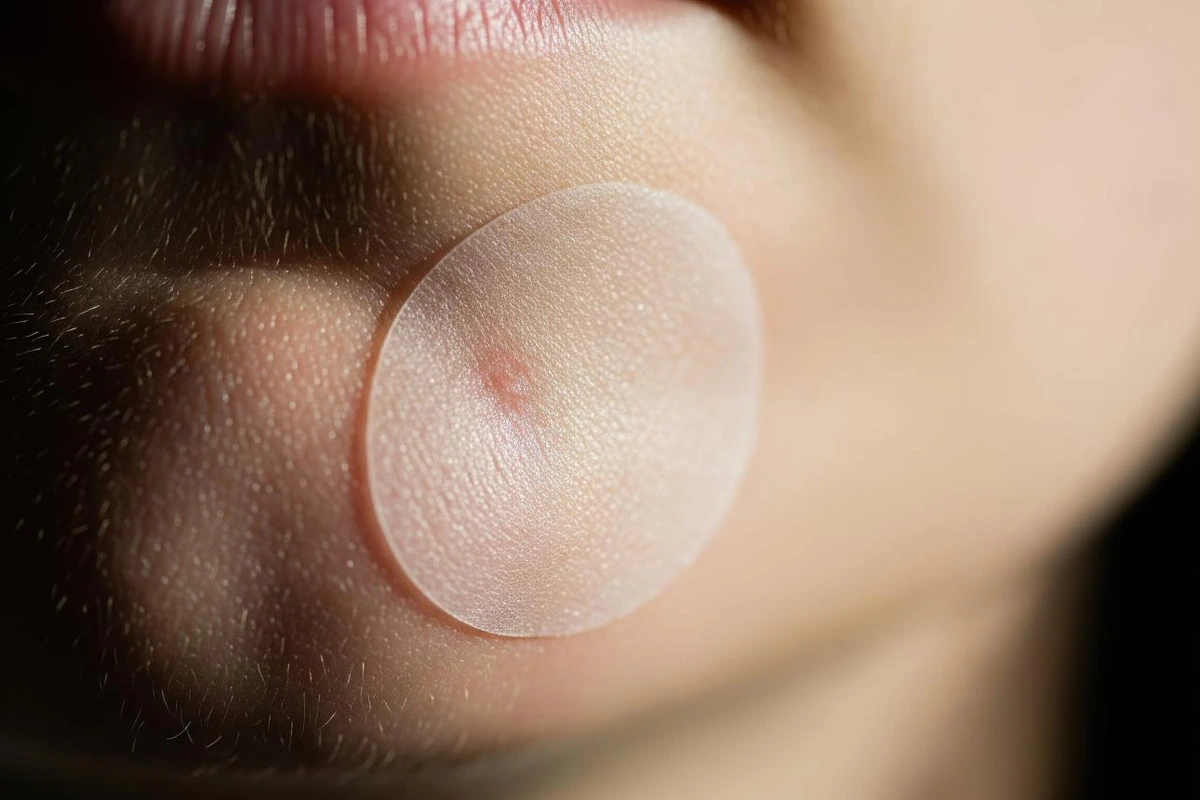
1. The Blemish Is Too Deep for Hydrocolloid Absorption
A deep, firm, or painful bump may form beneath intact skin without releasing visible fluid. Since ordinary hydrocolloid works mainly by absorbing moisture accessible at the surface, it cannot simply draw material through layers of unbroken skin.
This explains why a patch may stay clear even when the area looks inflamed.
The patch may still provide protective coverage, but it should not be expected to empty a deep blemish or eliminate the underlying inflammation.
If the bump is large, increasingly painful, persistent, or recurring, further patch applications are unlikely to address the underlying problem. A dermatologist can evaluate whether another treatment is needed.
2. There Is Little Fluid Left to Absorb
Sometimes the patch is appropriate, but the blemish has already released most of its surface fluid or is beginning to settle.
A smaller or drying blemish may produce little visible change in the hydrocolloid layer. The surrounding redness can also remain after drainage has decreased, so the pimple may look similar even when the amount of surface moisture has changed.
This is one reason appearance alone can be misleading. A patch that does not become visibly white has not necessarily done nothing, particularly if it remained securely in place and protected the affected area from repeated touching.
However, continued redness or swelling should not automatically be interpreted as evidence that the patch needs more time.
3. Why Your Pimple Patch Isn't Sticking Properly
Hydrocolloid patches need stable contact with the intended area to perform their absorbent and protective functions.
If you apply a patch over moisturizer, facial oil, sunscreen, or damp skin, the adhesive may not establish reliable contact. Even when the center initially looks attached, the edges can lift during sleep or facial movement.
Once the patch begins separating from the skin, its ability to maintain suitable contact with surface fluid may be reduced.
The location also matters. Curved areas around the nose, mouth, and chin can be difficult for some patch shapes to follow, particularly when the material is stiff or the patch is too large for the available flat surface.
A good application should feel secure without pulling uncomfortably on the surrounding skin.
4. You're Using a Patch With a Different Function
Not every product sold as a pimple patch is primarily designed to absorb fluid.
Plain hydrocolloid patches emphasize moisture management and protective coverage. Patches containing skincare active ingredients have additional formulation objectives, while microdart patches use tiny projections designed for localized ingredient delivery.
A microdart patch, for example, should not necessarily develop the same visible white center as an absorbent hydrocolloid patch.
Decorative patches can also differ in their material construction. Their shape or appearance doesn't tell you how much moisture they are designed to absorb.
Before deciding that a patch isn't working, check what the product is actually intended to do. A patch designed around active ingredients or protective coverage should not be evaluated solely by the amount of visible material collected underneath it.
5. The Patch Material May Not Meet Your Expectations
If a hydrocolloid patch repeatedly fails to show expected fluid absorption on suitable draining blemishes, while remaining properly attached, product construction may be worth investigating.
Hydrocolloid formulations differ in their absorbent components, adhesive systems, thickness, and backing materials. These factors influence how the finished patch handles moisture and stays attached.
Poor performance does not always indicate a manufacturing defect, and users cannot reliably judge material quality from appearance alone. Nevertheless, consistently disappointing results across appropriate applications may justify trying a different product or contacting the manufacturer.
For skincare brands, this distinction is particularly important: material claims should be evaluated through finished-product testing rather than assumptions based on the word "hydrocolloid."
How to Troubleshoot a Pimple Patch That Isn't Absorbing
If your pimple patch is not absorbing, don't judge the result only by whether it turned white. Consider the condition of the blemish, how well the patch adhered, and whether the covered area changed during wear.
The following troubleshooting table helps separate situations where a different application method may help from those where another form of skincare is more appropriate.
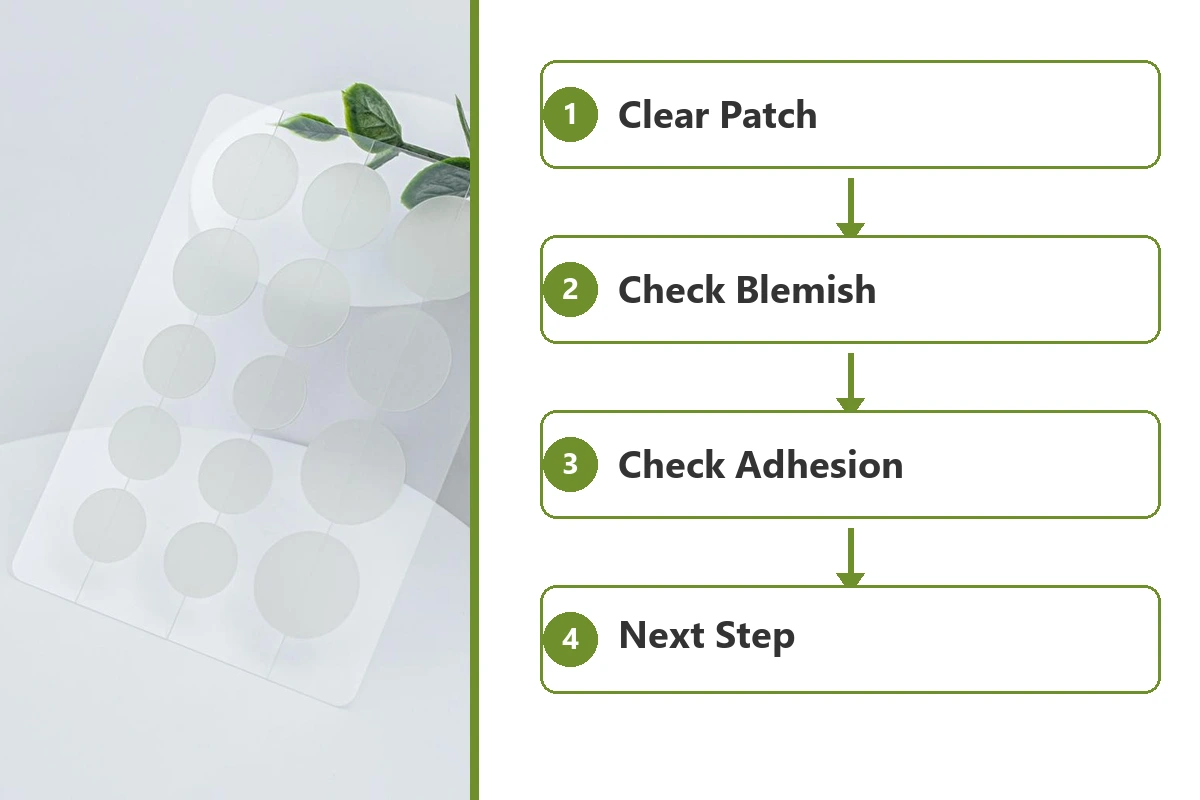
Pimple Patch Troubleshooting Guide
| What you notice | Possible explanation | What to do next |
|---|---|---|
| Patch stays clear over a deep, painful bump | Little accessible surface fluid | Do not squeeze or puncture it; consider appropriate acne care or professional advice |
| Patch stays clear, but the blemish is smaller or calmer | Little drainage or protective coverage without visible swelling | Monitor the skin and follow the recommended wear instructions |
| Patch falls off during the night | Moisture, skincare residue, friction, or poor fit | Apply a fresh patch to clean, dry skin and check sizing |
| Patch edges lift around the nose or chin | Patch shape or flexibility may not suit the area | Use an appropriately sized, flexible patch |
| Patch looks cloudy, but redness remains | Fluid absorption does not necessarily resolve inflammation | Avoid repeated picking and monitor the blemish |
| Several patches remain unchanged on closed bumps | The blemishes may not be suitable for fluid-absorbing patches | Reconsider the product type instead of repeating the same application |
| A patch causes burning, itching, or increasing redness | Possible irritation or sensitivity | Remove it and discontinue use if symptoms persist |
These observations can guide your next step, but they cannot establish a medical diagnosis. Increasing pain, spreading redness, warmth, significant swelling, or other signs of infection deserve medical assessment rather than continued patch experimentation.
A Simple Way to Evaluate the Result
After removing the patch at the end of its recommended wearing period, ask yourself three questions.
First, was the patch designed to absorb fluid, and was there any surface moisture available? If not, the absence of a white center may be entirely expected.
Second, did the patch remain attached throughout use? Loose edges or a shifted patch make it difficult to judge how the material would have performed under proper contact conditions.
Finally, how does the skin look and feel? Reduced rubbing or picking can be useful even without a dramatic visual change, but persistent pain, worsening inflammation, or repeated unsuccessful applications suggest that patching alone may not be the right approach.
This combination of observations gives a more meaningful answer than simply checking whether the patch turned white.
What Should You Do When a Pimple Patch Stays Clear?
If you remove a hydrocolloid patch and find no visible absorption, the next step should depend on the blemish rather than your disappointment with the patch.
For a small surface blemish, check whether the area is still releasing moisture. If the skin is comfortable and the product remains appropriate, you may use a fresh patch according to its instructions. You do not need to keep replacing patches simply to produce a white center.
For a closed bump or a spot that feels deep beneath the skin, repeated hydrocolloid applications may offer little additional benefit. The material cannot force an intact blemish to drain.
It is particularly important not to squeeze, pierce, or scrape the skin to make a patch absorb more. Doing so can increase irritation and the risk of infection or scarring.
Check Your Application Technique Before Trying Again
If poor adhesion appears to be the problem, a few adjustments may help.
- Cleanse the area gently and remove residual skincare or makeup.
- Allow the application area to dry completely.
- Choose a patch large enough to cover the blemish, without unnecessarily extending across difficult facial contours.
- Apply it directly to the intended area, following the product instructions.
- Avoid applying oily or creamy products beneath its adhesive surface.
Once the patch is attached, let it remain undisturbed for the manufacturer's recommended wearing period. Constantly lifting an edge to inspect the blemish can weaken adhesion.
If the patch becomes loose, dirty, or uncomfortable, replace or remove it as appropriate rather than pressing a contaminated adhesive surface back onto the skin.
When Should You Stop Using Pimple Patches?
A patch should not become the only response to a blemish that is worsening.
If you experience increasing pain, significant irritation, or an unexpected skin reaction, remove the patch. Persistent or recurrent deep acne may need treatment beyond a protective dressing.
The American Academy of Dermatology advises against squeezing deep, painful pimples because this can worsen the condition and increase the risk of scarring. Its dermatologists also recommend professional care when deep lesions persist or recur.
A hydrocolloid patch can be part of a skincare routine, but its limitations are just as important as its benefits.
How to Choose a Pimple Patch That Fits Your Needs
If your current pimple patch isn't working as expected, choosing another one should begin with its intended function, not its packaging or popularity.
For a surface blemish with accessible moisture, a plain hydrocolloid patch is often the more relevant product type. When the concern is a closed or under-the-skin bump, a conventional absorbent patch may provide coverage without noticeably changing the blemish.
Patches with active ingredients or microdart structures may be designed for different applications. Their suitability depends on the specific formulation, use instructions, and evidence supporting their claims. They should not be considered interchangeable with plain hydrocolloid or guaranteed to resolve deep acne.
What to Check Before Buying Another Hydrocolloid Patch
Look beyond claims such as "extra strength" or "fast absorbing." A patch should have a clear intended use, adequate adhesion, and a construction appropriate for the area of skin being covered.
The material needs to absorb accessible fluid while maintaining contact with the skin. A flexible, well-sized patch may also stay attached more reliably on curved areas than one that is oversized or relatively rigid.
If you have experienced irritation with adhesive products, check ingredient information and avoid assuming that all hydrocolloid formulations will feel the same.
Most importantly, look for realistic instructions. A trustworthy product should explain what it is designed to do and should not promise that every pimple will disappear after one application.
Does More Absorption Always Mean a Better Pimple Patch?
No. Absorption is important for a fluid-management patch, but the highest possible absorption is not necessarily the most useful measure of product quality.
A patch also needs appropriate adhesion, flexibility, skin compatibility, and comfortable removal. An absorbent patch that lifts prematurely may perform poorly in actual use, while a patch that adheres too aggressively may be uncomfortable to remove.
For this reason, finished-product performance matters more than a single isolated material property.
The right patch is one that balances its intended function with a practical and comfortable wearing experience.
What Patch Performance Means for Skincare Brands
When consumers report that a pimple patch "doesn't absorb anything," the cause is not always the absorbent material itself. Product instructions, target blemish type, patch geometry, adhesive behavior, and user expectations can all influence the experience.
For skincare brands developing private-label acne patches, these complaints offer useful guidance for product design and sample evaluation.
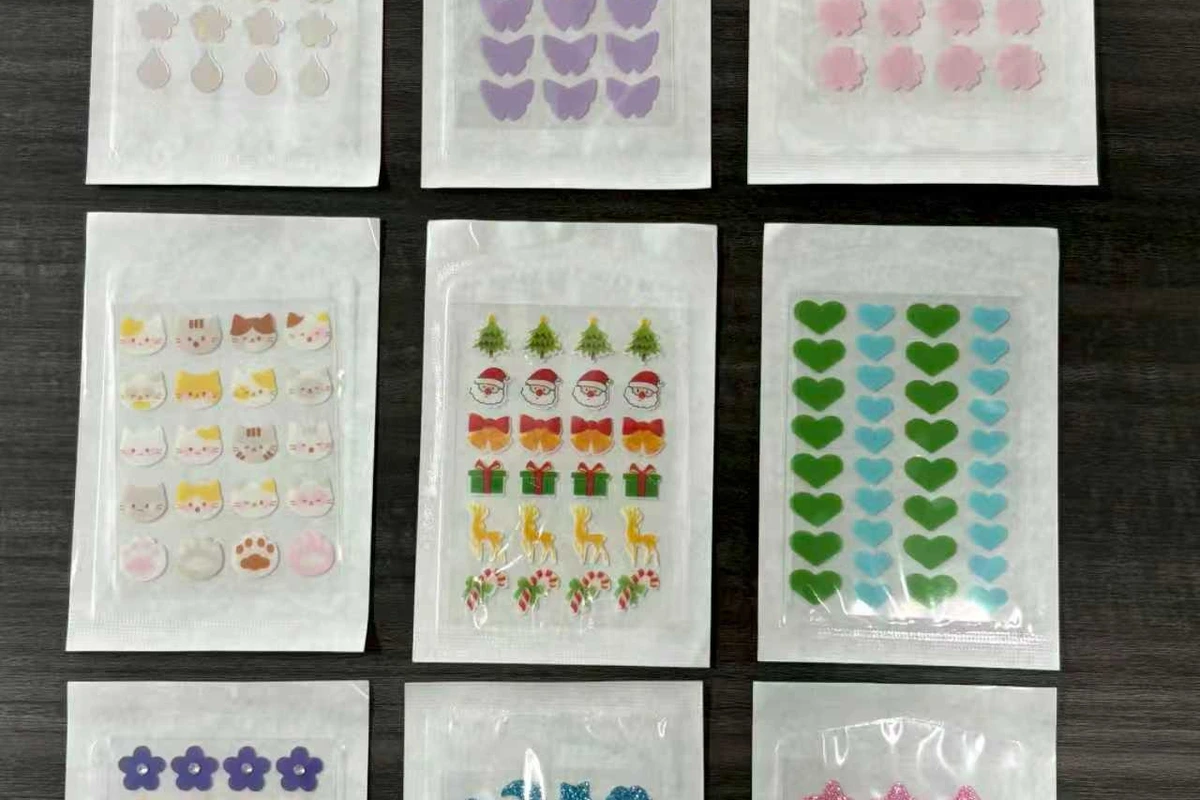
A hydrocolloid patch should be assessed not only for moisture absorption but also for how securely it remains on the skin, whether its edges lift, and how comfortably it can be removed. A product that performs adequately in a controlled material test may still require adjustments to its finished design for everyday use.
What Should Brands Check During Pimple Patch Sampling?
| Evaluation area | What to examine | Why it matters |
|---|---|---|
| Absorbent layer | Fluid uptake and retention under defined test conditions | Helps assess intended moisture-management function |
| Adhesion | Attachment to clean skin and edge lifting during wear | Supports stable patch contact |
| Flexibility | Conformability on curved application areas | Helps maintain consistent fit |
| Thickness and size | Coverage, profile, and handling | Balances comfort and practical application |
| Removal experience | Ease of removal and visible residue | Informs usability and skin-contact evaluation |
| Product instructions | Intended blemish type, application method, and wearing period | Helps align user expectations with actual product function |
These are proposed evaluation criteria rather than measured performance claims for any specific Athena product.
Athena offers custom acne patch solutions covering hydrocolloid patches, microdart product formats, customizable formulations, and different patch shapes and sizes. Brands can discuss material selection, adhesive and design requirements, ingredient options, and packaging configurations according to their product concept.
For a conventional hydrocolloid line, the development priority may be reliable moisture management and comfortable contact. A discreet daytime line may require additional attention to thickness and appearance, while a microdart-based product calls for a different evaluation of its structure and intended ingredient-delivery function.
Defining these objectives before sampling helps manufacturers and brands assess a product against its actual intended use rather than a single marketing claim.
Frequently Asked Questions
Why Did My Pimple Patch Stay Clear Overnight?
A clear patch may indicate that the blemish had little accessible fluid, particularly if it was closed or deep beneath the skin. It may also have absorbed too little moisture to produce an obvious color change. Check that the patch remained attached before judging the result.
Can a Pimple Patch Work Without Turning White?
Yes. A patch may provide physical protection and discourage picking even when no obvious whitening occurs. However, the absence of whitening does not demonstrate that acne treatment has occurred, and a plain hydrocolloid patch may have limited benefit for blemishes without surface fluid.
Why Does My Pimple Patch Keep Falling Off?
Moisture, moisturizer, facial oil, sunscreen residue, friction, or an unsuitable patch shape can interfere with adhesion. Apply a fresh patch to clean, dry skin and follow its use instructions. If it continues lifting, a different size or construction may fit better.
Should I Leave a Clear Pimple Patch on for Longer?
Not simply because it remains clear. Follow the product's recommended wearing period. Extending use does not guarantee that a closed or deep blemish will release fluid, and prolonged contact can be uncomfortable for some users.
Can a Pimple Patch Make a Pimple Worse?
Some users may develop irritation from adhesive contact or added skincare ingredients. Excessive patch changes can also disturb sensitive skin. Remove the patch if burning, worsening redness, or significant discomfort occurs, and seek medical advice for severe or persistent reactions.
How Do I Know Whether a Pimple Patch Is Poor Quality?
One unsuccessful application is not enough to judge quality. Look for appropriate material information, clear usage instructions, consistent adhesion, and credible support for performance claims. For brands, controlled sample testing provides a more reliable basis for evaluating product quality than the patch's appearance after a single use.
Final Thoughts
A pimple patch that doesn't absorb anything is not necessarily a failed product. The blemish may have little surface fluid, the patch may not have remained attached, or the product may have a different intended function.
Before applying another patch, check the blemish, the adhesive contact, and the product instructions. If the skin is becoming more painful or inflamed, repeated patching is unlikely to be the best solution.
For skincare brands, the same troubleshooting principles can inform better product development. Athena supports custom hydrocolloid and microdart acne patch projects, helping brands explore suitable materials, shapes, formulations, and packaging for their intended users.
Developing your own acne patch line? Explore Athena's custom acne patch solutions and discuss your product requirements, sample options, and customization needs with the team.