Intake Breathing vs Breathe Right — How Different Are They Really?
Date:2026-08-14
Read:336
source: Athena
Intake Breathing and Breathe Right solve the same front-of-nose airflow problem with very different hardware. Intake uses two adhesive tabs plus a reusable magnetic bridge; Breathe Right uses a disposable one-piece adhesive strip with flexible spring bands. Intake offers more reusable structure and a more pronounced mechanical pull, while Breathe Right is simpler, lower-profile and easier to trial. Neither is a treatment for obstructive sleep apnea.
The better choice depends less on which product looks stronger and more on four practical questions: how much opening force feels comfortable, whether accurate tab placement is acceptable, how the skin tolerates repeated adhesive contact, and whether the user prefers a reusable bridge or a fresh one-piece strip each time.
Intake Breathing vs Breathe Right: The Short Decision
Choose Intake Breathing when you want a reusable rigid bridge, are comfortable aligning two separate adhesive tabs, and value a more direct outward pull on the nasal sidewalls. Choose Breathe Right when you want a fast, familiar one-piece application, a lower visual profile and fewer components to manage.
This is a comparison of product architecture, not proof that either system will improve athletic performance, eliminate snoring or treat a sleep disorder. Both act at the external nasal valve. The likely benefit is easier-feeling nasal airflow when narrowing at the front of the nose is relevant.
Two Mechanisms, One Anatomical Target
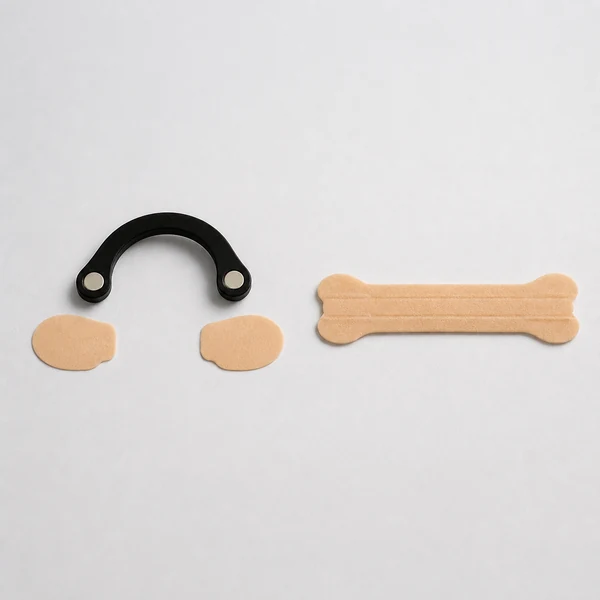
Intake's official product description identifies a two-part system: adhesive tabs sit on the outer nasal sidewalls, each tab contains a metal disk, and magnets at the ends of a reusable curved band connect to those disks. The band then applies outward force through two discrete contact points. Nothing is placed inside the nostrils.
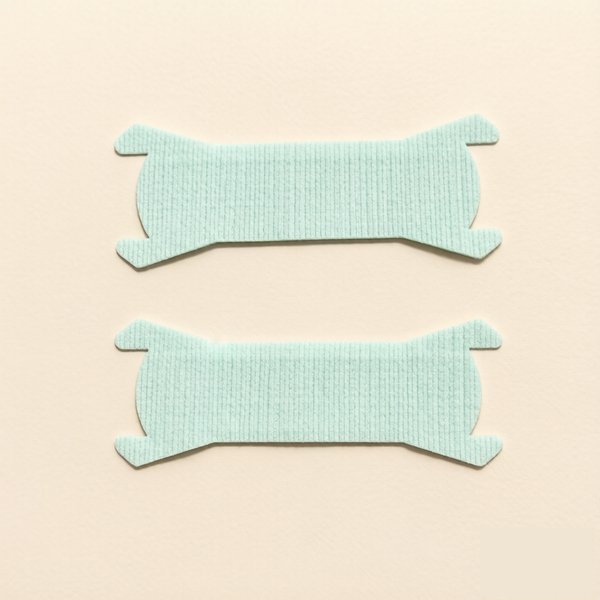
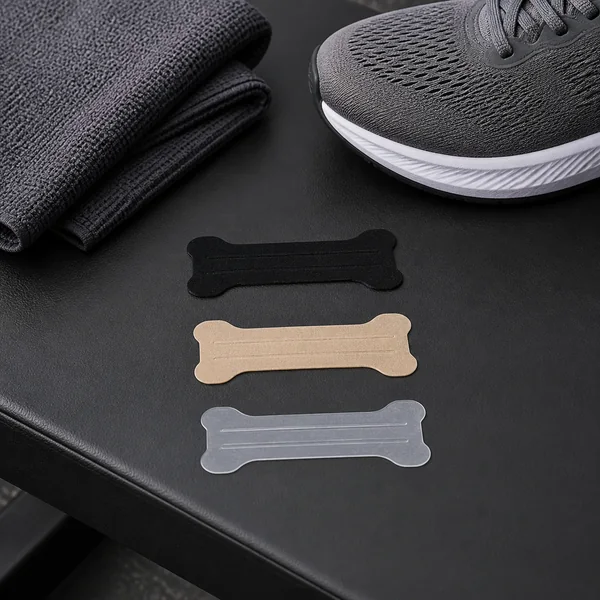
Breathe Right describes flexible spring-like bands embedded in a single adhesive strip. Once the strip is applied above the nostril flare, the bands try to return toward their original shape and lift the sidewalls outward. The backing, ribs and adhesive are removed together after use.
These differences explain most of the real-world trade-offs. A magnetic nasal strip system separates the lifting component from the disposable skin-contact tabs. A conventional adhesive nasal strip integrates lift and adhesion into one flexible laminate. Readers who want the broader category context can review how magnetic and one-piece nasal systems differ by construction.
Which Feels More Open?
Intake may feel more forceful because its rigid bridge resists inward movement and transfers pull through two side tabs. Breathe Right provides a distributed spring force through the length of one flexible strip. A stronger sensation is not automatically a better outcome: excessive pull can distract the user, stress the adhesive edges or feel uncomfortable on a narrow bridge.
Neither brand's marketing claim should substitute for an independent head-to-head clinical trial. Systematic reviews of mechanical nasal dilators show that these products can improve measures of nasal patency in some users, but products and study methods vary. The honest comparison is therefore mechanical and practical rather than a universal claim that one works better for everyone.

Application Is Where the Experience Separates
Breathe Right has the shorter routine: clean and dry the nose, remove the liner, center the strip above the nostril flare and press both ends firmly. A well-aligned strip distributes its lifting force in one step.
Intake requires the two tabs to be placed symmetrically before the bridge is attached. Small placement errors can change the bridge angle, pressure and perceived opening. The reusable component also needs to match the user's nose width. This creates more setup, but it lets the bridge be removed while the skin-contact pieces remain separate.
For occasional users, a one-piece strip may be easier to incorporate into a bedtime or workout routine. For repeat users who accept a short setup process, the magnetic system's reusable hardware can be appealing.
Skin Contact Matters More Than the Magnet
Both systems still depend on pressure-sensitive adhesive touching clean skin. The magnet does not eliminate adhesive exposure; it changes which component is reused. Users with sensitive skin should test a shorter wear period, avoid broken or irritated skin, and stop if burning, persistent itching or swelling occurs.
Review discussions about both products repeatedly return to edge lift, residue and removal discomfort. Those reports are useful for identifying questions to test, but they cannot predict an individual's response. Skin oil, humidity, skincare residue, wear time and removal technique can change the result dramatically.
Athena's guide to redness and adhesive-removal marks explains why retention and gentle removal must be engineered together rather than treated as opposing product claims.
Cost Is a System Question, Not a Pack-Price Question
Breathe Right is a fully disposable unit: each use consumes one strip. Intake separates the reusable band from replacement adhesive tabs. The relevant comparison is therefore total cost over a realistic period, including starter hardware, tab refills, replacement bands, shipping and the number of nights actually used.
A magnetic system can reduce disposal of the rigid lifting component, but it still uses disposable adhesive interfaces. A one-piece strip generates one complete discarded unit but has no hardware to lose, size or replace. There is no universal cost winner without a defined usage frequency.
Sleep, Exercise and Travel Create Different Priorities
For sleep
Low distraction, reliable overnight hold and gentle morning removal matter most. A bulky or highly noticeable bridge may bother some side sleepers, while others prefer its stable pull. A one-piece sleep strip is simpler, but its edge hold must survive pillow contact and skin oil.
For sport
Sweat resistance, movement stability and compatibility with glasses or helmets become decisive. Apply either system before sweating starts. Easier-feeling nasal airflow should not be presented as guaranteed gains in speed, endurance or oxygen uptake.
For travel
One-piece strips are compact and require no reusable part. A magnetic system requires its bridge, correct-size components and enough replacement tabs. The trade-off is convenience versus maintaining a preferred reusable setup.

How to Run a Fair Five-Use Comparison
Test each option under comparable conditions rather than switching based on one night. Record baseline nasal stuffiness, ease of application, perceived opening after five minutes, edge lift, comfort after several hours and skin condition thirty minutes after removal. Keep room conditions, exercise type or bedtime routine as similar as possible.
If both systems improve airflow but one irritates the skin, adhesion—not lifting mechanism—is the deciding problem. If neither changes breathing sensation, the restriction may be deeper than the external nasal valve. If airflow feels easier but snoring remains unchanged, the sound source may be in the soft palate, tongue base or throat.
What Product Developers Can Learn From the Comparison
The category is not simply magnetic versus non-magnetic. It is a choice between reusable hardware plus replaceable interfaces and an integrated disposable laminate. Product briefs should specify target lifting force, bridge sizes, tab geometry, adhesive wear duration, sweat exposure, removal target, skin profile and packaging instructions.
Athena develops external nasal-support formats built around distinct wear scenarios. For brands, the strongest opportunity is not to imitate a visible competitor; it is to test a structure against a defined user, climate, wear time and claim boundary.
The Useful Answer Is Conditional
Intake Breathing is mechanically more complex and may provide a firmer, reusable-bridge experience. Breathe Right is simpler, more discreet and easier to trial. Both still rely on adhesive contact and both are limited to external nasal support.
Choose by fit, skin response, routine and verified use conditions. If snoring includes gasping, witnessed breathing pauses or substantial daytime sleepiness, skip the brand experiment and seek an appropriate sleep evaluation.
Sources
Intake Breathing: How the two-part magnetic system works
Breathe Right: Application and external-strip mechanism
Systematic review of over-the-counter mechanical nasal dilators