When Do Nasal Strips Make Sense for a Stuffy Nose?
Date:2026-08-12
Read:126
source: Athena
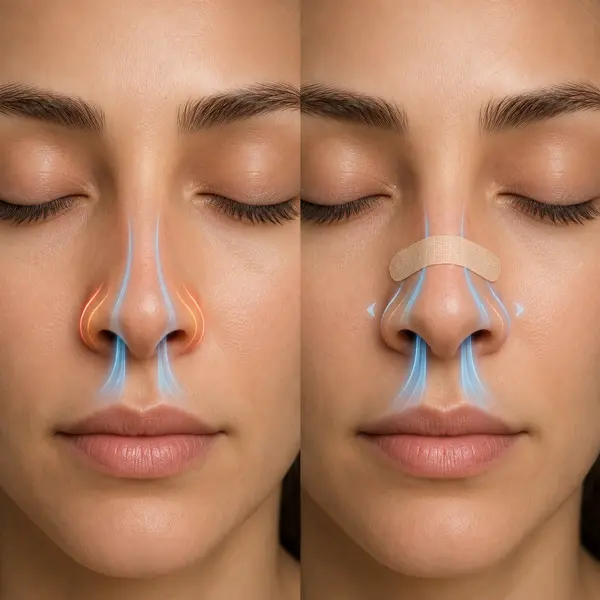
Nasal strips can make sense for a stuffy nose when the problem includes narrowing near the front of the nasal passage. They work from the outside, using flexible tension to support the nasal sidewalls. That may make inhalation feel easier for some people, but it does not remove mucus, shrink inflamed tissue or treat the cause of an infection or allergy.
A Fast Decision Guide
Try an external strip only when the expected action matches the problem. If gently supporting the nasal sidewall makes inhalation easier, a strip may be worth testing. If the main problem is heavy mucus, deeper swelling, facial pressure or infection symptoms, external lift is unlikely to be the main answer. Persistent one-sided blockage, fever, significant pain or sleep-breathing warning signs should move the decision away from self-testing and toward professional advice.
Do Nasal Strips Help a Stuffy Nose?
They can help some people breathe more comfortably when restriction is near the nasal entrance, but they do not treat deeper swelling or mucus. External nasal strips contain flexible elements that lift the skin and support the lateral nasal walls. Studies have measured increases in nasal dimensions or inspiratory flow in some participants, although benefit varies by anatomy and baseline resistance.
“Stuffy nose” describes a sensation rather than one single mechanism. A cold may produce swelling and mucus. Allergies can inflame the nasal lining. Dry air can irritate tissue. A deviated septum, polyps or narrow nasal valve may create more structural resistance. A strip only addresses the external mechanical part of that picture.

When Do Nasal Strips Make the Most Sense?
They make the most sense for mild, temporary or position-dependent nasal restriction that improves when the side of the nose is gently supported. Common situations include nighttime stuffiness, dry indoor air, light congestion during a cold, and mild allergy-related narrowing near the nasal valve.
The blockage feels close to the nostrils
If inhaling makes the sidewall pull inward or the narrow feeling seems concentrated at the front of the nose, an external dilator is mechanically aligned with the problem. Deeper pressure around the cheeks or forehead, heavy discharge or severe internal swelling is less likely to respond to external lift alone.
You want a drug-free mechanical option
A strip contains no active decongestant. That can be useful when a person wants to test external support without adding a medicine, provided the skin is healthy and adhesive is tolerated. “Drug-free” does not mean universally effective or risk-free: adhesive can irritate skin, and the strip can still be the wrong tool for the cause.
Congestion interferes with sleep
Lying down may make nasal stuffiness feel more noticeable. If mild nasal resistance contributes to mouth breathing or snoring, supporting the nasal entrance may improve perceived airflow. However, strips do not treat obstructive sleep apnea and should not be used to dismiss breathing pauses, gasping or daytime exhaustion.
A Quick Check Before Trying a Strip
Gently supporting the cheek beside the nostril can provide a clue about whether external lift may help. With clean hands, pull the cheek slightly outward—not upward and not forcefully—while breathing normally. If airflow immediately feels easier, external nasal-valve support may be relevant.
This is only an informal screening clue. Pulling too far can open almost anyone’s nostril and create a misleading result. It cannot identify allergy, infection, a deviated septum or another structural condition.
What Nasal Strips Cannot Do
Nasal strips cannot clear mucus, reduce inflammation, kill germs or open the throat. They also do not correct a severely deviated septum or remove nasal polyps.
This boundary is important because congestion treatments are not interchangeable. Saline can moisturize or rinse the nasal passage. Decongestant medicines act on swollen tissue but have product-specific directions and warnings. Allergy treatment targets an allergic process. An external strip changes mechanical support at the nasal entrance.
The FDA notes that nasal irrigation can help flush mucus and allergens when used correctly, but rinse devices require distilled, sterile or previously boiled water. The FDA also warns that using some decongestant nasal sprays for more than a few days may worsen congestion through rebound effects; users should follow the Drug Facts label and professional advice.
Nasal Strips vs Saline vs Nasal Spray
| Option | Main action | Best matched need | Key limit |
|---|---|---|---|
| External nasal strip | Supports nasal sidewalls mechanically | Front-of-nose narrowing | Does not treat swelling or mucus |
| Saline mist or rinse | Moisturizes or flushes nasal passages | Dryness, mucus or allergens | Rinsing requires safe water and cleaning |
| Medicated spray | Varies by active ingredient | Cause-specific symptom management | Directions, contraindications and duration matter |
The right choice depends on the cause. These options may sometimes be used together, but a pharmacist or healthcare professional should advise when medication is involved. Avoid assuming that a stronger sensation means a better treatment match.
How to Apply a Nasal Strip for Congestion
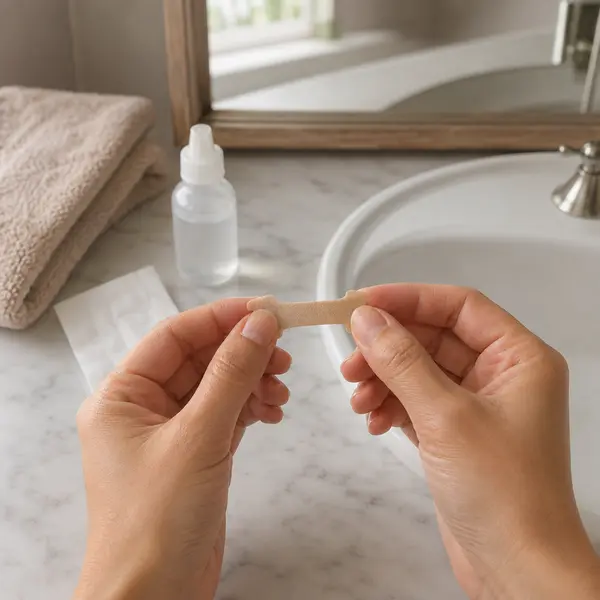
Apply the strip to clean, completely dry skin across the lower bridge, just above the nostril flare. Wash away oil or skincare residue, dry the area, center the strip and press the ends down without stretching the backing. A strip placed too high may miss the nasal sidewalls; one placed too low may interfere with the nostril edge.
Remove it slowly after moistening the edges if necessary. Do not apply to broken, sunburned or irritated skin. Athena’s nasal strip application guide covers preparation, placement and controlled removal in more detail.
How to Choose a Strip for a Stuffy Nose
Choose by fit, lift distribution, adhesive balance and skin comfort—not by maximum stickiness alone. The flexible element should reach the nasal sidewalls without extending onto the cheeks. The backing should conform without wrinkling. Adhesive should hold through the intended wear time while still allowing controlled removal.
Different nose shapes may need different strip widths or spring geometry. Humid climates, oily skin and overnight movement can affect adhesion. Sensitive-skin users may prioritize a softer backing and lower peel force, while still needing enough stability to maintain placement.
Athena’s nasal strip product options include development choices in shape, material, adhesion, color and packaging. For sleep programs, long-wear comfort and stable fit should be evaluated together rather than treated as separate specifications.
When Should You Skip Self-Treatment and Get Help?
Seek professional advice when congestion is severe, persistent, repeatedly one-sided or accompanied by warning signs. Fever, significant facial pain, swelling around the eyes, frequent nosebleeds, worsening symptoms or breathing difficulty deserve assessment. Recurrent congestion may reflect allergy, chronic rhinitis, sinus disease or a structural issue that needs a different approach.
During sleep, witnessed pauses in breathing, choking, gasping, loud persistent snoring and marked daytime tiredness are reasons to discuss possible sleep apnea with a healthcare professional. A strip may change nasal comfort without addressing the more important airway problem.
What Product Developers Should Test
A congestion-focused strip should be tested as a system of structure, adhesive, material and fit. Spring recovery force affects lift; strip geometry affects where that force lands; backing softness affects conformity; and adhesive performance changes with oil, moisture and wear time.
For brands developing drug-free nasal support products, prototypes should represent the intended users and conditions. Testing only on one nose shape or immediately after application can miss edge lift, skin discomfort and force loss over time. Athena can support sample development and customization, but specifications should be tied to a defined use case rather than broad treatment claims.
Practical Questions Before You Try a Strip
Can I use a nasal strip when I have a cold?
It may provide external support if front-of-nose narrowing contributes, but it will not treat the virus, swelling or mucus. Stop if the skin becomes irritated.
Are allergy nasal strips different?
The mechanical principle is usually the same. A product marketed for allergy-related stuffiness still does not treat the allergic reaction; fit and skin tolerance remain important.
Can I combine a strip with saline spray?
They act differently and may sometimes be used in the same routine. Allow the skin to dry fully before applying adhesive, and follow the saline product’s directions.
Why does a strip help only one side?
The two sides may differ because of the normal nasal cycle, placement, septal shape or asymmetric narrowing. Persistent one-sided blockage should be assessed professionally.
Match the Support to the Cause
A stuffy feeling is not specific enough to choose a solution by itself. External strips are designed for mechanical support near the nasal entrance; saline addresses moisture, mucus and rinsing needs; medicines have ingredient-specific actions and warnings. The sensible choice begins with the likely cause, not the strongest product claim. When congestion persists, repeatedly affects only one side or appears with concerning sleep symptoms, further evaluation is more useful than extending a trial that does not match the problem.
Sections
13 July 2026
Nasal strips look simple, but correct use can make a clear difference in comfort, adhesion, and breathing experience. To use them properly, users need to clean the skin, place the strip in the right position, choose the right size, press it firmly, and remove it gently. Nose strips can be used for sleep, daily breathing comfort, running, workouts, and some nasal-based snoring situations. However, they are external support products, not medical treatments. If nasal blockage, snoring, or breathing issues are severe or long-term, users should seek professional advice. Read More