Can You Put Makeup Over a Pimple Patch?
Date:2026-10-16
Read:43
source: Zoey
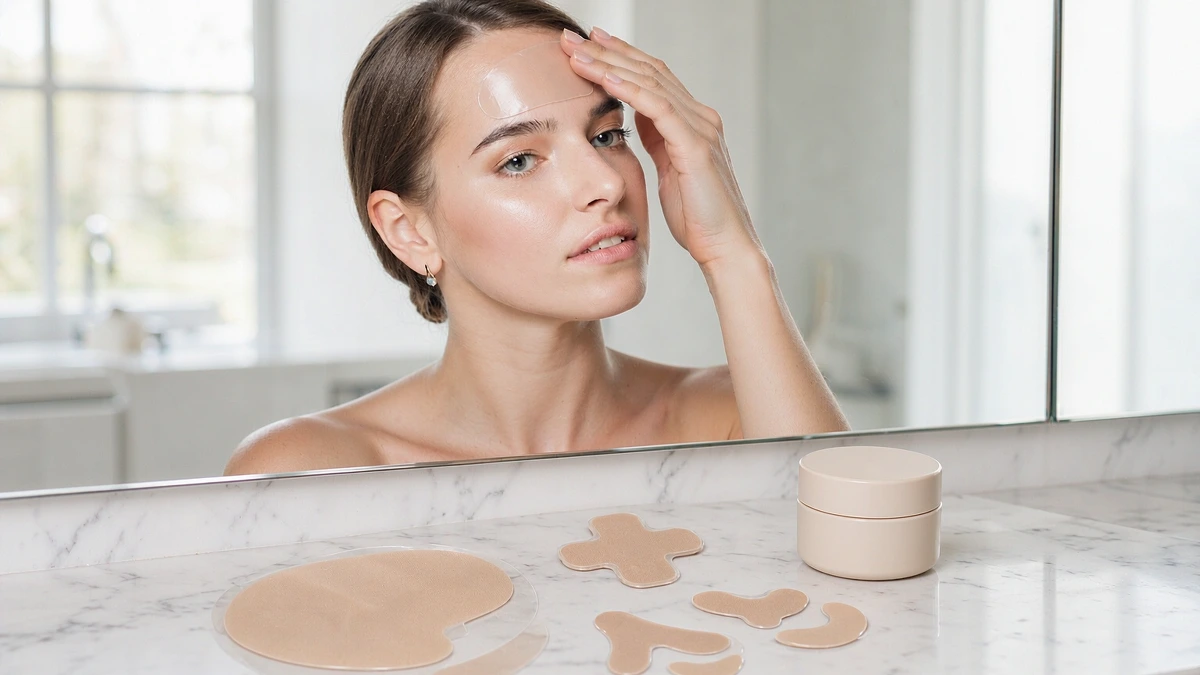
A pimple appearing before work, a special event, or a day out can make applying makeup more complicated than usual. Concealer may cover redness, but it does not always sit smoothly over a raised or irritated blemish. A pimple patch offers another option by creating a protective layer between the blemish and your makeup.
But can you put makeup over a pimple patch without affecting its adhesion or making the spot even more noticeable? The answer depends on the type of patch, your application technique, and the makeup products you use.
Quick Answer
Yes, you can put makeup over a pimple patch. Apply a thin, transparent patch to clean, dry skin first, then gently dab makeup over it. Avoid rubbing or lifting its edges.
Key Takeaways
- Apply the pimple patch before makeup on clean, completely dry skin for better adhesion.
- Thin, transparent hydrocolloid patches are generally more discreet than thick, opaque patches, although no patch is guaranteed to disappear under makeup.
- Gently dab foundation or concealer over the patch instead of rubbing or dragging a brush across it.
- Patch thickness, edge design, surface finish, and adhesive properties influence how well makeup sits over the patch.
- If a patch begins lifting, replace it rather than trying to secure the adhesive with additional makeup.
Can You Put Makeup Over a Pimple Patch?
Yes. You can apply foundation or concealer over many conventional pimple patches, provided the patch adheres securely and its surface is compatible with your makeup. A thin hydrocolloid patch can cover a blemish while helping manage surface moisture and reducing direct contact with the affected area.
However, not every patch is designed for makeup application. Traditional hydrocolloid patches may have a noticeable thickness or raised edge, which can become more visible when foundation settles around them. Some patches also have a smooth or glossy surface that does not hold makeup the same way as natural skin.
For daytime use, the best approach is to select a patch with a thin profile, flexible construction, and an outer surface suitable for gentle makeup application.
Should a Pimple Patch Go Before or After Makeup?
A conventional adhesive pimple patch should generally go before foundation, concealer, and other makeup products. Applying it directly to clean, dry skin helps the adhesive establish contact with the skin rather than attaching to a layer of cosmetics.
Putting a patch over foundation can interfere with adhesion because makeup products may contain oils, emollients, pigments, or powders. This can cause the patch to shift, lift at the edges, or detach during the day.
For a typical morning routine, apply the patch first, then continue with skincare and makeup around it. Sunscreen should still be applied to the surrounding exposed skin. A patch should not be assumed to provide sun protection unless the product has specifically established that function.
How to Apply a Pimple Patch Before Makeup
The goal is to create a secure patch application without disturbing the adhesive as you apply your other products. You do not need a complicated routine, but the order and technique matter.
Step-by-Step Guide to Wearing a Pimple Patch Under Makeup
| Step | What to do | Why it matters |
|---|---|---|
| 1. Cleanse | Wash your face with a gentle cleanser | Removes makeup, oil, and surface residue |
| 2. Dry | Pat the intended patch area completely dry | Helps the adhesive contact the skin |
| 3. Apply the patch | Center the patch over the blemish and press gently | Secures the patch before other products are applied |
| 4. Continue skincare | Apply moisturizer and other products around the patch | Reduces the chance of loosening its edges |
| 5. Apply sunscreen | Cover surrounding exposed skin without dislodging the patch | Maintains the usual daytime sun-protection routine |
| 6. Apply makeup | Gently pat a small amount of foundation or concealer over and around the patch | Helps minimize friction and edge lifting |
| 7. Check the finish | Inspect the patch edges and surrounding makeup | Identifies visible buildup or loose edges |
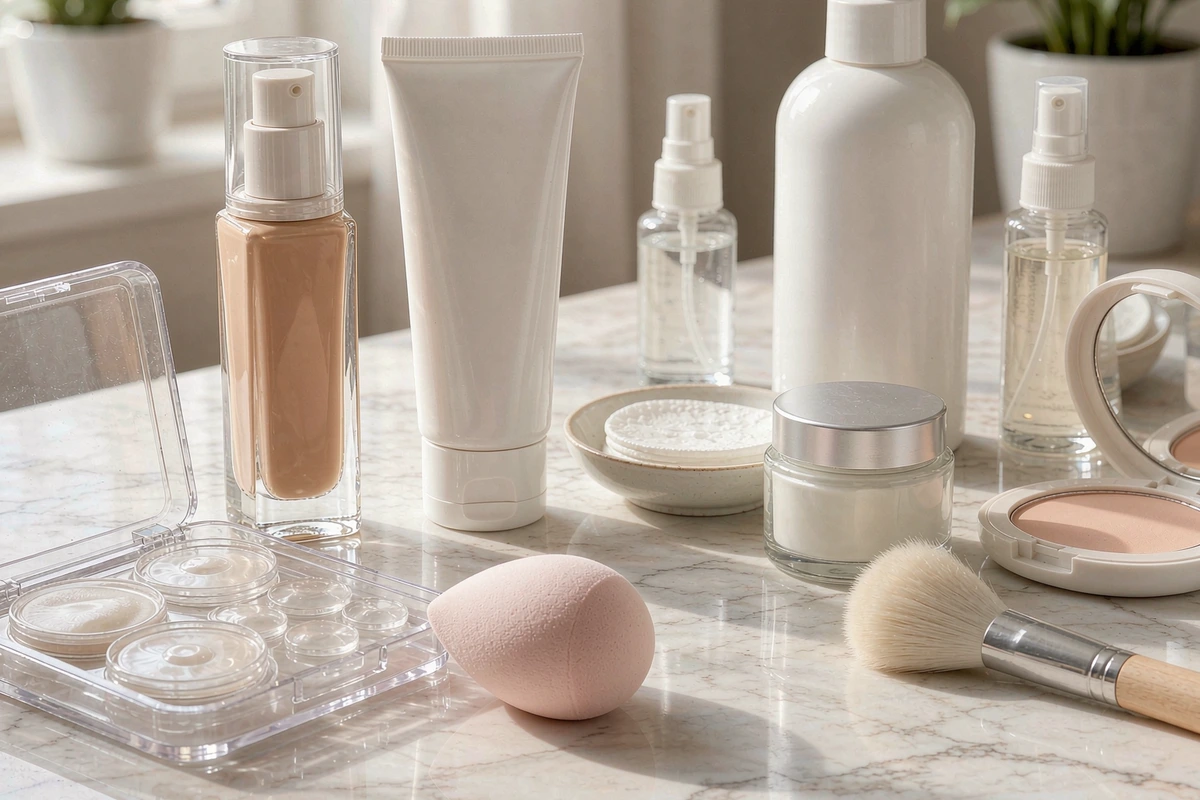
The sequence above is intended for conventional adhesive hydrocolloid patches. Liquid-forming patch products may require their own drying time and application instructions.
How to Apply Foundation Over a Pimple Patch
Liquid and cream foundations can be applied over some pimple patches, but their finish depends on the patch surface and the formula being used.
Start with a small amount of foundation and gently press it onto the area using a clean fingertip or makeup sponge. Avoid dragging the applicator across the patch, particularly near its edges.
Rather than trying to conceal the entire patch with a thick layer, blend the surrounding foundation first. Then apply only the amount needed to make the color transition less noticeable.
Excessive foundation may accumulate around the patch boundary and create a visible circular outline. It can also emphasize a raised surface rather than concealing it.
Can You Put Concealer Over a Pimple Patch?
Yes, concealer can be applied over some patches, especially thin patches with a smooth outer surface. However, concealer does not always adhere evenly to polymer films or hydrocolloid surfaces.
Use a small amount and tap it gently into place. Build coverage gradually only if the first layer looks uneven.
If concealer repeatedly slides off the patch or collects around its edges, adding more product is unlikely to solve the problem. The patch may simply be incompatible with that particular makeup formula.
In that situation, a different patch finish or a lighter makeup application may produce a more natural result.
Which Pimple Patches Work Best Under Makeup?
Not all acne patches behave the same way beneath foundation. The most suitable option depends on the patch material, thickness, surface finish, and intended function.
For everyday daytime use, thin and transparent pimple patches are often preferable because they create less visible height above the skin. However, transparency alone does not guarantee that a patch will blend naturally with makeup.
Comparing Pimple Patch Types for Makeup
| Patch type | Makeup compatibility | Main advantage | Potential limitation |
|---|---|---|---|
| Thin transparent hydrocolloid patch | Often suitable | Low-profile coverage with fluid absorption | Edges or surface reflection may remain visible |
| Standard hydrocolloid patch | Variable | Protective and absorbent construction | Thicker profile may show through makeup |
| Tapered-edge invisible patch | Often suitable, depending on finish | Less noticeable transition at the edges | Adhesion and makeup compatibility still vary |
| Liquid film-forming patch | Depends on the specific product | Can form a thin protective film without a precut edge | Does not necessarily offer conventional hydrocolloid absorption |
| Microdart pimple patch | Product-dependent | Designed for localized ingredient delivery | Raised structures or specific wear instructions may make makeup layering unsuitable |
| Decorative or colored patch | Usually intended to remain visible | Adds color or visual expression | Not designed to disappear beneath foundation |
These comparisons describe general product-design considerations rather than verified performance results for specific brands.
Are Invisible Pimple Patches Really Invisible?
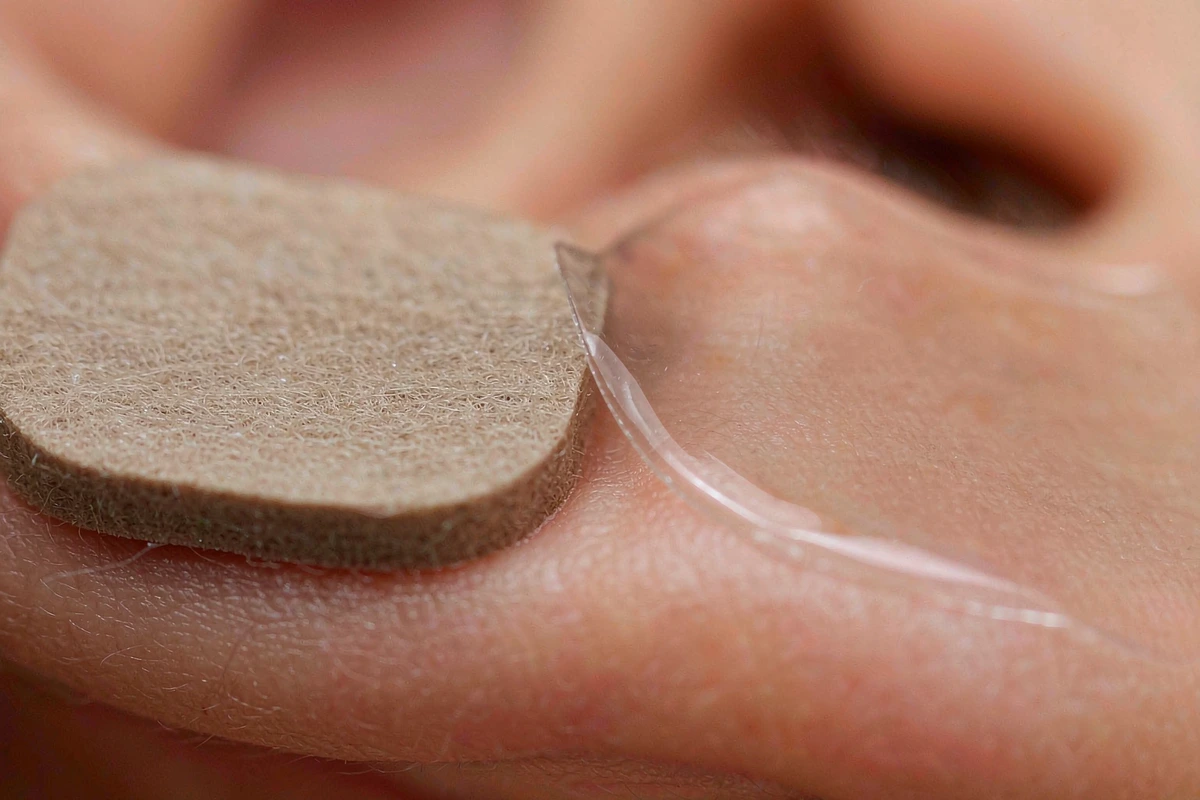
The term "invisible pimple patch" generally refers to a patch designed to be less noticeable on the skin. It does not mean the product will be completely undetectable under every lighting condition or makeup formula.
Even a transparent patch may create a visible outline because of its thickness, reflective surface, or contrast with surrounding skin texture.
The patch may look discreet on bare skin but become more noticeable after foundation is applied. This can happen when makeup settles around its boundary or adheres differently to the patch than to the skin.
For consumers, the practical goal should be a comfortable, low-visibility patch rather than a guarantee of perfect invisibility.
Do Thinner Hydrocolloid Patches Work Better With Makeup?
A thinner hydrocolloid patch may be easier to conceal because it creates less height above the surrounding skin. Flexible materials can also help the patch follow natural facial contours.
However, thickness is only one factor. A patch also needs sufficient adhesion, appropriate absorption capacity, and a stable backing surface.
An ultra-thin patch that lifts easily or fails to meet its intended fluid-management requirements is not necessarily a better product.
A successful daytime design balances discretion with the patch's primary function.
Why Does Makeup Make Some Pimple Patches More Visible?
A patch may become more noticeable after makeup application because foundation and concealer do not always spread evenly across its surface.
Natural skin has texture, absorbs certain products, and contains varying levels of moisture and oil. A pimple patch introduces a separate material surface with different properties. Makeup may therefore accumulate, separate, or reflect light differently over the patch.
This is a product compatibility issue as much as an application issue.
Common Makeup Problems With Pimple Patches
| Problem | Possible cause | Practical solution |
|---|---|---|
| A visible circular outline | Thick patch or noticeable edge profile | Choose a thinner or tapered-edge patch |
| Foundation separates on the patch | Makeup does not adhere well to the backing surface | Try a lighter layer or different formula |
| Patch edges begin lifting | Oil, skincare residue, or makeup friction | Apply a fresh patch to clean, dry skin |
| Concealer looks cakey | Excess product around the boundary | Use less product and blend around the patch |
| Patch looks shiny | Reflective backing film | Consider a different surface finish |
| Patch moves during makeup application | Insufficient adhesion or excessive rubbing | Press gently during application and use tapping motions |
These problems cannot always be corrected with makeup technique alone. If a particular patch consistently lifts or looks highly visible, switching to another patch design may be more effective than adding more cosmetics.
Why Does Foundation Sometimes Peel Off a Pimple Patch?
Foundation can peel, separate, or wear away when it does not form a stable layer on the patch's outer surface.
Some patch films have relatively smooth surfaces that interact differently with makeup than skin does. Oil-based products, primers, sunscreen formulations, and setting products may also influence the result.
The interaction varies between products, so there is no universal guarantee that one foundation will work over every pimple patch.
Try a small amount of makeup first. If the patch surface does not hold it properly, avoid repeated heavy applications that may loosen the adhesive.
Does Wearing Makeup Over a Hydrocolloid Patch Affect Its Function?
Applying makeup to the outside of an intact hydrocolloid patch does not necessarily stop the material beneath from absorbing moisture. The hydrocolloid layer works through contact with fluid at the skin-facing surface, while the outer film provides coverage and protection.
However, makeup may interfere indirectly if it loosens the patch, damages its edges, or causes it to detach. A patch that no longer maintains suitable contact with the skin may not perform as intended.
This is why it is important to distinguish between makeup applied to an intact backing surface and makeup that gets underneath a loose patch.
Can a Pimple Patch Protect a Blemish From Makeup?
An intact patch creates a physical covering over the blemish, reducing direct contact between cosmetics and the covered area.
This can be particularly useful when a blemish has been picked at or has surface drainage, although patch suitability depends on the skin's condition and the product's intended use.
A patch is not a sterile barrier throughout wear, nor does it replace appropriate wound care or acne treatment. If an area is severely irritated, appears infected, or has significant skin damage, cosmetic coverage should not take priority over proper care.
For routine acne-prone skin, selecting suitable makeup remains important even when a patch is used. The American Academy of Dermatology recommends choosing cosmetics carefully because certain products can contribute to breakouts.
Can Makeup Cause a Pimple Patch to Fall Off?
Yes. Makeup application may loosen a patch through friction, especially if the adhesive has already been weakened by moisture, skincare residue, or facial oils.
Repeated brushing across the patch can lift its edges. Once foundation enters beneath the adhesive boundary, reattaching the same patch may be difficult.
If the patch becomes loose, remove it gently and replace it with a new one on clean, dry skin if continued patch use is appropriate.
Do not attempt to secure a lifting patch using concealer, powder, or unrelated cosmetic adhesives.
How to Choose an Invisible Pimple Patch for Daytime Wear
When selecting a patch for use under makeup, it helps to focus on a few practical characteristics rather than relying on an "invisible" label alone.
The ideal daytime patch should be comfortable, suitable for the intended blemish, and designed to remain securely attached during normal facial movement.
What to Look for in a Makeup-Friendly Pimple Patch
| Selection factor | What to look for | Why it matters |
|---|---|---|
| Thickness | Thin, low-profile construction | Reduces visible height above skin |
| Transparency | Clear or appropriately translucent material | Helps reduce contrast with surrounding skin |
| Edge design | Smooth or tapered transition | Makes the boundary less noticeable |
| Adhesive properties | Stable adhesion with comfortable removal | Helps reduce lifting and discomfort |
| Flexibility | Material that follows facial contours | Supports natural movement |
| Surface finish | Compatibility with the intended makeup products | Reduces uneven application and noticeable shine |
| Patch size | Sufficient coverage without unnecessary excess | Reduces visible patch area |
| Skin compatibility | Appropriate materials and ingredient selection | Helps reduce avoidable irritation risks |
A daytime patch should not be judged only by appearance. It must also maintain the properties required for its intended blemish-care function.
For brands developing their own products, this means evaluating the finished patch in realistic use conditions rather than simply choosing the thinnest available material.
Should You Choose a Pimple Patch or a Liquid Patch Under Makeup?
Traditional hydrocolloid patches and liquid film-forming products are different technologies.
A hydrocolloid patch typically includes an absorbent adhesive layer and a backing film. It can help manage moisture from certain surface blemishes while creating a localized covering.
A liquid film-forming product is applied directly to the skin and dries to form a protective layer. Depending on the formulation, it may offer a thinner surface without a precut patch boundary. However, it should not automatically be assumed to provide the same fluid absorption as a hydrocolloid patch.
The right choice depends on the product's intended function, skin condition, and makeup compatibility. Brands should support any specific performance or treatment claims with suitable evidence.
Custom Invisible Pimple Patch Solutions from Athena
A makeup-friendly pimple patch requires more than a transparent appearance. Its material thickness, flexibility, adhesive properties, and shape all influence how the finished patch sits on the skin.
For skincare brands developing daytime blemish-care products, these design details can help distinguish a discreet patch from a conventional overnight product.
Athena provides OEM/ODM acne patch solutions, including hydrocolloid patches, high-transparency material options, ultra-thin designs, and customizable shapes, sizes, and packaging.
Ultra-Thin Hydrocolloid and Transparent Material Options
Athena supports hydrocolloid patch development using flexible materials and high-transparency film options. These materials provide a foundation for product concepts that prioritize discreet appearance, comfortable wear, and localized coverage.
For a patch intended to be used beneath makeup, important design considerations include the backing film, overall profile, adhesive performance, and edge geometry.
The appropriate material combination depends on the intended product specifications. Makeup compatibility should be evaluated with the finished patch rather than assumed from transparency alone.
Custom Shapes, Sizes, and Formulations
Different blemish-care products may require different patch configurations. Athena offers shape and size customization, including round, oval, localized, and larger-area formats.
Brands can also discuss formulation options involving ingredients such as salicylic acid, niacinamide, tea tree oil, and centella asiatica, depending on the product concept and formulation requirements.
However, a patch designed primarily for discreet daytime coverage may have different priorities from an ingredient-enhanced or microdart product. Its intended function should guide material and formulation decisions.
Developing a Daytime Pimple Patch for Your Brand
For brands planning a private-label pimple patch line, product development should begin with a clear understanding of the intended users and wearing conditions.
A daytime-focused product brief can specify the desired transparency, thickness, patch dimensions, adhesive characteristics, ingredient requirements, packaging format, and target market.
Samples should then be reviewed for relevant characteristics such as application, edge lifting, removal comfort, and visual appearance. If makeup compatibility is an intended selling point, representative makeup products and application conditions should be included in the evaluation.
Athena offers custom acne patch solutions for brands exploring hydrocolloid materials, discreet patch designs, and customized packaging. Discussing your application requirements early can help identify suitable product options for further development.
Frequently Asked Questions About Pimple Patches and Makeup
Can You Put Powder Over a Pimple Patch?
Yes, a small amount of powder may be applied over some patches. Use a light pressing motion rather than sweeping repeatedly across the surface. Powder can still collect along the patch edges, so use only what is needed.
Can You Wear a Pimple Patch With Sunscreen?
Yes, but a conventional adhesive patch generally needs to be applied to clean, dry skin first. Apply sunscreen carefully to the surrounding exposed skin without disturbing the patch. Do not assume the covered area receives adequate UV protection from the patch itself.
Can You Apply Primer Over a Pimple Patch?
Some primers may work over a patch, while others may cause makeup to slip or emphasize the surface. Compatibility depends on the primer formulation and the patch backing. Avoid applying primer beneath the adhesive area before attaching a conventional patch.
Should You Remove a Pimple Patch Before Taking Off Makeup?
Generally, remove makeup gently without rubbing the patch aggressively. Follow the patch's removal instructions, then cleanse the area appropriately. If the patch is difficult or uncomfortable to remove, avoid pulling forcefully.
Can You Wear Pimple Patches Under Makeup All Day?
This depends on the specific patch's recommended wear duration, adhesive performance, and skin tolerance. Follow the manufacturer's instructions rather than assuming every patch is suitable for continuous daytime use. Replace or remove a patch if it becomes loose, contaminated, or uncomfortable.
Can You Reapply Makeup Over the Same Pimple Patch?
Light touch-ups may be possible if the patch remains securely attached and the skin feels comfortable. However, repeated makeup layering can create buildup around the edges. If the patch becomes loose or heavily coated, replacing it may be preferable.
Final Thoughts
You can wear makeup over a pimple patch, but achieving a discreet, comfortable result depends on both the patch design and the way makeup is applied.
A thin, transparent hydrocolloid patch placed on clean, dry skin is often a practical starting point. Gentle application, minimal product buildup, and careful attention to the edges can help preserve its appearance and adhesion.
For skincare brands, makeup-friendly acne patches represent a product-development opportunity where material selection, adhesive performance, and visual design need to work together. Athena supports customized hydrocolloid patch development for brands seeking to create daytime blemish-care products tailored to their market needs.
Get Custom Invisible Acne Patches for Your Brand
Athena develops hydrocolloid, medicated and microdart acne patches for private label brands, including thin, high-transparency options designed for daytime wear. Contact our team to discuss materials and product configurations for your market.