How to Source Microneedle Pimple Patches for a Private Label Brand
Date:2026-09-24
Read:109
source: Zoey
Successful microneedle pimple patches sourcing starts with a written product specification. The brand then needs to verify the supplier’s documents, evaluate physical samples, review packaging protection, determine the product’s regulatory status and document the approved version before production.
This guide covers dissolving cosmetic microcone or microdart pimple patches developed for private label skincare projects. It does not cover powered microneedling devices, injectable products or patches promoted with drug-treatment claims.
The terms “microneedle,” “microdart” and “microcone” are used inconsistently across the market. Ask each supplier to define the projection material, geometry, intended skin interaction and dissolution behavior of its product. This allows buyers to compare actual constructions rather than relying on product names.
What to Define Before Sourcing Microneedle Pimple Patches
Prepare a sourcing brief before requesting quotations. It should explain what will be manufactured, where it will be sold and which parts of the product require customization.
Athena’s existing acne patch product range includes hydrocolloid and microneedle formats with different material, shape, ingredient and packaging directions. Buyers can use these options to define an initial concept before requesting a custom sample.
| Sourcing area | Information to provide |
|---|---|
| Product format | Stock private label, modified platform or fully custom development |
| Target user | Intended age group, skin type and use occasion |
| Product construction | Projection layer, backing, adhesive area and release liner |
| Formula direction | Preferred ingredients, excluded ingredients and allergen restrictions |
| Patch design | Shape, dimensions, coverage area and color |
| Packaging | Patch count, individual pouch, carton, insert and labeling needs |
| Target market | Countries or regions where the product will be sold |
| Claims | Proposed packaging, website and advertising language |
| Sales channel | Retail, e-commerce, clinic, salon or professional distribution |
| Order plan | Initial order range and anticipated reorder volume |
Select the Appropriate Development Model
A stock private label project uses an existing product specification with brand-specific packaging or artwork. It is suitable when the existing construction, formula and patch configuration already fit the launch plan.
An ODM project modifies an established product platform. Common changes include formula direction, patch shape, package count, pouch design and secondary packaging.
A fully custom project requires a new specification and a more detailed development process. The quotation should identify the components being developed, the applicable development fees and the ownership of formulas, molds, artwork and technical files.
State the chosen development model in the request for quotation. Otherwise, one supplier may price a stock format while another quotes custom development, creating an inaccurate cost comparison.
Define the Patch Structure, Formula and Claims
A name such as “salicylic acid microdart patch” does not define a manufacturable product. The specification must describe the structure, formula and finished presentation in measurable terms.
Document the Patch Construction
Ask the proposed microdart acne patch supplier to identify the projection material, base layer, backing, adhesive area and release liner. The specification should also state the patch dimensions, projection arrangement, dimensional tolerances, intended dissolution behavior, storage conditions and primary packaging.
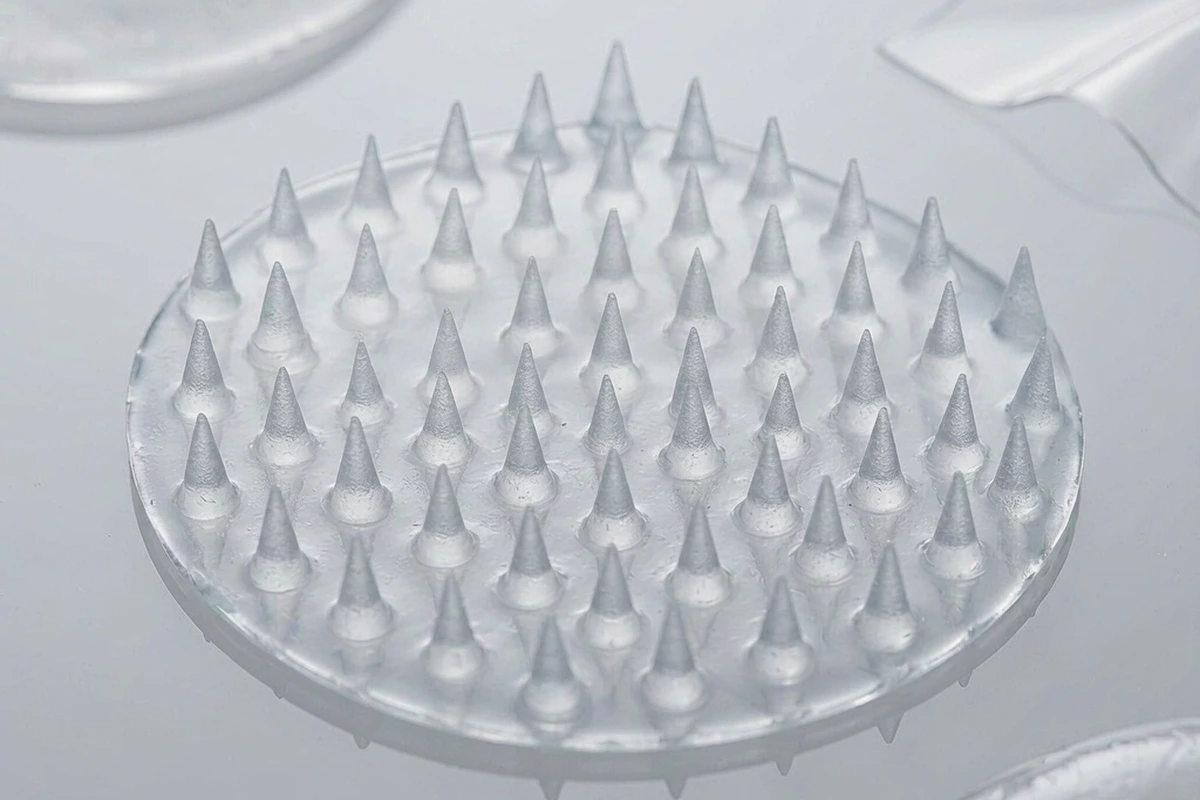
Request technical drawings or specification sheets that use measurable units. Descriptions such as “ultra-fine,” “deep acting” or “fast dissolving” do not establish production standards.
The supplier should explain how the projections are formed, conditioned, removed from the mold, inspected and packaged. These stages matter because projection integrity can be affected by handling, moisture and pressure.
Collect Complete Formula Information
The brand or its appointed safety assessor needs sufficient formula information to evaluate the finished product. Before production approval, request:
- The complete ingredient list and quantitative information required for the target market;
- The function of each ingredient and supporting raw-material documentation;
- Allergen, fragrance, colorant, preservative and restricted-substance information;
- Compatibility information for the complete formula and patch structure;
- The storage and shelf-life evidence applicable to the proposed packaging.
Athena’s published acne patch range identifies formulation directions such as salicylic acid, tea tree oil, niacinamide and centella asiatica. These references indicate available development directions; they do not establish the concentration, finished-product performance or permitted claims of a custom formula.
Do not approve production until the brand or appointed safety assessor has received the information required for the applicable safety and regulatory review.
Review Intended Use and Claims Early
Prepare the proposed front-label, product-page and advertising claims during product development. Claims can influence product classification, substantiation requirements and packaging copy.
Cosmetic appearance language must be distinguished from claims to treat acne, deliver a drug or alter a body function. Avoid approving artwork first and reviewing classification afterward, because a claim change can require new supporting documents or a different regulatory pathway.
For products intended for the United States, the FDA explains that the regulatory status of a microneedling product can depend on its structure, penetration, intended use and claims. Obtain a written assessment based on the finished product before commercializing it. The relevant principles are described in the FDA’s regulatory guidance for microneedling products.
How to Compare Microneedle Pimple Patch Manufacturers
A suitable microneedle pimple patch manufacturer should connect its quotation to a defined specification, an identifiable production site and documented quality controls.
Begin by asking the supplier to map the production route. The explanation should identify who prepares the formula, forms the projections, assembles the layers, performs die cutting, seals the primary package and releases the finished batch. When a stage is outsourced, record the subcontractor’s role and the controls applied to the outsourced work.
Outsourcing alone is not a rejection condition. The critical issue is whether responsibilities, specifications and release decisions remain traceable.
Review the Supplier Document Package
The initial review should cover documents that verify the supplier, manufacturing location and proposed product. Depending on the destination market and project scope, request:
- Business information, manufacturing-site details and relevant quality-management documents;
- Product specifications, technical drawings and ingredient documentation;
- Test methods, representative reports and packaging specifications;
- Batch-numbering, traceability and finished-product release procedures;
- Change-control, complaint and adverse-event handling procedures.
Check the issuing body, manufacturing address, scope and validity of every certificate. A certificate covering another factory or product category does not automatically apply to the proposed microneedle patch.
Missing specifications or traceability prevent production approval regardless of the quoted unit price.
Compare Quotations on the Same Basis
Unit prices are meaningful only when suppliers quote the same construction, formula, packaging and service scope.
| Comparison item | What the supplier should state |
|---|---|
| MOQ | Minimum quantity by formula, SKU and packaging design |
| Sample cost | Fees for stock, modified and custom samples |
| Development cost | Formula, mold, tooling or engineering charges |
| Sample schedule | Time from confirmed brief to sample dispatch |
| Production schedule | Time from sample approval and deposit to shipment readiness |
| Packaging scope | Pouch, carton, insert, label, coding and master case |
| Testing responsibility | Included tests, optional tests and responsible party |
| Ownership | Formula, mold, artwork and technical-file ownership |
| Reorder terms | Price validity, reorder MOQ and material-change conditions |
| Payment terms | Deposit, balance and accepted payment method |
| Shipping terms | Incoterms, freight allocation and export documents |
| Change control | Notice and approval requirements for production changes |
Request an updated quotation whenever the formula, patch dimensions, pack count or packaging material changes. The final quotation should refer to the same specification version that will be used for sample approval.
How to Evaluate Microneedle Pimple Patch Samples
A physical sample must be evaluated against an agreed protocol. General comments such as “looks good” or “sticks well” cannot serve as production criteria.
Inspect projection integrity, patch dimensions, component alignment, appearance, release-liner handling, adhesion, edge lift, removal behavior and packaging condition. Where dissolution behavior is relevant to the product design, document the test conditions and observation points.
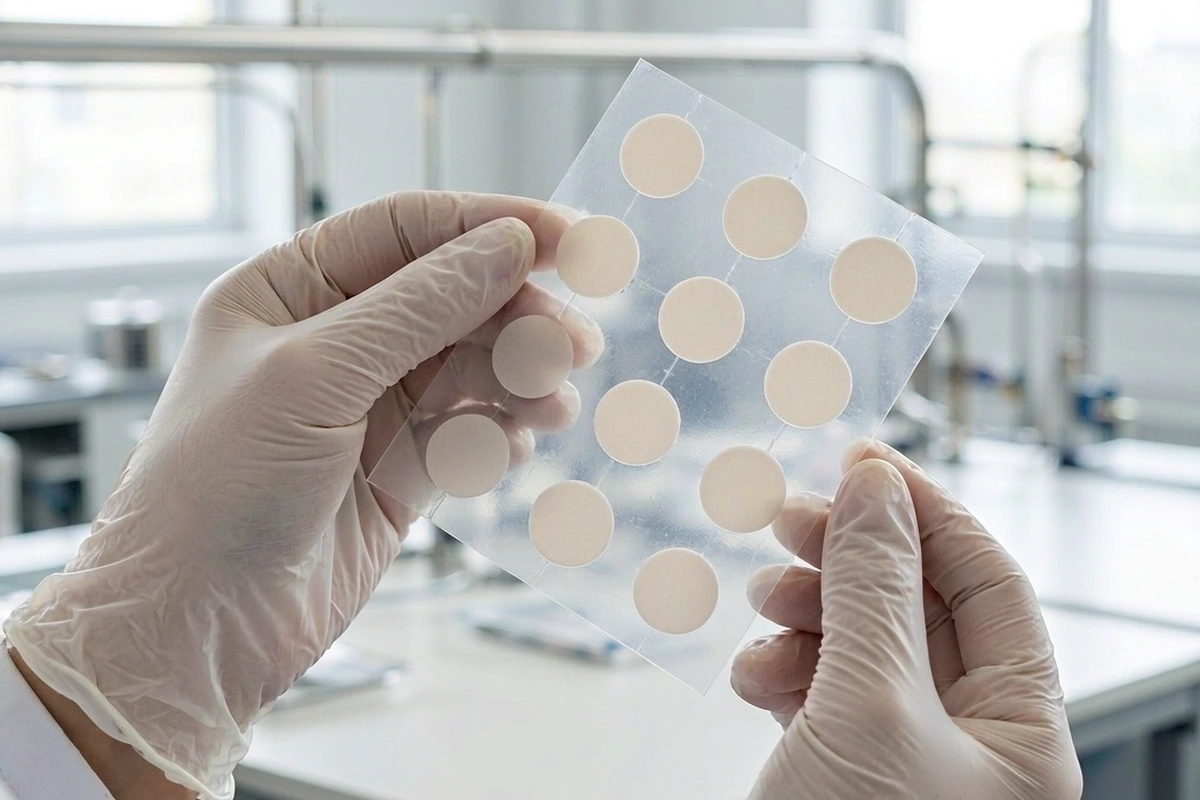
The approved specification should state how many damaged or irregular projections are permitted, which dimensional variation is acceptable and what level of edge lift, residue or visible defect causes rejection. These limits are specific to the selected construction and should not be copied from a different patch design.
Photographs can support communication, but production approval should use physical samples made with the proposed formula, construction and packaging route.
Evaluate more than one unit. A single sample shows that one unit can be produced; it does not demonstrate consistency. Record visible variation across multiple samples and request an investigation when differences appear in projection shape, alignment, adhesion, surface condition or package sealing.
Packaging Requirements for Microneedle Pimple Patches
Dissolving projections can be affected by moisture and physical pressure. Packaging therefore has a functional role in addition to presenting the brand.
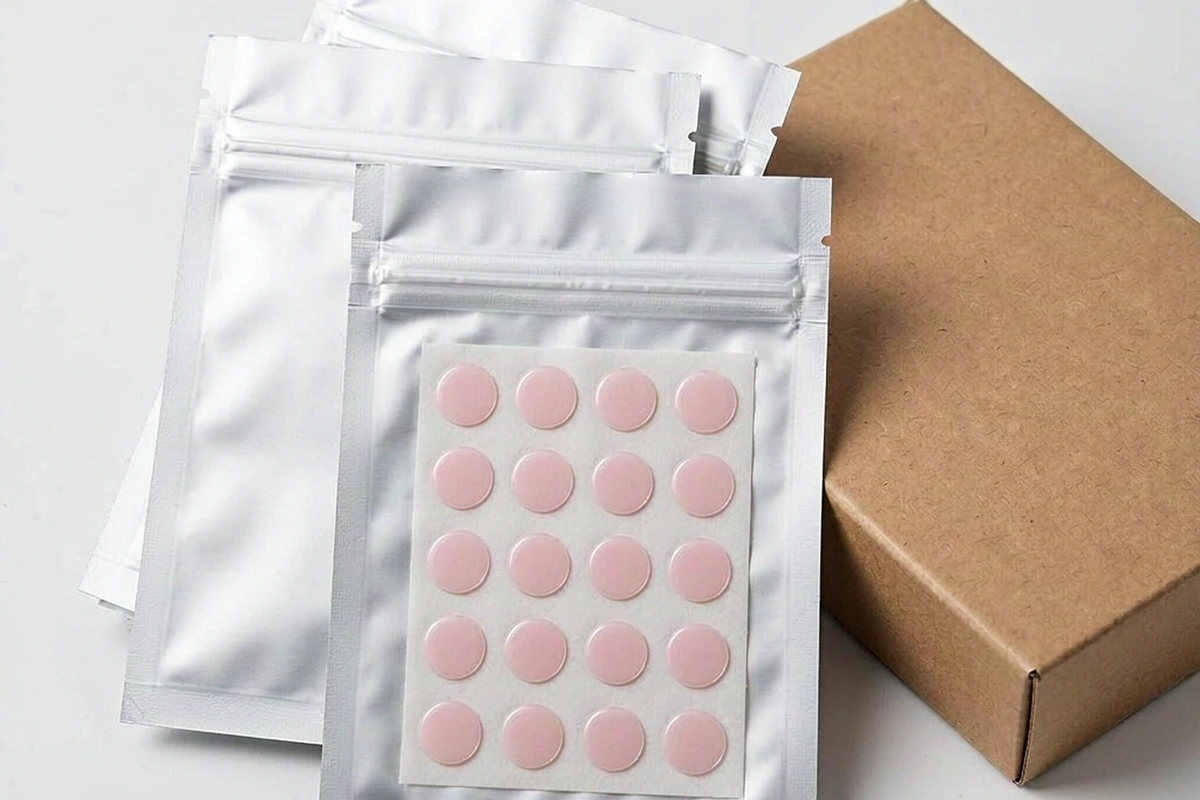
Review the primary pouch material, barrier specification, seal integrity, product movement inside the pouch and protection during transportation. Confirm that the opening method does not make the user press or damage the projections.
The artwork review should cover the ingredient declaration, directions, warnings, storage information, responsible-party information, lot coding and expiry or durability marking required for the destination market.
Ask which packaging configuration was used for stability or storage evaluation. If the barrier material, seal structure or pack format changes, determine whether the existing evidence still supports the proposed shelf life.
How Athena Develops a Private Label Sample
Athena’s published customization process begins with requirements communication. For a microneedle pimple patch project, the initial brief can define the product format, ingredient direction, shape, packaging configuration, usage requirements and target market.
The project then moves through custom modeling, material selection and sample development. Mass production begins after the customer confirms the sample. This gives the brand an opportunity to review the physical construction and packaging before approving a commercial order.
Athena’s customization process provides the general stages for turning the sourcing brief into a sample. Product-specific dimensions, formula details, testing scope, fees and production conditions should be confirmed for the individual project.
Before approving the sample, convert the agreed result into a signed specification. That document should identify the formula version, patch construction, dimensions, packaging components, artwork version and release checks. The approved sample and signed specification then become the references for pilot production and future reorders.
Complete the Target-Market Review Before Production
Regulatory review should use the finished formula, construction, claims, instructions and destination market. A general statement such as “FDA approved” or “EU compliant” does not demonstrate that a private label product has completed the required review.
United States
Establish whether the finished product is regulated as a cosmetic, drug, device or another product type. The assessment must consider the actual structure, intended use and marketing claims.
If the product is marketed as a cosmetic, review the obligations arising under the Modernization of Cosmetics Regulation Act of 2022. Depending on the product, business and applicable exemptions, responsibilities can include safety substantiation, serious adverse-event reporting, facility registration and product listing. The FDA’s MoCRA overview provides the official framework.
FDA cosmetic facility registration or product listing is not FDA approval. Do not describe these administrative records as proof that the agency has approved the finished patch.
European Union
Obtain a classification assessment based on the finished product and its intended presentation. If the product is classified as a cosmetic in the European Union, the compliance process generally includes:
- Appointment of an EU Responsible Person;
- Preparation of a Cosmetic Product Safety Report and Product Information File;
- Notification through the Cosmetic Product Notification Portal;
- Label review and support for the claimed cosmetic effects.
These requirements arise from Regulation (EC) No 1223/2009 on cosmetic products.
Complete the assessment before printing commercial packaging. Changes to the formula, product structure, instructions or claims can affect the previous conclusion and supporting documentation.
Approve the Pilot Batch and Production Agreement
Retain the approved development sample as a reference for pilot production. Evaluate the pilot batch using the same written criteria applied during sample review, including construction, dimensions, appearance, packaging and release checks.
The manufacturing agreement should connect six areas of responsibility. Product control covers the approved formula, construction, specification and artwork version. Quality control covers in-process inspection, release criteria, retained samples and handling of nonconforming units. Traceability covers raw-material records, batch codes and finished-product documentation.
The agreement should also establish written change control, commercial responsibility for rework or replacement, shipping terms and the records required for complaint investigation. No formula, material, factory, mold, process or packaging component should be changed without documented notice and brand approval.
This maintains the connection between the evaluated sample and the finished product released for sale.
Final Microneedle Pimple Patch Sourcing Checklist
Before issuing a purchase order for private label microneedle patches, confirm that:
- The construction, dimensions, materials and meaning of “microneedle,” “microdart” or “microcone” are documented;
- Complete formula information is available for safety and target-market assessment;
- Proposed claims have been reviewed against the product’s structure, intended use and classification;
- Physical samples have passed written criteria for projection integrity, dimensions, adhesion, handling and packaging;
- The quotation defines MOQ, development costs, testing responsibility, lead times, ownership and shipping terms;
- The approved sample, specification, packaging artwork and production agreement refer to the same version;
- The agreement covers batch traceability, release checks, supplier changes, complaints and nonconforming products.
A complete sourcing file creates a traceable path from the initial brief to the commercial batch. It also allows the brand to compare suppliers using consistent technical, regulatory and commercial requirements.
Brands preparing a custom microdart or microneedle acne patch project can contact Athena with the target market, formula direction, patch format, packaging requirements and expected order range to begin a sample assessment.
Sections
20 July 2026
When you wear nasal strips, the first thing that happens is not deep inside the airway. It starts on the surface of the nose. The adhesive holds the strip on the skin, while the flexible support layer creates a light outward pull on the sides of the nose. For some users, this can make the front nasal passage feel more open soon after application. For others, the difference may feel small. Some users may notice peeling edges, tightness, red marks, or adhesive residue after removal. This article explains what actually happens when nasal strips are worn, why the experience feels different from person to person, and what these reactions mean for brands developing custom nasal strips. Read More