What’s Behind the Dopamine Lab Nasal Strip Trend in Pro Cycling?
Date:2026-08-07
Read:167
source: Zoey
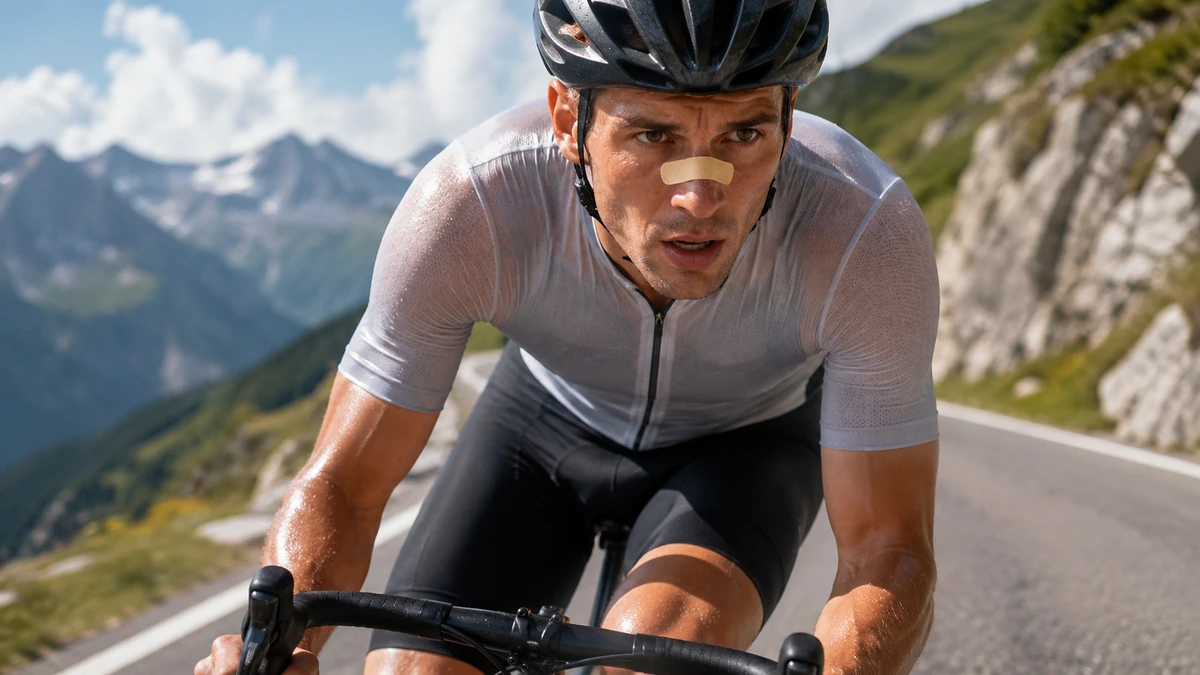
A bright yellow strip across Tadej Pogačar’s nose became one of the more unexpected details of the 2026 Tour de France.
The strip came from Australian brand Dopamine Lab, but this was not a conventional athlete sponsorship. Teammate Adam Yates had discovered the product months earlier and later passed one to Pogačar. When the Tour leader wore it with the yellow jersey, a product only a few centimeters wide suddenly became difficult to ignore.
Pogačar was not the only rider wearing one. Nasal strips were already appearing elsewhere in the peloton, making the Dopamine Lab moment part of a wider shift in professional cycling rather than a one-off celebrity appearance.
Key Takeaways
- The Dopamine Lab nasal strip reached Pogačar through teammate Adam Yates rather than a formal sponsorship arrangement.
- Several professional cyclists are wearing nasal strips again, bringing renewed attention to breathing comfort and sports-specific strip design.
- Research shows that external nasal strips can alter nasal airflow, but evidence for improving cycling performance is far less convincing.
- For cycling, sweat resistance, edge stability, fit and flexible support may matter more than broad claims about “more oxygen.”
How Did the Dopamine Lab Nasal Strip Reach Pogačar?
The route from a small Australian brand to the Tour de France was surprisingly informal.
Adam Yates bought Dopamine Lab nasal strips at the Cadel Evans Great Ocean Road Race in Australia in January 2026. Over the following months, the brand began noticing him wearing the strips at races overseas.
At the Tour de France, Yates passed one to teammate Tadej Pogačar. Pogačar wore the distinctive yellow strip during his Stage 14 victory and again in the following time trial. According to SmartCompany, the appearance was unsponsored. Dopamine Lab subsequently reported increased attention and website traffic from European markets including France, Spain and Portugal.
The color helped turn an accidental product appearance into something much more visible. The yellow strip matched Pogačar’s yellow jersey closely enough to stand out in television close-ups and race photography.
Still, one rider alone does not explain the renewed interest in nasal strips.
Why Are Nose Strips Back at the Tour de France?
Look across the professional peloton and Pogačar is clearly not the only rider experimenting with them.
Mattias Skjelmose, Kévin Vauquelin, Victor Campenaerts and Jonas Vingegaard have all been seen wearing nasal strips, while some Visma-Lease a Bike riders have made particularly visible use of bright pink versions.
The riders do not necessarily give the same reason for using them. Some appear to value the sensation of a more open nose. Others treat nasal breathing as part of a race routine. Campenaerts has discussed using nasal breathing as a way of calming himself during hard efforts, while Fred Wright has acknowledged liking the more open feeling without presenting the strip as a major performance advantage.
That distinction is useful.
The resurgence of Tour de France nasal strips does not need to be explained by one dramatic physiological benefit. Comfort, routine and product preference are enough to make an accessory appealing to an athlete.
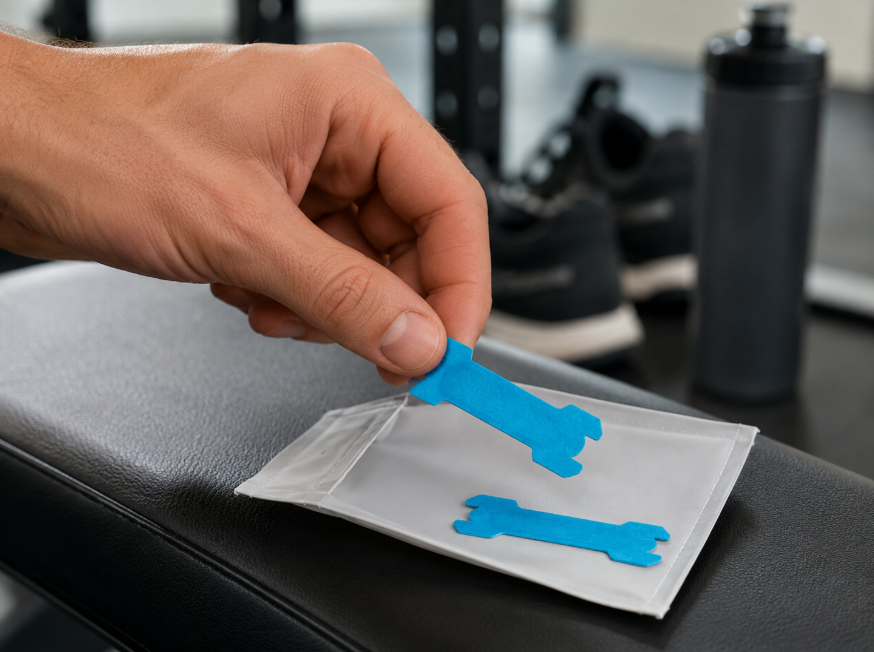
There is also a more visible change. Nasal strips were once largely beige, transparent and deliberately discreet. Current sports versions are increasingly bright enough to become part of an athlete’s look. In cycling, where helmets, glasses and jerseys already carry strong visual identities, the center of the face is valuable real estate.
Do Cycling Nasal Strips Actually Improve Performance?
The photographs are more dramatic than the science.
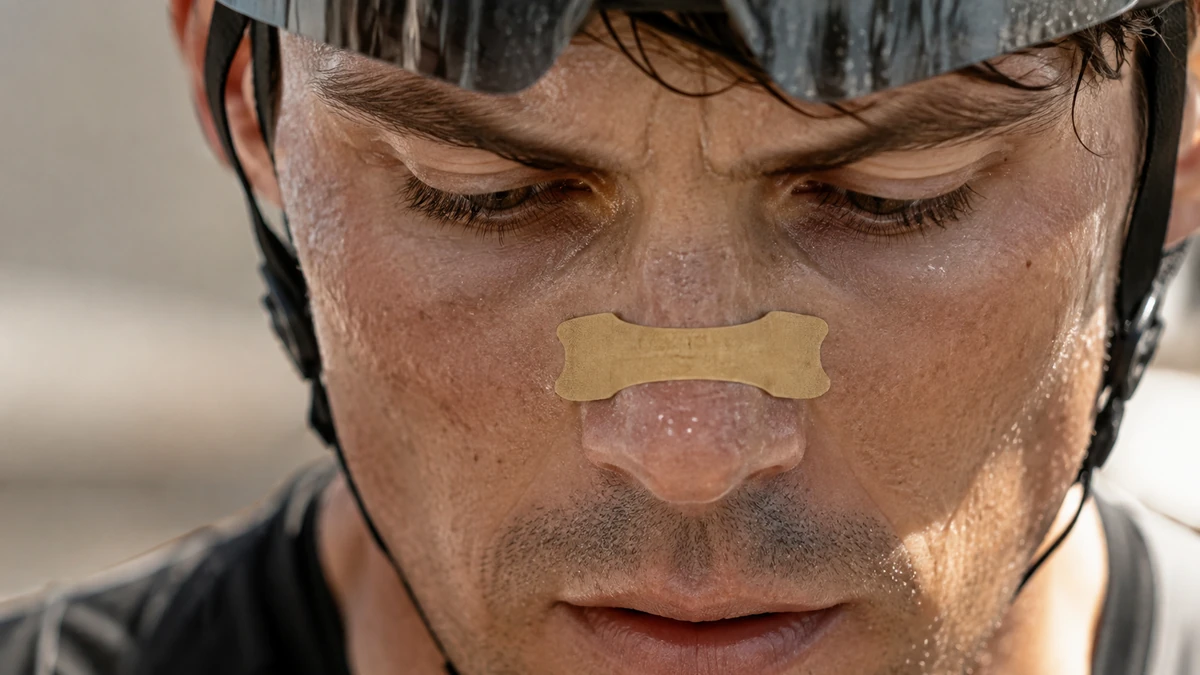
External nasal strips work by applying outward tension around the nasal valve area. This can increase the cross-sectional area of the nasal valve and reduce nasal resistance. The mechanical effect is well established; the leap from easier nasal airflow to better endurance performance is where the evidence becomes much weaker.
A systematic review and meta-analysis by Dinardi and colleagues evaluated 19 eligible studies. For healthy participants exercising with external nasal dilator strips, the pooled results found no statistically significant improvement in VO₂max, heart rate or rating of perceived exertion.
There is also a study directly relevant to cyclists.
Fifteen trained cyclists completed 20 km time trials using an external nasal dilator, an internal nasal dilator and no device. Average power output was 271 ± 44 W with the external strip versus 272 ± 44 W in the control condition, with no significant improvement in time-trial performance or cycling economy.
That gives the performance question a fairly practical answer:
A nasal strip can make the nose feel more open without making the bike go faster.
For someone who already feels restricted through the nose, that change in comfort may still be noticeable. It simply should not be confused with a proven increase in aerobic capacity or power output. what actually makes a nasal strip effective
What Matters More Than the Hype in a Nasal Strip for Cycling?
Once a nasal strip moves from the bedroom to a three-hour ride, the design brief changes.
Cyclists introduce sweat, heat, sunscreen, continuous facial movement and much longer exposure to outdoor conditions. Under those circumstances, simply asking how strongly a strip lifts the nose misses much of what determines whether the product actually works well in use.
| Product Factor | Why It Matters During Cycling |
|---|---|
| Sweat resistance | Heat and perspiration can gradually reduce adhesive contact. |
| Edge stability | Helps prevent the corners from lifting during long periods of movement. |
| Balanced adhesion | Needs enough hold for active use without making repeated removal unnecessarily harsh. |
| Flexible support | Maintains outward tension while allowing normal facial movement. |
| Fit and sizing | Nose width and placement influence stability, comfort and how evenly the strip lifts. |
A common temptation in sports-product development is to solve sweat resistance simply by increasing adhesive strength. In practice, stronger is not automatically better.
A strip needs enough initial tack to stay secure, but its performance also depends on the backing material, contact area, edge geometry and the way the support bands distribute tension. If those elements are poorly balanced, adding more adhesive may improve holding strength while creating a less comfortable product.
Edge lifting is a good example. The middle of a strip can remain firmly attached while the corners begin to curl after prolonged sweating or facial movement. For a rider, that small failure becomes noticeable long before the entire strip comes off.
The support structure presents a similar trade-off. Too little restoring force reduces the lifting sensation; excessive rigidity can make long-duration wear less comfortable.
These are the kinds of details that begin to separate purpose-designed nasal strips for cycling from a conventional strip simply marketed with a sports image. purpose-designed nasal strips for cycling
Sports Nasal Strips Are Becoming More Than a Sleep Product
The Dopamine Lab moment also reveals something about where the category may be heading.
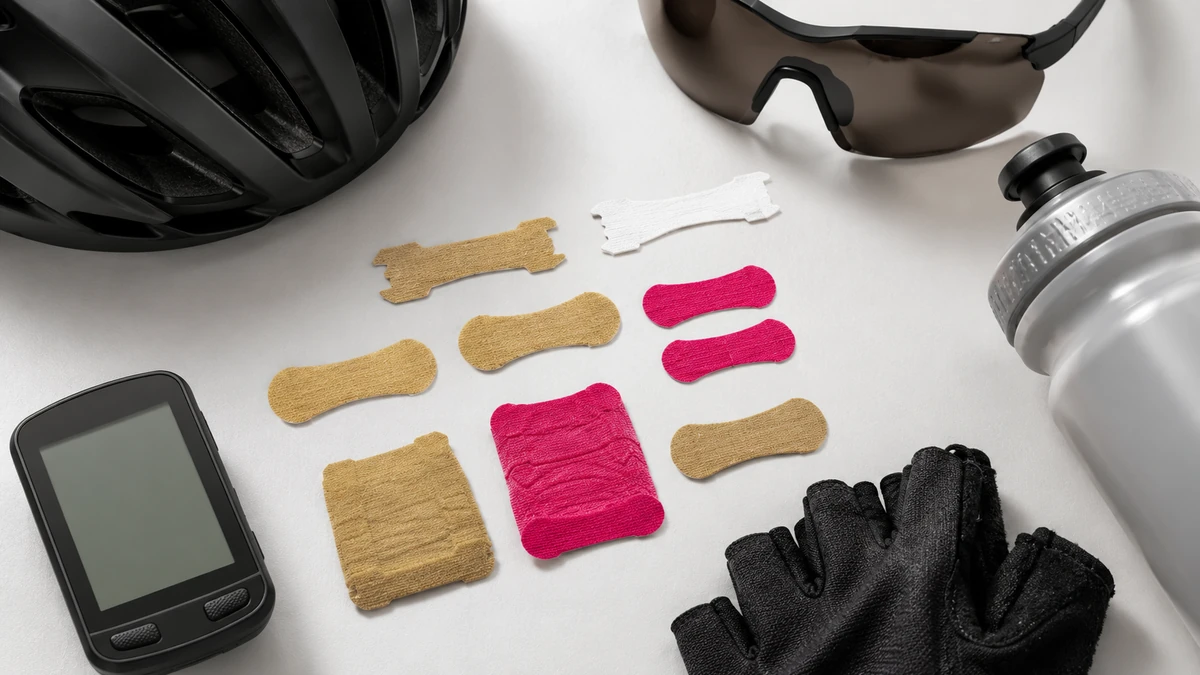
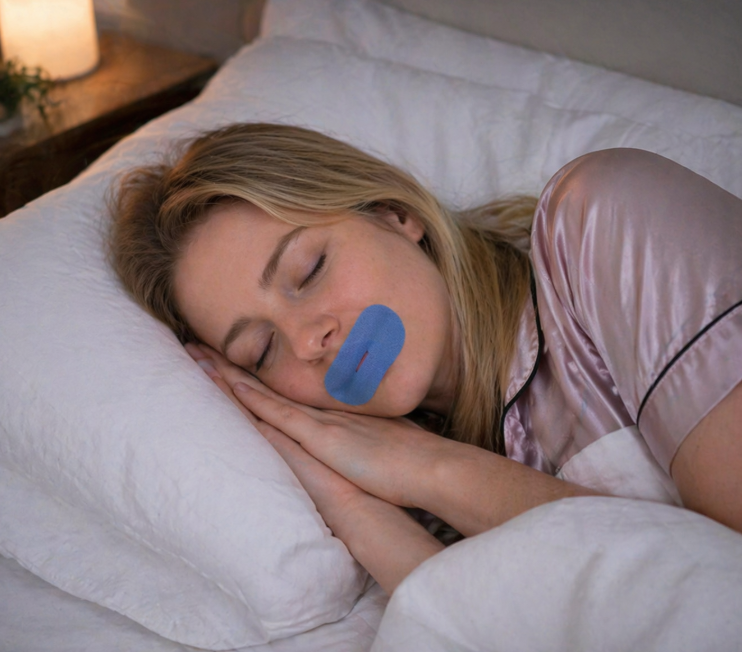
Traditional nasal strips were usually expected to disappear into the face. Neutral colors made sense for products associated primarily with sleep, snoring or congestion. products made mainly for sleep
Sports changes the expectation.
Pogačar’s yellow strip was memorable partly because it did not try to disappear. The same is true of the pink strips visible elsewhere in the peloton. A product sitting directly across the nose can become surprisingly recognizable when color is used deliberately.
That gives sports brands options that mattered far less in the traditional nasal-strip market: team colors, custom graphics, event editions, distinctive shapes and athlete-focused packaging.
The technical requirements are changing at the same time.
A strip intended mainly for sleep may place particular emphasis on overnight comfort and gentle removal. A cycling product has to consider perspiration, sunscreen, heat, movement and the possibility of several hours of continuous wear.
The result is not simply “a stronger sleep strip.”
A well-developed sports version requires a different balance between adhesion, support, comfort, fit and appearance. As more nasal strips appear in cycling, running and other active environments, sports nasal strips are beginning to look like a genuine product segment of their own.
What Should Recreational Cyclists Take From the Trend?
For recreational riders, there is no need to turn a nasal strip into a bigger decision than it is.

If nasal breathing tends to feel restricted during easier riding, trying a strip during a normal training session can answer most practical questions quickly. Does the nose feel more open? Does the strip stay attached after sweating? Does it interfere with glasses? Is the skin comfortable after removal? using a nasal strip correctly
Those answers are more useful than assuming that something worn in the Tour de France must produce a measurable performance gain.
Training, pacing, nutrition, recovery and aerodynamics remain much larger factors in cycling performance. A nasal strip can still earn a place in a rider’s kit if it makes breathing feel more comfortable; it simply does not need to be treated as a secret source of extra watts.
FAQ
What nasal strip did Tadej Pogačar wear?
Pogačar wore a yellow Dopamine Lab nasal strip during the 2026 Tour de France. The strip reportedly came from teammate Adam Yates, who had previously bought Dopamine Lab products in Australia.
Does Dopamine Lab sponsor Tadej Pogačar?
The Tour de France appearance was reported as unsponsored. Pogačar said the strip had been given to him by Adam Yates rather than supplied through a formal endorsement agreement.
Why are colored nasal strips becoming popular in cycling?
Color makes an otherwise small product highly visible in television coverage, photography and social media. At the same time, newer sports-focused strips are being designed around active-use requirements such as sweat resistance, secure adhesion and extended wear.
From a Cycling Trend to Better Sports Nasal Strip Design
What is happening in professional cycling is useful beyond the story of one athlete or one brand.
Active users place different demands on a nasal strip. Sweat resistance, edge stability, flexible support, skin comfort and fit all become more important when a product is worn through training sessions or races. Appearance is becoming part of that brief too.
For brands developing products for runners, cyclists and other active users, that creates room to design a nasal strip around the sports environment from the beginning rather than adapting a standard sleep product afterward.
Athena develops OEM and ODM nasal strips for sports and sleep applications, with customization options covering strip structure, adhesive requirements, colors, graphics and private-label packaging. For more information about custom nasal strips and OEM/ODM development, visit the Athena official website.