Best Wrinkle Patches in 2026: How to Compare Materials, Fit, and Target Areas
Date:2026-09-24
Read:145
source: Zoey
The best wrinkle patches are not necessarily those with the strongest adhesive, the longest ingredient list or the most dramatic claims. The right choice depends on where the lines appear, what you want the patch to do, how long you plan to wear it and how your skin responds to the material.
Silicone forehead patches, adhesive facial patches, hydrogel eye masks and dissolving microcone patches may all be described as wrinkle patches, but they are not interchangeable. Some create an occlusive layer that helps retain moisture, some provide physical support that limits skin folding, and others carry cosmetic ingredients in a targeted format.
For most users, wrinkle patches are best understood as a supplementary skincare product. They may temporarily soften the appearance of fine lines, improve surface hydration or reduce creasing while worn, but they should not be expected to remove deep wrinkles permanently.
How Do Wrinkle Patches Work?
Wrinkle patches generally use one or more of three approaches: physical support, occlusion or targeted ingredient delivery.
A structured adhesive patch holds a small area of skin relatively flat. This may reduce repeated folding while the patch is in place, particularly on areas affected by facial expressions or sleeping position.
A placebo-controlled study involving 39 participants found that topical adhesive pads temporarily reduced measured surface roughness around crow’s feet. However, the observed improvement was limited in duration. The findings support short-term cosmetic smoothing rather than permanent wrinkle removal. The study is available through PubMed.
Silicone and other occlusive patches cover the skin and reduce moisture loss from the surface. The resulting hydration may make superficial lines look temporarily softer after the patch is removed.
Hydrogel and microcone patches take a different approach. They are usually designed to hold cosmetic ingredients against a targeted area. Their performance depends on the finished formulation, patch structure, application time and condition of the user’s skin.
The material and mechanism should therefore match the intended result. A patch chosen for temporary under-eye hydration may be very different from one intended to limit forehead creasing overnight.
How to Compare the Best Wrinkle Patches
A useful comparison begins with the target area and desired result rather than the product name.
| Comparison factor | What to check |
|---|---|
| Material | Silicone, elastic fabric, adhesive tape, hydrogel or dissolving microcones |
| Target area | Forehead, between the brows, crow’s feet, under-eyes, smile lines, neck or chest |
| Fit | Whether the patch follows the facial contour and remains flat around the edges |
| Wear method | Short treatment, several hours, overnight, single use or reusable |
| Skin compatibility | Adhesive strength, residue, breathability and potential sensitivity |
| Evidence | Whether claims apply to the finished patch, one ingredient or another product format |
These factors are more useful than a general “best” label because they show whether a patch actually fits a person’s routine and target area.
The American Academy of Dermatology recommends focusing on one primary skin-aging concern rather than adding several anti-aging products at once. It also advises choosing products suited to the user’s skin type and maintaining realistic expectations.
Silicone Wrinkle Patches for Broad Areas
Silicone wrinkle patches are generally flexible, reusable and designed to sit closely against the skin. Their occlusive structure may help reduce moisture loss and create a more hydrated surface appearance.
They are commonly considered for broad, relatively flat areas such as the forehead, neck or upper chest. A larger patch can cover several lines at once and may contain no active skincare ingredients, which can simplify the routine for people who already use separate creams or serums.
Reusable silicone patches require maintenance. Oils, cream residue, dust and incomplete cleaning may reduce adhesion. Before choosing one, check whether it should be applied to clean, dry skin or over skincare, how it should be washed, how many uses are recommended and how it should be stored.
A silicone patch that is too thick or too large may lift on curved or highly mobile areas. For smaller expression lines, a localized adhesive shape may provide better contact.
Adhesive Facial Patches for Forehead and Expression Lines
Adhesive wrinkle patches may use paper, cotton, nonwoven fabric, elastic fabric or medical-grade adhesive tape. They depend more heavily on mechanical support, flexibility and adhesive performance than on serum delivery.
These formats can be useful for localized areas because they can be made in different sizes and shapes. Square, cross-shaped, V-shaped, curved and rectangular patches may be designed for forehead lines, the area between the brows, facial folds or broader treatment zones.
Athena’s anti-wrinkle patch range presents material and shape options for different facial applications, including silicone, elastic fabric, cotton, bamboo fiber, adhesive tape, curved shapes, rectangular shapes and localized patches.
The strongest adhesive is not automatically the best choice. A wrinkle patch should stay in place for the recommended period while still allowing controlled removal. Excessive tack may cause discomfort, while insufficient tack can allow the edges to lift during sleep or facial movement.
A suitable patch should balance:
- Initial adhesion during application;
- Resistance to edge lifting;
- Flexibility during facial movement;
- Comfortable removal;
- Minimal adhesive residue.
People with a history of reactions to tapes or personal-care adhesives should review the material information carefully. Terms such as “skin-friendly” or “hypoallergenic” do not guarantee that no reaction will occur.
Hydrogel Patches for Short-Term Hydration
Hydrogel patches are generally designed for a shorter skincare session. Their gel structure holds water and cosmetic ingredients against the skin and often provides a cooling sensation.
They are frequently used around the eyes, where dehydration may make fine lines look more visible. Hydrogel patches may be helpful before makeup or when the objective is temporary hydration rather than overnight mechanical support.
Fit remains important. A highly saturated under-eye patch may slide when the wearer is standing or moving. A suitable shape should follow the lower-eye contour without sitting too close to the lash line.
When comparing hydrogel wrinkle patches, examine the recommended treatment time, complete ingredient list, patch dimensions and intended cosmetic concern. A product intended for hydration, puffiness or dark circles should not automatically be treated as a long-term wrinkle treatment.
Hydration can temporarily soften the appearance of fine lines, but a short-wear eye patch cannot be assumed to change deeper expression lines permanently.
Microcone and Microneedle Wrinkle Patches
Dissolving microcone patches contain small projections designed to press against the outer skin and release a cosmetic formulation in a concentrated area. They require a different evaluation from flat silicone or fabric patches.
The performance of a microcone patch depends on factors such as:
- Cone material and geometry;
- Dissolution behavior;
- Active ingredient composition;
- Backing and adhesive structure;
- Application pressure and wear time;
- Packaging and storage conditions.
Results from one tested formulation should not be applied automatically to every product described as a microneedle or microcone patch.
Consumers should also distinguish cosmetic microcone patches from professional microneedling devices. The FDA explains that the regulatory status of a microneedling product depends on its needle characteristics, intended use and whether it is designed to affect the structure or function of tissue. Professional or powered microneedling devices should therefore not be treated as equivalent to every consumer wrinkle patch. The FDA explains these distinctions in its microneedling guidance.
Before choosing a microcone wrinkle patch, confirm what the projections are made from, which ingredients they contain, how long they take to dissolve, where the patch may be placed and whether the supplier has evidence for the complete product.
Best Wrinkle Patches for Different Facial Areas
Material alone does not determine whether a patch will fit comfortably. The patch shape must match the movement and contour of the target area.
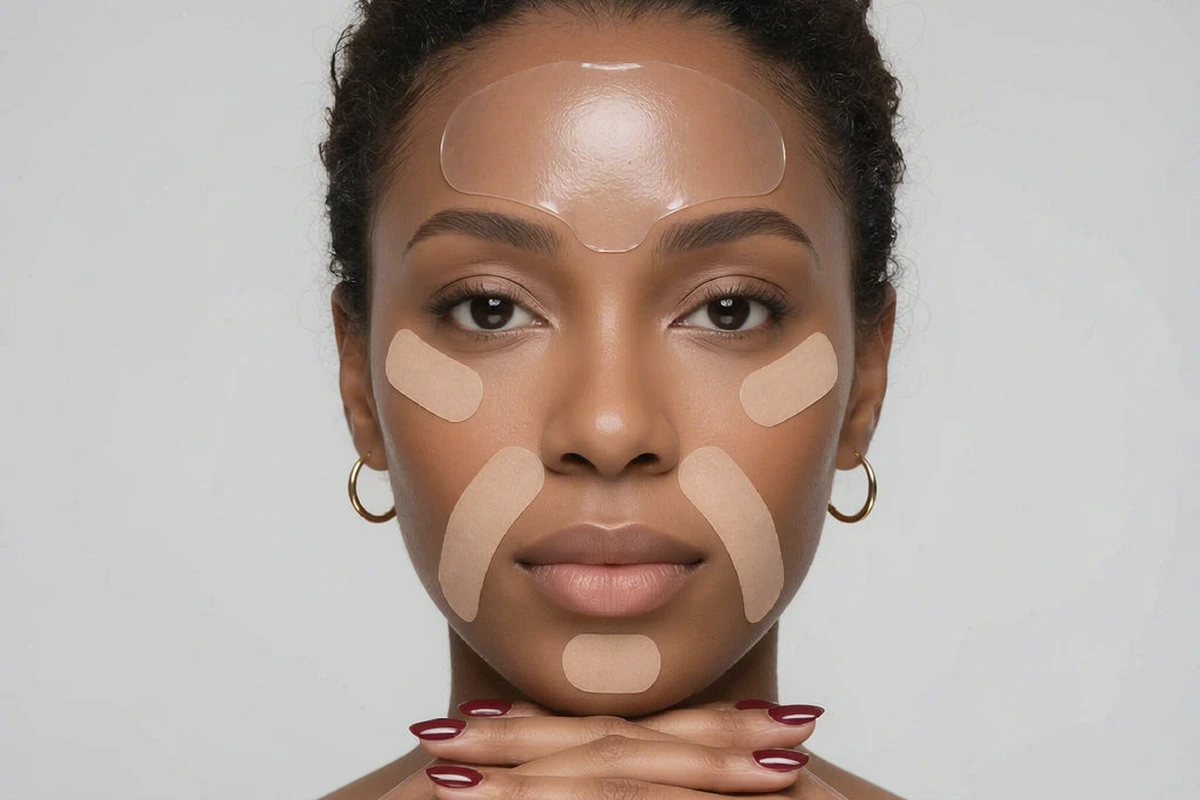
Forehead Wrinkle Patches
A forehead patch generally needs enough width to cover horizontal lines without entering the hairline. Larger silicone or elastic patches may suit broad forehead coverage, while smaller adhesive shapes can target individual lines.
The patch should lie flat across the center and edges without pulling the eyebrows upward. People who sleep on their side or stomach should also consider whether the edges are likely to rub against a pillow.
Patches for Frown Lines
The area between the eyebrows is smaller and more mobile than the center of the forehead. A compact vertical, cross-shaped or V-shaped patch may fit this area more precisely than a broad sheet.
Correct positioning matters. An off-center patch may create uneven tension and may not remain flat as facial expressions change.
Under-Eye and Crow’s-Feet Patches
Under-eye skin requires a patch with a gentle curve and controlled adhesion. The patch should not touch the lash line or sit closer to the eye than the product instructions allow.
Hydrogel formats may suit short-term hydration, while localized adhesive or microcone patches may be positioned for fine lines near the outer eye. These formats should not be treated as identical simply because they share a similar crescent shape.
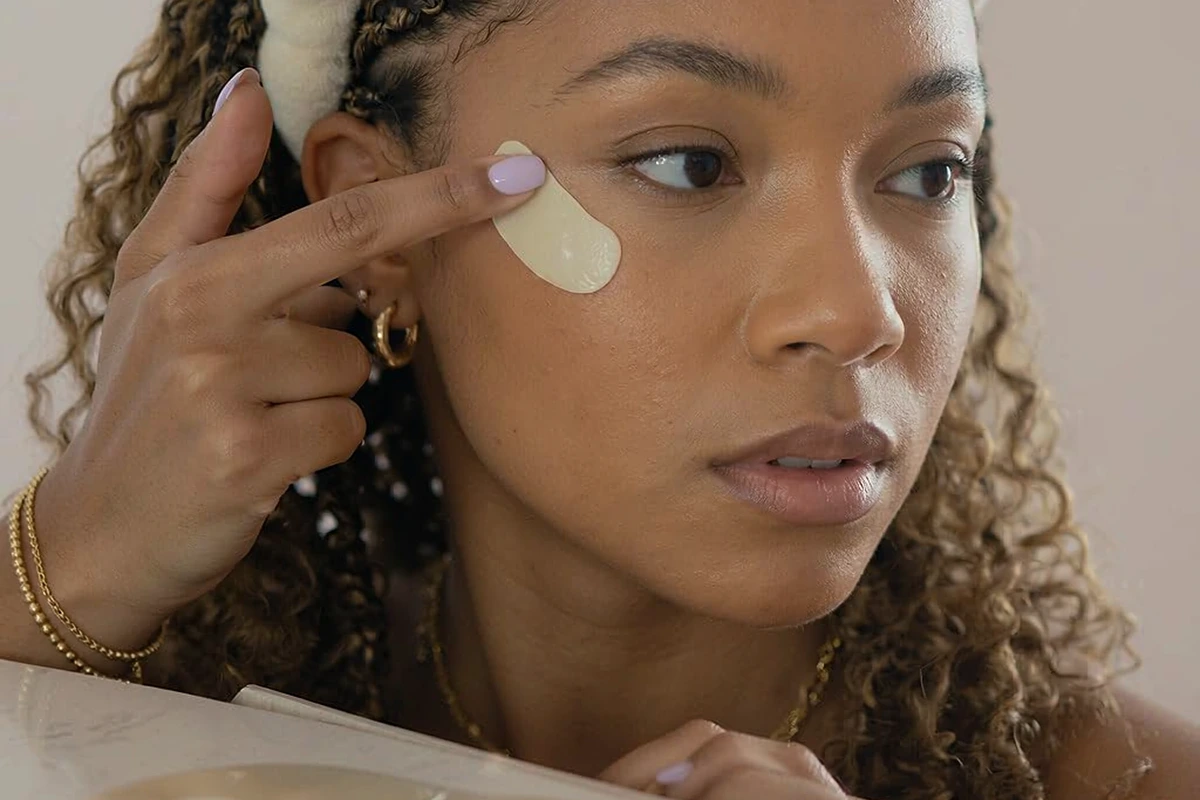
Smile-Line and Facial-Fold Patches
Smile lines and nasolabial folds move frequently during talking, eating and sleeping. A suitable patch needs enough flexibility to follow the contour without folding or lifting.
Smaller curved or localized patches may provide better contact than a rigid sheet. Users should evaluate whether the product remains comfortable during normal movement rather than stretching the skin tightly during application.
Neck and Chest Wrinkle Patches
Neck and chest patches usually cover a larger surface. They must remain in contact despite sleeping position, clothing, perspiration and body movement.
Broad silicone or elastic formats may be suitable, but long wear can also increase heat and occlusion. Product dimensions and recommended wear time should be reviewed before use.
Athena’s facial care solutions show how localized patch formats can be used for different facial-care areas and product applications.
Fit and Adhesion Matter More Than Maximum Tack
Even a well-designed wrinkle patch cannot perform as intended if it does not remain in consistent contact with the target area.
Unless the product says otherwise, the application area should generally be clean and dry. Oil, perspiration, makeup, sunscreen and heavy skincare products may interfere with some adhesives. Other reusable systems may be designed for use with compatible skincare underneath, so the supplied instructions should take priority.
Apply the patch without aggressively stretching the skin. Press it from the center toward the edges and check that the full surface lies flat. If the patch wrinkles immediately, crosses the hairline or lifts during normal movement, it may be the wrong size, material or shape.
Removal is also part of the product experience. A patch that holds securely but causes excessive pulling during removal may not be suitable for frequent use. Follow the supplied instructions, especially if warm water or a damp cloth is recommended to loosen the adhesive.
Persistent redness, itching, burning, swelling, broken skin or pain is a reason to stop using the product. People with an existing skin condition or a history of adhesive reactions may need professional guidance before adding an overnight patch.
Single-Use vs. Reusable Wrinkle Patches
Single-use and reusable patches should be compared by use pattern rather than package price alone.
Single-use adhesive or hydrogel patches can be convenient because every application starts with a new surface. However, ongoing use requires repeated purchases and generates more packaging and product waste.
Reusable silicone patches may cost more initially but can provide multiple applications when cleaned and stored correctly. Their practical value depends on how long they maintain their shape and adhesion under the manufacturer’s instructions.
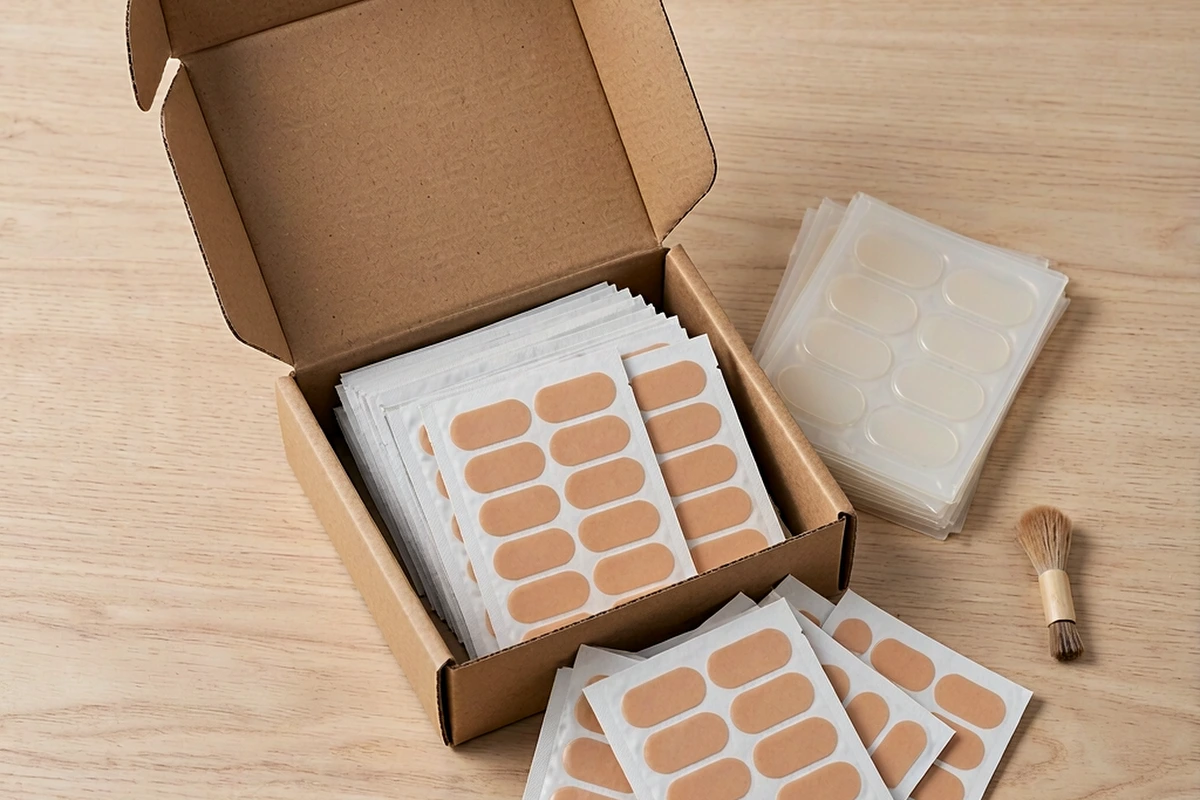
Microcone patches are generally single-use because their projections dissolve or change during application. They may also contain fewer pieces per package, so the cost should be compared per target area and treatment rather than per box.
For brands developing their own range, the choice between single-use and reusable formats also affects packaging, instructions, storage, sample evaluation and consumer education. Athena’s customization capabilities provide an overview of product-development support for different patch structures and packaging requirements.
Can Wrinkle Patches Permanently Remove Wrinkles?
Wrinkle patches should generally be viewed as a temporary or supplementary approach rather than a permanent correction for every type of wrinkle.
Occlusion and hydration may make superficial lines appear softer. Mechanical support may reduce visible creasing during wear. A product-specific formulation may provide additional benefits when supported by suitable evidence. However, these mechanisms do not establish that every patch can permanently change deep static wrinkles, sun damage or skin laxity.
Temporary smoothing can still be useful. Someone may want a more hydrated appearance before makeup, less visible sleep creasing in the morning or a targeted step within an existing skincare routine. The important point is to match expectations to the product mechanism.
The American Academy of Dermatology recommends moisturizer and broad-spectrum SPF 30 or higher sunscreen as foundational anti-aging products. It also advises consumers to focus on one primary concern and remain cautious about exaggerated promises of dramatic or immediate change. See the AAD guidance on selecting anti-aging products.
Persistent wrinkles, significant sun damage and changes in skin laxity are different concerns from temporary surface dehydration. People seeking longer-lasting changes may need advice from a qualified dermatologist.
How to Choose the Right Wrinkle Patch
Start by identifying the area you want to cover and the result you expect.
Choose a reusable silicone format when you want broad occlusive coverage and are willing to clean and store the patch. Consider a shaped fabric or adhesive patch when localized support, flexibility and overnight hold are more important. Choose hydrogel when the main objective is short-term hydration. Evaluate microcone patches separately when targeted ingredient delivery is the priority.
Before buying, confirm:
- The material touching the skin;
- The intended facial area;
- The recommended wear time;
- The application and removal method;
- Compatibility with other skincare products;
- Whether the product is single-use or reusable;
- The evidence supporting the finished product.
The best wrinkle patches are those that fit the correct area, remain comfortable for the instructed wear period and make claims that match their materials and available evidence.
Find the Right Wrinkle Patch for Your Market
The right wrinkle patch should match its target area, intended wear time, material requirements and expected user experience. Consumers should follow the instructions supplied with the product, while brands should verify specifications, samples, testing documents, packaging options and applicable market requirements before confirming a format.
If you are developing a wrinkle-care patch and need to compare available materials, shapes or packaging directions, contact Athena to discuss your project requirements.
Sections
11 June 2026
Nose strips fit in a modern workout gear checklist as a small, stick-on accessory for breathing comfort and training preparation. A complete workout kit is no longer limited to shoes, clothing, and a water bottle. Many active users also prepare small items such as sports tape, towels, cooling products, recovery patches, and other wearable accessories that support comfort before, during, or after training. Read More