Hydrocolloid vs Microdart Pimple Patches: Which One Should You Choose?
Date:2026-11-12
Read:46
source: Zoey
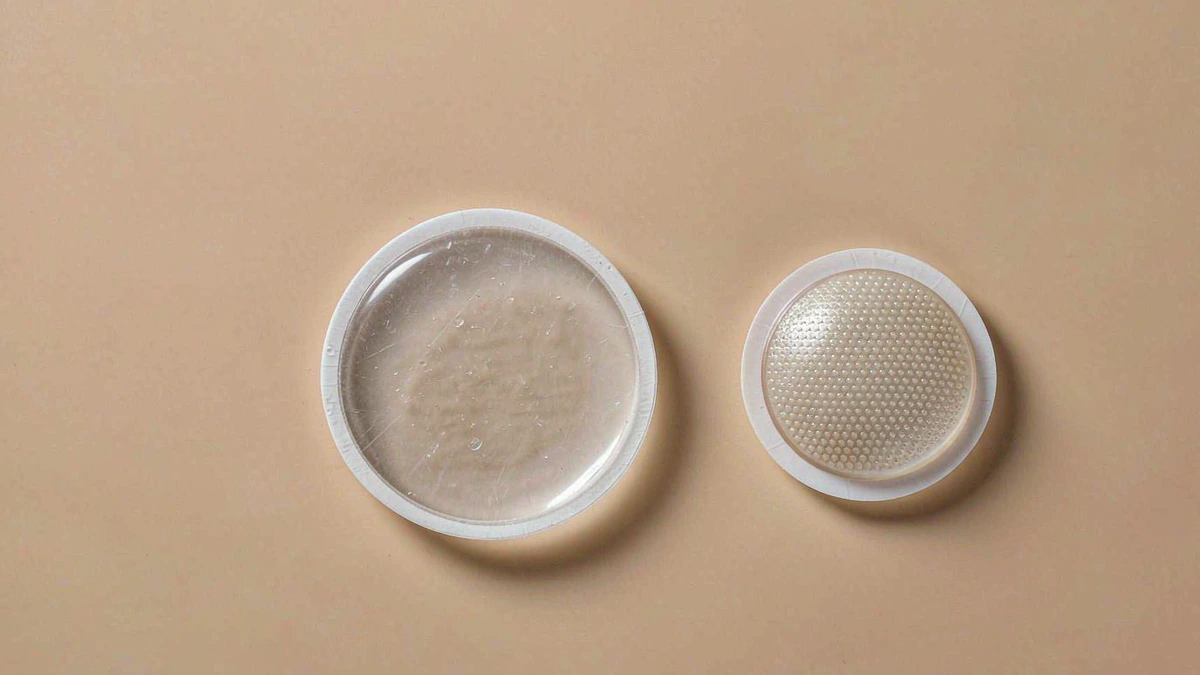
Not all pimple patches are designed to work the same way. Some absorb fluid from surface-level blemishes, while others use tiny dissolving projections to deliver selected skincare ingredients. Choosing between them depends largely on the type of breakout and its stage of development.
When comparing hydrocolloid vs microdart pimple patches, the most important difference is not how the patches look but what they are designed to do. Understanding their functions, ingredients, and limitations can help you avoid using the wrong patch for a particular blemish.
Quick Answer: Which Pimple Patch Works for Which Type of Blemish?
Quick Answer
Hydrocolloid patches are generally better suited to whiteheads and blemishes that have opened or released fluid. They absorb moisture, cover the affected area, and help protect the skin from further picking. Microdart patches are designed for earlier-stage blemishes that have not developed a visible whitehead. Their tiny dissolving projections can deliver selected ingredients into the outer layers of skin, although their effectiveness depends on the product and the available evidence remains limited.
Neither option is a reliable standalone treatment for deep cystic acne. Large, painful, or persistent breakouts may require professional dermatological care.
The easiest way to choose is to look at the blemish first: if fluid is accessible near the surface, a hydrocolloid patch may be more useful. If the bump is still closed, a purpose-designed microdart patch may be worth considering, but results are not guaranteed.
Hydrocolloid vs Microdart Patches: What's the Difference?
Both products are applied directly to a blemish, but their primary functions are different. Hydrocolloid patches manage surface moisture and provide physical protection, while microdart patches are designed around localized delivery of selected ingredients.
These differences explain why two patches with similar shapes and sizes may serve different purposes. Neither technology should automatically be described as superior in every situation.
| Comparison | Hydrocolloid Patches | Microdart Patches |
|---|---|---|
| Main technology | Moisture-absorbing hydrocolloid material | Tiny dissolving microprojections |
| Primary purpose | Absorb fluid and protect the blemish | Deliver selected ingredients into superficial skin layers |
| Common use | Whiteheads, opened or draining pimples | Early-stage bumps without a visible head |
| Active ingredients | Not required in plain hydrocolloid products | Often incorporated into dissolving projections |
| Visible action | May swell or turn white as fluid is absorbed | Projections gradually dissolve after application |
| Main limitation | Limited direct effect on deep, closed blemishes | Clinical effectiveness varies; robust acne-specific evidence is limited |
| Selection priority | Absorption, adhesion, flexibility, skin protection | Formulation, projection design, skin tolerance, supporting evidence |
How Do Hydrocolloid Pimple Patches Work?
Hydrocolloid pimple patches contain moisture-absorbing materials that form a gel as they take up fluid. This process helps manage drainage from surface blemishes while creating a protective covering over the area.
The patch also acts as a physical barrier, making it harder to touch or pick at the spot. This can be useful because repeated picking may increase irritation and the risk of unwanted marks.
Hydrocolloid patches are most useful when moisture or drainage is available near the skin surface. They do not extract material from deep beneath intact skin, so their ability to improve a closed, painful bump is limited.
How Do Microdart Pimple Patches Work?
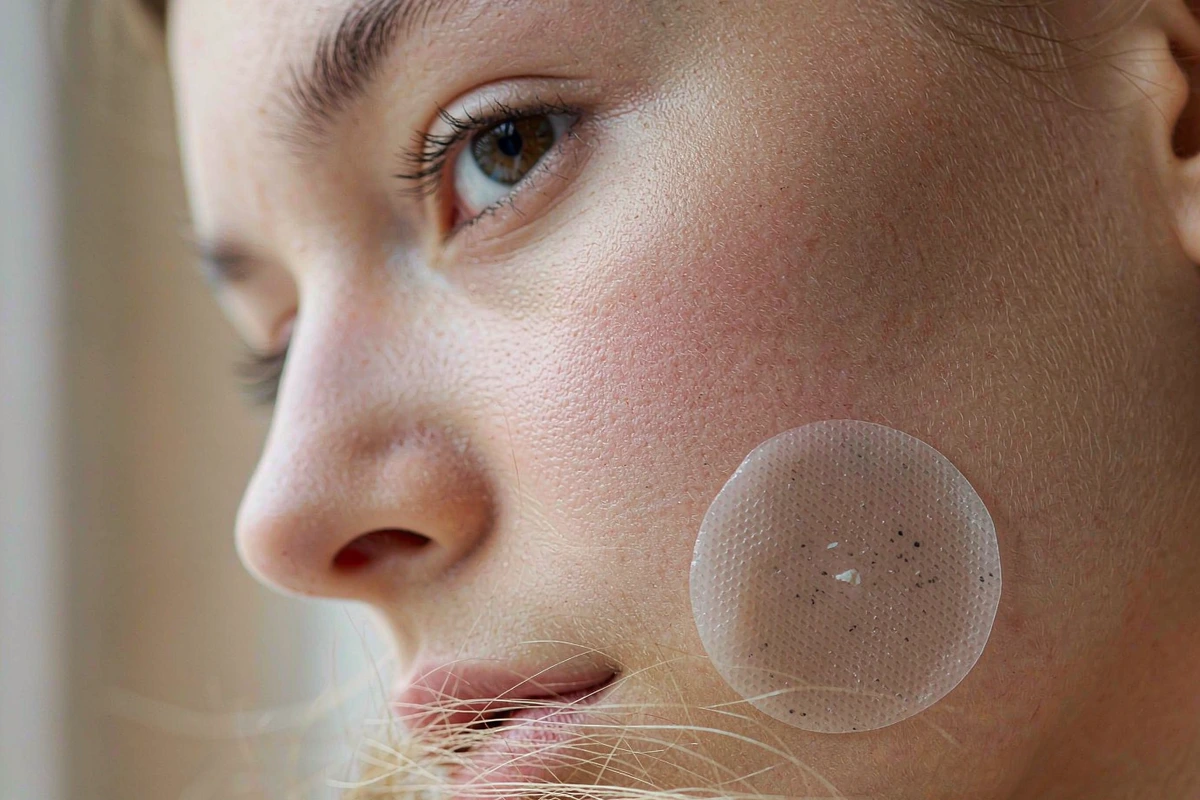
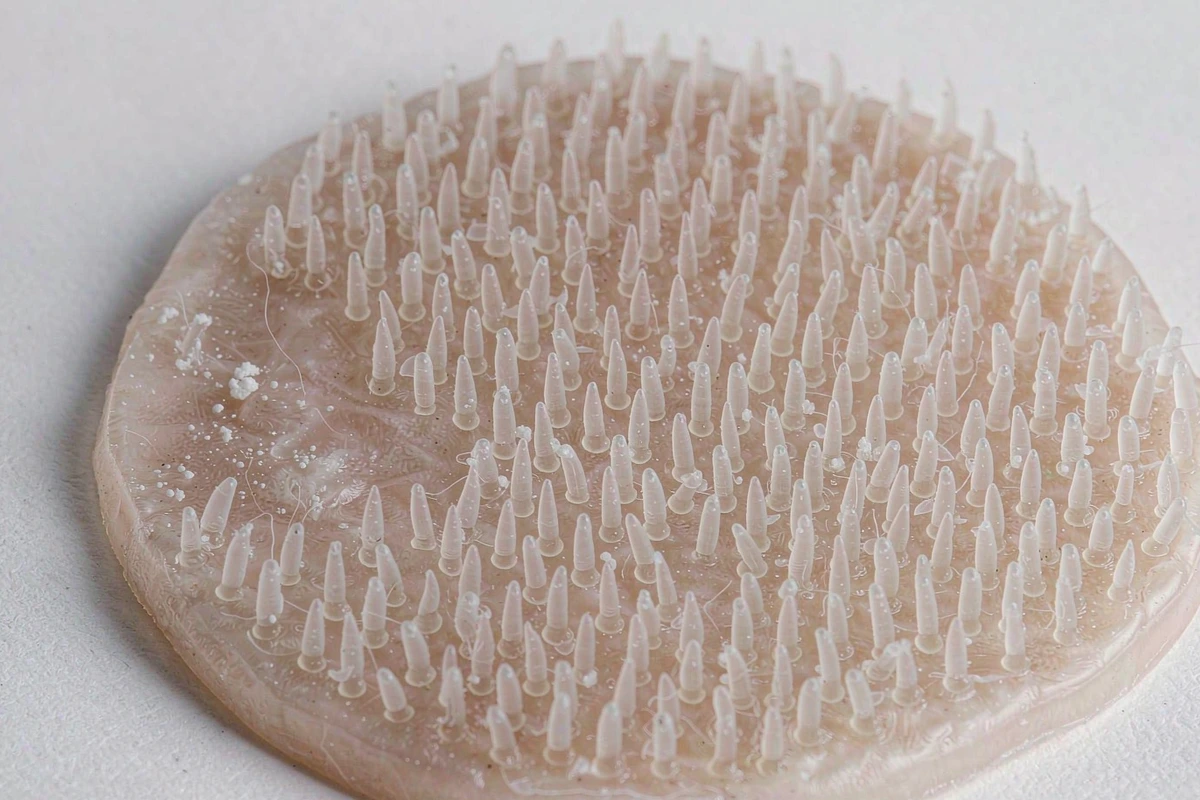
Microdart pimple patches contain arrays of extremely small projections, often made with dissolvable materials. These projections are designed to enter the superficial skin layers and release incorporated ingredients as they dissolve.
Depending on the formulation, a microdart patch may contain ingredients such as salicylic acid, hyaluronic acid, or niacinamide. The actual delivery behavior depends on projection design, material composition, and ingredient concentration.
Unlike a conventional hydrocolloid patch, the main purpose of a microdart structure is not to absorb fluid from an open blemish.
However, ingredient delivery should not be confused with proven clinical effectiveness. A patch's ability to release ingredients does not automatically mean it can resolve deep nodules, cysts, or severe inflammatory acne.
Which Pimple Patch Should You Use at Each Acne Stage?
The stage and appearance of a blemish are more useful selection factors than choosing whichever patch promises the fastest result.
A surface whitehead, an early bump beneath intact skin, and a deep painful cyst are different conditions. They should not all be treated as interchangeable patch-use situations.
Pimple Patch Selection Matrix
The matrix is a practical selection guide, not a diagnosis. Individual skin conditions and product formulations can change what is appropriate.
| Blemish condition | Suggested option | Why | Important limitation |
|---|---|---|---|
| Whitehead with visible surface fluid | Hydrocolloid patch | Absorbs available moisture and covers the spot | Does not address the underlying causes of acne |
| Opened or draining pimple | Appropriate hydrocolloid patch | Provides protection and helps manage drainage | Avoid use on deeply infected or concerning wounds without medical advice |
| Early bump without a visible head | Consider a purpose-designed microdart patch | Designed for localized ingredient delivery | Improvement is not guaranteed |
| Deep, painful cyst or nodule | Dermatological assessment | May require medical acne treatment | Neither patch is a reliable substitute |
| Blackheads | Neither as the primary option | Blackheads involve blocked follicles rather than surface drainage | Consider established acne-care approaches |
| Actively irritated or damaged skin | Avoid unsuitable patches and assess the skin first | Adhesives and active ingredients may worsen irritation | Seek advice when reactions are significant |
Are Hydrocolloid Patches Better for Whiteheads?
Hydrocolloid patches are generally a sensible choice when a whitehead has visible fluid near the surface or has begun to drain. Their absorbent material can take up moisture while shielding the area from touching and friction.
A patch may become white or swollen as the hydrocolloid absorbs fluid and forms a gel. This visible change reflects moisture absorption; it does not necessarily mean the entire blemish has been removed or healed.
For an intact whitehead without accessible fluid, the immediate effect may be less noticeable. It is better to follow the product instructions than to squeeze or puncture the blemish simply to make a patch work.
Can Microdart Patches Help with Blind Pimples?
Microdart patches for blind pimples are designed for early bumps that have not yet developed a visible head. Because these lesions are covered by intact skin, ordinary fluid-absorbing hydrocolloid patches may have little moisture to absorb.
Microdart products offer a different approach by incorporating ingredients into dissolving projections. This makes them a potential option for selected early-stage blemishes, depending on the specific formulation.
Still, a blind pimple is not necessarily the same as deep cystic acne. Large, painful, recurring, or persistent lumps may need medical treatment, and consumers should not expect a cosmetic patch to resolve every under-the-skin breakout.
Are Microdart Patches More Effective Than Hydrocolloid Patches?
There is no reliable basis for saying that one patch technology is universally more effective.
The two approaches are intended for different situations, and the evidence supporting their use is not equally developed. Effectiveness also depends on which outcome is being measured: surface fluid absorption, reduction in redness, appearance, discomfort, or longer-term acne control.
What Does the Research Say About Hydrocolloid Patches?
Hydrocolloid dressings have a long history in wound care, where moisture management and physical protection are established functions.
For blemish patches, dermatologists generally consider them most useful for opened or draining surface pimples. Some small studies suggest potential improvements in selected acne-related outcomes, but research involving acne patches is more limited than research on established acne medications.
This distinction matters. Evidence that a material absorbs wound fluid does not prove that it treats every kind of acne or prevents future breakouts.
Hydrocolloid patches are best understood as a localized supportive option, particularly when surface fluid management and protection are needed.
What Evidence Supports Microdart Pimple Patches?
Dissolving microneedle technology has been investigated as a method of delivering ingredients through the outer skin barrier. Researchers have explored different materials, active substances, and projection designs for topical delivery.
However, findings from general microneedle-delivery research should not automatically be treated as clinical proof for commercially available microdart acne patches.
Acne-specific results depend on the exact ingredients, dose, patch construction, application method, and study design. Large, well-controlled studies comparing consumer microdart patches directly with hydrocolloid patches remain limited.
For consumers, this means treating rapid-clearance claims cautiously. For brands, formulation testing and appropriate evidence are necessary before making specific acne-treatment claims.
How Do Ingredients Affect Pimple Patch Selection?
The material structure determines much of a patch's basic function, but added ingredients can further distinguish one product from another.
Plain hydrocolloid patches may work without an added acne-treatment active ingredient. Microdart patches more commonly incorporate selected compounds into the dissolving structure, although formulations vary.
Ingredients should be evaluated according to their intended role, concentration, compatibility, and skin tolerance rather than the number of actives listed on the packaging.
| Ingredient | Common role in skincare | Important consideration |
|---|---|---|
| Salicylic acid | Exfoliation and acne care | Concentration, irritation risk, and applicable product claims |
| Hyaluronic acid or sodium hyaluronate | Hydration and dissolvable-material applications | Molecular form, formulation, and delivery design |
| Niacinamide | Skin-conditioning and barrier-support applications | Concentration, stability, and finished-product evidence |
| Centella asiatica-derived ingredients | Soothing-focused skincare formulations | Extract composition and supporting evidence |
Do Salicylic Acid Microdart Patches Work Differently?
Salicylic acid is a common acne-care ingredient associated with exfoliation and helping keep pores clear. Some microdart products incorporate it into a dissolving structure instead of relying solely on conventional topical application.
Other ingredients found in the microdart market include hyaluronic acid, which is commonly used for hydration, and niacinamide, which is often included in formulas designed around skin appearance and barrier support.
An ingredient's established role in skincare does not automatically prove its effectiveness when delivered through a particular patch.
Should Sensitive Skin Use Hydrocolloid or Microdart Patches?
For sensitive skin, a plain hydrocolloid patch with a suitable adhesive and minimal additional ingredients may be simpler to evaluate than a product containing several actives.
However, hydrocolloid adhesives can still cause irritation, and some users may react to the backing or other components.
Microdart patches require additional consideration because their projections and incorporated ingredients may produce discomfort or irritation in susceptible users.
Avoid applying either type over severely irritated or infected skin unless instructed by a healthcare professional. Discontinue use if significant redness, swelling, itching, or pain develops.
How Should You Apply and Remove Different Pimple Patches?
Although application instructions vary by product, both patch types generally require a suitable skin surface and careful handling.
Before application, cleanse and dry the intended area according to the manufacturer's instructions. Avoid touching the adhesive or microdart surface unnecessarily, as this can affect placement or damage the projections.
A hydrocolloid patch should be applied smoothly without stretching the surrounding skin. Follow the product's stated wear time and removal instructions, particularly if the patch is covering a previously opened blemish.
For microdart patches, correct pressure and contact time may matter because the projections need to engage with the skin as designed. Never assume that instructions for one brand apply to another, as projection structures and formulations can differ.
Remove either product carefully. If the adhesive pulls excessively or the skin becomes irritated, stop using it.

How Does Athena Customize Hydrocolloid and Microdart Acne Patches?
For skincare brands, choosing between hydrocolloid and microdart technologies involves more than consumer-facing claims. Materials, formulation feasibility, patch design, packaging, and target-market requirements all influence the final product.
Athena offers OEM/ODM acne patch solutions covering traditional hydrocolloid designs and microneedle-based products, with customization options for materials, shapes, sizes, selected ingredients, and packaging.
These capabilities allow brands to develop different product concepts rather than treating every pimple patch as the same type of skincare accessory.

What Can Brands Customize in Hydrocolloid Patches?
Hydrocolloid patch development can involve material selection, patch dimensions, shapes, surface appearance, backing flexibility, and adhesive characteristics.
A brand focused on discreet daytime use may prioritize a thin, transparent appearance and comfortable fit. Another brand developing an overnight patch may place greater emphasis on suitable coverage and adhesion.
Athena also offers customized shapes and packaging formats, enabling brands to coordinate product design with their intended market positioning.
The final specification should be established through sample evaluation, with particular attention to absorption, adhesion, flexibility, and removal performance.
What Should Brands Check When Developing Microdart Patches?
Microdart development involves additional considerations because the delivery structure and incorporated formula must function together.
Brands should discuss the intended ingredients, proposed patch format, skin-contact requirements, and available technical documentation during the development process.
Important evaluation areas include projection structure, formulation compatibility, dissolution behavior, application characteristics, finished-product consistency, and the evidence required for proposed claims.
Athena provides custom formulation and design options for microneedle acne patches. Specific ingredient combinations, performance targets, and manufacturing requirements should be confirmed for each project rather than assumed from another brand's product.
Develop Your Own Hydrocolloid or Microdart Acne Patch Line
Athena supports custom acne patch development with options for materials, active ingredients, shapes, sizes, and private-label packaging.
Explore the available product solutions and discuss which technology best fits your intended skincare range.
Frequently Asked Questions About Hydrocolloid and Microdart Patches
1. Can I use a hydrocolloid patch after removing a microdart patch?
It may be appropriate to use a hydrocolloid patch later if the blemish has developed surface drainage and the skin is suitable for adhesive contact. However, the products should not automatically be used one after another. Follow the specific instructions for each product, allow irritated skin to recover, and avoid layering treatments without considering their ingredients.
2. Can microdart pimple patches remove deep cystic acne?
Microdart patches are not a proven substitute for medical treatment of deep cystic acne. Their ingredient-delivery design may suit certain early-stage blemishes, but large or painful cysts develop deeper in the skin and may require prescription treatment. Persistent, recurrent, or worsening lesions should be assessed by a dermatologist.
3. Can I wear hydrocolloid and microdart patches overnight?
Some products are designed for several hours of wear or overnight use, but instructions vary between formulations and brands. The correct duration depends on adhesive performance, ingredients, and patch design. Do not use another manufacturer's recommended wear time as a universal rule, and remove the patch if irritation or unusual discomfort develops.
4. Are microdart patches painful to apply?
Many consumer microdart products are designed with very small projections and may cause only mild pressure or a brief prickling sensation. However, comfort varies with projection design, skin condition, and individual sensitivity. Significant pain, persistent redness, or swelling should not be considered a normal sign that the patch is working.
5. Can hydrocolloid patches help prevent acne scars?
Hydrocolloid patches may help protect a blemish from repeated picking, which can contribute to further skin injury. However, they should not be considered a guaranteed method of preventing scars or treating existing acne scars. The risk of scarring also depends on acne severity, inflammation, and individual healing responses.
6. Are microdart patches the same as microneedling treatments?
No. Consumer microdart patches generally use small, localized arrays of projections intended for a specific product formulation. Professional microneedling procedures involve different equipment, treatment depths, indications, and clinical considerations. Results and safety evidence from professional procedures should not automatically be applied to cosmetic microdart patches.
7. Can you use pimple patches with other acne treatments?
Compatibility depends on the patch, topical medication, and condition of the skin. Some active treatments may increase dryness or irritation, while creams and gels can interfere with patch adhesion. Follow the instructions for each product and consult a dermatologist when using prescription acne medication or treating persistent inflammatory breakouts.
Conclusion
Hydrocolloid and microdart pimple patches serve different purposes. Hydrocolloid patches are generally better suited to surface blemishes where moisture absorption and protection are useful, while microdart patches are designed for localized ingredient delivery to selected early-stage bumps.
Neither technology should be treated as a universal solution for acne. Choosing the right patch means considering the blemish stage, formulation, skin tolerance, and quality of the supporting evidence.
For skincare brands, the same distinction provides a useful starting point for developing product lines with clear functions, appropriate materials, and well-supported claims.