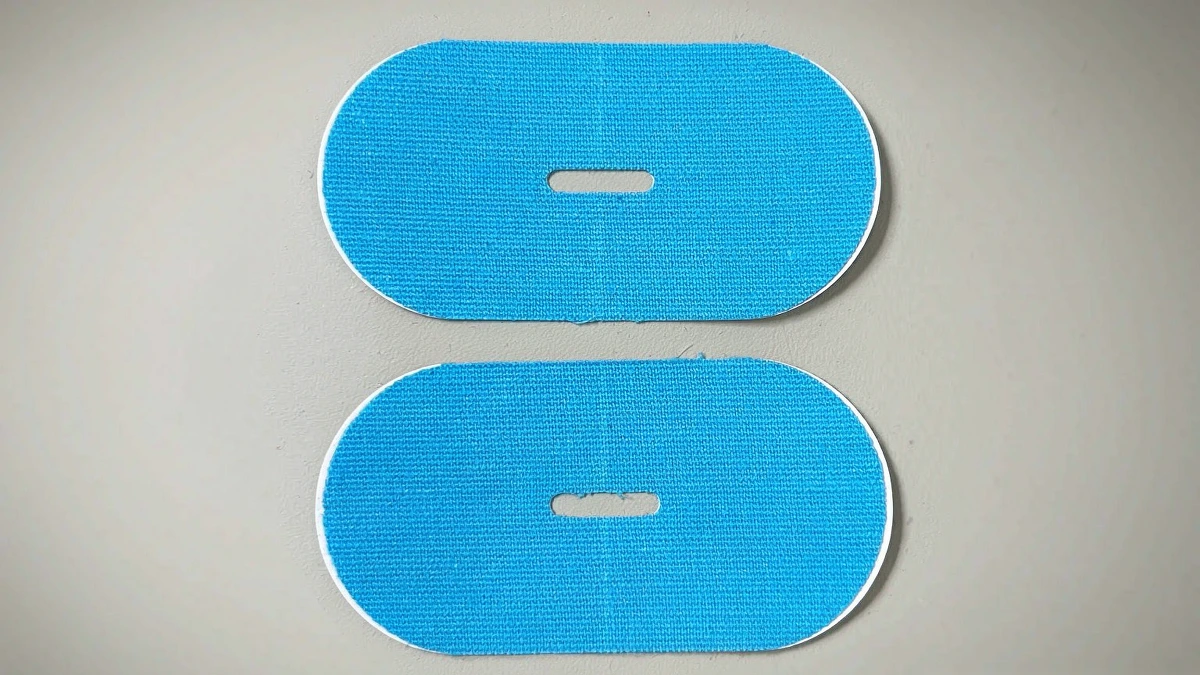
Pimple Patch Sheets vs Individual Patches: Which to Use?
Date:2026-10-28
Read:41
source: Zoey
If you only have one pimple, a small round patch is usually enough to cover it. But what happens when several breakouts appear across your forehead, cheek, or jawline? Applying individual patches to every spot can become inconvenient, especially if the affected area is relatively large.
That's why some people consider pimple patch sheets, larger hydrocolloid patches, or cut-to-size materials instead of standard acne patch dots. The idea is straightforward: cover multiple nearby blemishes with one piece rather than several small ones.
However, larger coverage isn't always the better choice. The location of your breakouts, the type of acne, how well the material adheres, and the amount of unaffected skin being covered all matter.
Quick Answer
Use pimple patch sheets for several nearby surface blemishes when a larger patch fits comfortably and stays attached. Individual patches are usually better for isolated spots, curved areas, or targeted coverage.
Key Takeaways
- Pimple patch sheets can be convenient for clusters of blemishes in the same area, while individual dots work well for isolated pimples.
- Larger hydrocolloid patches do not necessarily absorb more fluid from each blemish or treat deep acne more effectively.
- Cut-to-size hydrocolloid sheets and ready-made acne patches may differ in adhesive properties, thickness, and intended use.
- The cheapest option per package is not always the most economical option per application.
- Patch size, shape, flexibility, and edge adhesion can matter as much as the amount of skin covered.
Pimple Patch Sheets vs Individual Patches: What's the Difference?
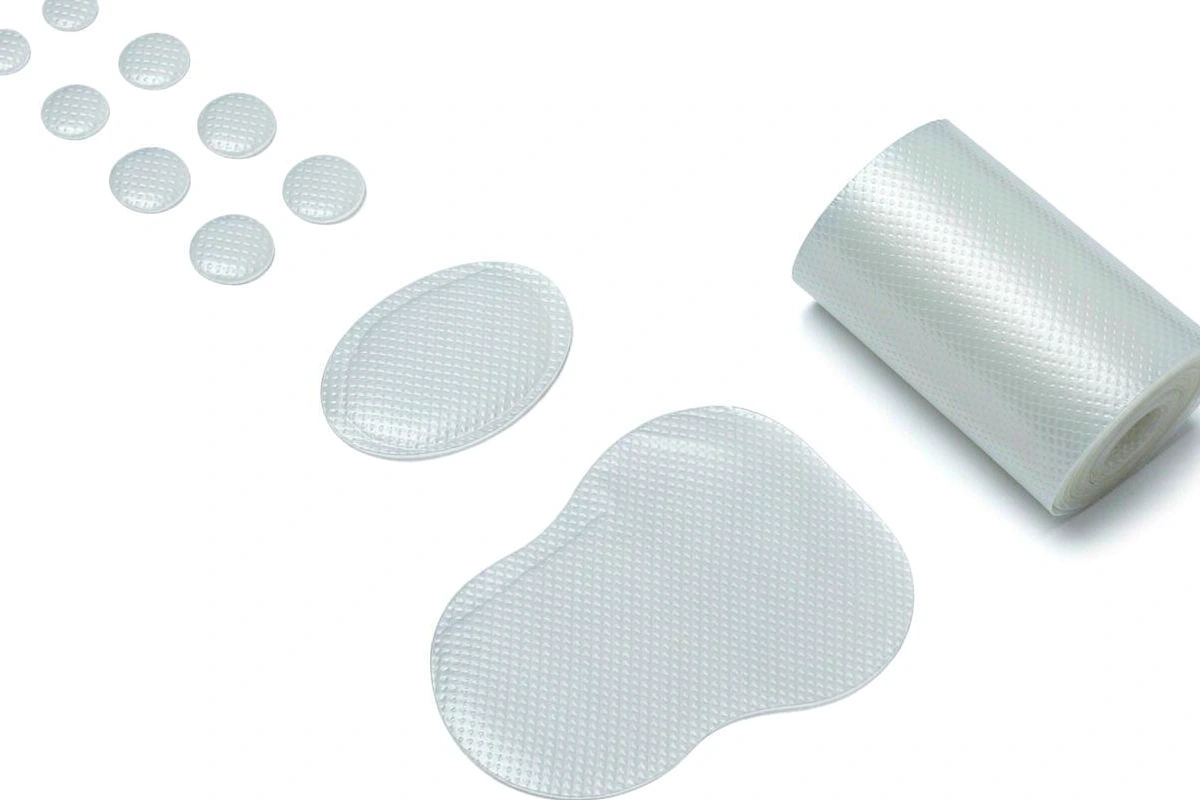
The main difference is how much skin each patch covers and how the material is supplied.
Individual pimple patches are typically small, pre-cut dots designed to cover one blemish at a time. Their compact shape makes them convenient for targeted applications, especially when pimples appear in different parts of the face.
Pimple patch sheets cover a larger area or provide material that can be cut into different sizes, depending on the product design. Some are manufactured as ready-to-use forehead, cheek, or body patches. Others are sold as hydrocolloid sheets or rolls intended for particular applications.
These formats may share similar absorbent materials, but their construction and instructions can differ. A large patch designed for facial use is not necessarily identical to a general-purpose hydrocolloid dressing.
| Feature | Pimple Patch Sheets or Larger Patches | Individual Pimple Patches |
|---|---|---|
| Coverage | Multiple nearby spots or a larger zone | One blemish or a small targeted area |
| Best-fit pattern | Concentrated breakout clusters | Isolated or widely separated pimples |
| Application | One larger piece, sometimes requiring shaping | Several ready-to-use dots |
| Flexibility | Depends on sheet material, size, and design | Small dots often adapt more easily to local contours |
| Material waste | May involve trimming or unused coverage | May require multiple dots for a cluster |
| Discreet wear | Larger coverage may be more noticeable | Small transparent dots can be less conspicuous |
| Product choice | Pre-cut zone patches or suitable cut-to-size sheets | Standard round, oval, or specialty shapes |
Neither format is inherently more effective. The better option is the one that provides appropriate coverage for the blemishes you are trying to protect.
Are Hydrocolloid Sheets the Same as Acne Patches?
Not always.
Hydrocolloid is a category of moisture-managing material used in wound dressings and many acne patches. But products can differ in their adhesive formulation, backing film, thickness, absorbent layer, and intended contact conditions.
A hydrocolloid dressing sold for wound care may be designed for a different type of skin contact than a cosmetic facial patch. Its size and price alone do not establish whether it is appropriate for a breakout.
Some dressings can be cut to size, while others have handling or use limitations. Follow the specific manufacturer's instructions rather than assuming every roll or sheet is suitable for facial acne. The NHS Clinical Evaluation Team's hydrocolloid dressing criteria also identify instructions on cutting, application, removal, and wearing time as important product information. [3]
If you want a larger patch for breakouts, a product specifically designed and labeled for that purpose may offer clearer guidance on placement, wear time, and removal.
When Should You Use Hydrocolloid Sheets for Acne?
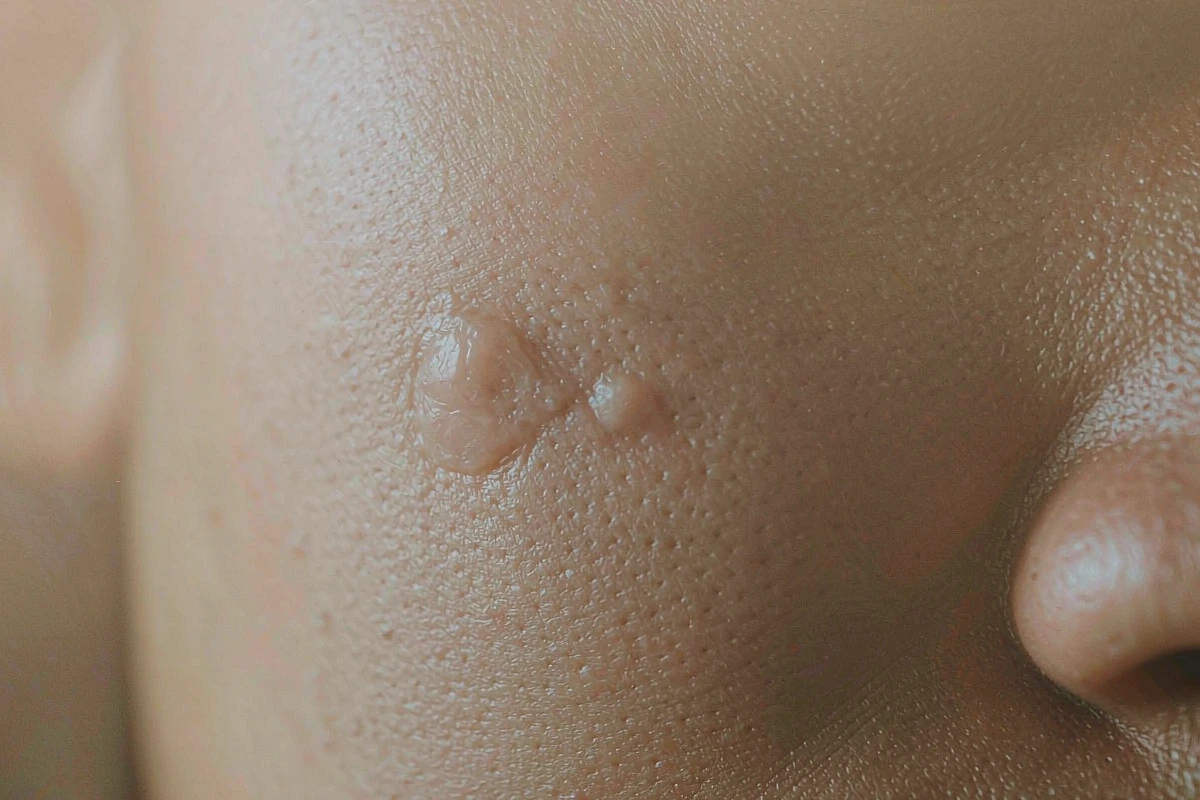
A larger patch can be worth considering when several surface blemishes are close enough to fit under one appropriately shaped piece.
For example, you might have a small cluster along your forehead or a group of nearby pimples on one cheek. Instead of arranging several separate dots, a suitably sized patch may provide continuous protective coverage with one application.
That convenience depends on the product fitting the area. A broad sheet that wrinkles, pulls at the skin, or lifts around the edges may be less practical than several smaller patches.
It is also important to consider the kind of blemishes being covered. Traditional hydrocolloid patches primarily absorb moisture accessible at the skin's surface. Cleveland Clinic explains that these patches are most useful for certain surface blemishes and have limitations when it comes to overall acne management. [1]
Covering a larger area does not allow the material to reach fluid trapped deep beneath intact skin.
Can One Large Pimple Patch Cover Several Pimples?
Yes, when the product is designed for that purpose and the blemishes are close together.
A larger patch can cover several surface spots at once, provided it has enough contact with the surrounding skin to stay in place. It may also reduce the need to position individual dots across a concentrated area.
However, covering several pimples is not the same as treating all of them equally. A draining surface blemish may provide moisture for the hydrocolloid to absorb, while a nearby closed bump may show little response.
If the area contains multiple deep, painful, or persistent lesions, a large hydrocolloid patch should not replace appropriate acne treatment. The American Academy of Dermatology recommends dermatologic care for recurring or persistent deep, painful acne. [2]
Are Large Pimple Patches Useful for Body Acne?
They can be useful for selected surface blemishes on areas such as the back, chest, or shoulders, provided the product is intended for those sites.
Body areas introduce practical challenges. Clothing can rub against the patch, the skin may stretch with movement, and sweat can affect adhesion. A larger sheet may cover more skin, but that coverage is only useful if the patch stays comfortably attached.
Placement also matters. A patch that lies smoothly on a relatively flat section of the back may behave differently on a shoulder or another frequently moving area.
For widespread, inflamed, or recurrent body acne, relying on large patches alone may delay more appropriate treatment. The goal should be targeted protection where suitable, not indiscriminate coverage of every affected area.
When Are Individual Pimple Patches the Better Choice?
Individual patches are often more practical when blemishes are isolated or spread across different parts of the face.
If you have one pimple on your chin and another near your temple, covering both with a large sheet would also cover a substantial amount of unaffected skin. Two small dots provide more focused contact and may be easier to position.
Small patches can also work better around certain facial contours. The sides of the nose, the area near the mouth, and the curved jawline may make it difficult for a broad sheet to remain smooth.
A compact patch isn't automatically more adhesive, but its smaller footprint can make it easier to place without folds or excessive tension.
Individual dots can also be useful when you want to check the condition of separate blemishes or replace coverage on one spot without disturbing another.
Which Format Fits Your Breakout Pattern?
Rather than choosing by patch size alone, look at how your blemishes are distributed.
- One or two isolated pimples: Individual patches usually provide sufficient targeted coverage.
- Several nearby surface blemishes: A properly sized larger patch may be more convenient.
- Widely separated breakouts: Individual patches generally avoid unnecessary coverage between spots.
- A concentrated forehead or cheek area: Compare a ready-made zone patch with several dots based on fit and comfort.
- Curved or frequently moving areas: Choose the shape that stays smooth and secure rather than assuming the larger format will perform better.
For deep nodules, persistent painful acne, or extensive inflammation, neither format should be treated as a complete solution.
This distinction is especially important for someone who has already tried a hydrocolloid patch without noticing much fluid absorption. Changing the size alone may not address the reason the original patch appeared ineffective.
Are Hydrocolloid Sheets Cheaper Than Individual Pimple Patches?
They can be, but the cost advantage depends on how much material you actually use.
People who regularly cover several nearby blemishes sometimes turn to larger hydrocolloid sheets or rolls because buying small pre-cut dots repeatedly can become expensive.
In a Reddit discussion in r/acne about the cost of pimple patches, one user described switching to hydrocolloid rolls to cover a larger area of the cheek. The user felt the longer rolls offered better value for repeated applications.
Other participants reported a different experience. Some found cut-to-size materials harder to remove from their backing, less absorbent, or less reliable at staying attached than individual patches. These accounts reflect personal experiences rather than controlled product comparisons, but they highlight why cost and convenience need to be considered together.
A roll may be inexpensive relative to its total area, yet some material could be wasted during cutting. Large pieces may also be harder to position, particularly if their edges curl or the adhesive does not suit the facial area.
Individual dots cost more per piece in some product lines, but they require little preparation and can reduce material waste when only a small area needs coverage.
How to Compare the Actual Cost per Application
Consider the amount of material needed to cover the same breakout pattern, not simply the number of patches or total package length.
For example, a person covering one spot at a time should compare the cost of a small dot with the amount of sheet material needed for that same spot. Someone covering several concentrated blemishes should compare one larger piece with the combined cost of the individual patches required.
The number of usable applications matters more than the package's apparent volume.
Practical factors such as cutting time, product storage, adhesive performance, and wasted material also influence value. A lower-cost sheet that regularly lifts or is difficult to handle may not offer the expected savings.
For this reason, pimple patch sheets are not automatically cheaper in everyday use, even when the material costs less per unit of area.
What Can Go Wrong With Cut-to-Size Hydrocolloid Sheets?
Cut-to-size materials appeal to users who want flexible coverage, but they introduce additional handling considerations.
Cutting may produce uneven or pointed corners that catch on clothing or lift during facial movement. A poorly sized piece can wrinkle against curved skin, making it difficult to maintain consistent contact.
There are also hygiene and storage questions. Handling the adhesive surface or repeatedly exposing unused material may compromise cleanliness. Any remaining product should be stored according to the manufacturer's instructions, and products designated for single use should not be reused.
Before cutting a hydrocolloid dressing, confirm that its instructions permit trimming and that the product is intended for the proposed skin application.
Do not assume that ordinary wound-care rolls are interchangeable with ready-made cosmetic acne patches. Differences in adhesive, product construction, and use instructions may affect comfort and suitability.
How Do Patch Size, Shape, and Adhesion Affect Performance?
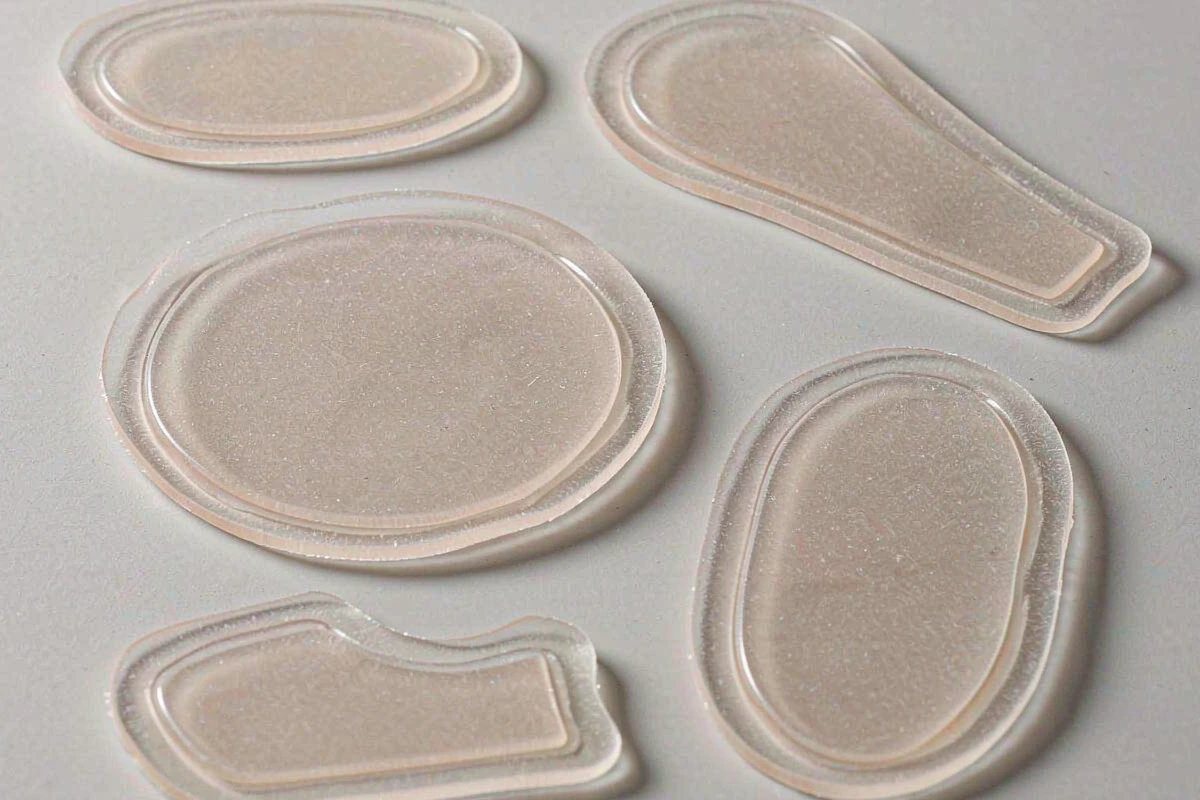
Coverage is only one part of a successful patch design. A larger piece needs to follow the skin's shape while maintaining appropriate contact around the blemishes.
On a relatively flat area, a broad patch may be easy to apply. Around the chin or jawline, the same patch may crease as the skin moves. That can cause the edges to lift or create uncomfortable tension.
Thickness also matters. A thicker material may be more noticeable and less flexible in certain designs, although actual performance depends on the complete construction rather than thickness alone.
Similarly, strong adhesion isn't necessarily better in every situation. A patch must remain in place during the intended wearing period without causing unnecessary discomfort during removal.
The NHS Clinical Evaluation Team's review of hydrocolloid dressings identifies conformability, adhesion to clean and dry skin, and edge lifting as relevant aspects of dressing performance. Although these criteria concern wound dressings rather than cosmetic acne patches specifically, they offer useful technical considerations when evaluating larger adhesive patch formats. [4]
What Makes a Larger Acne Patch Stay in Place?
Several design factors influence how a patch performs during ordinary wear.
| Design Factor | Why It Matters for Larger Patches |
|---|---|
| Shape and contour | Helps the patch follow the forehead, cheek, jawline, or body surface |
| Material flexibility | Allows movement without excessive wrinkling or pulling |
| Edge design | Influences whether corners and edges lift during wear |
| Adhesive properties | Helps maintain contact while supporting comfortable removal |
| Thickness | Affects handling, visibility, and how the material follows the skin |
| Intended wear conditions | Determines whether movement, sweat, or friction need particular consideration |
These factors explain why a large patch cannot always be produced successfully by enlarging a standard circular dot.
For users, the practical test is whether the patch stays flat, feels comfortable, and provides appropriate coverage.
For brands, they highlight why patch dimensions should be considered alongside material selection, adhesive requirements, and actual application conditions.
Does a Larger Pimple Patch Absorb More?
Not necessarily in a way that benefits an individual pimple.
A larger hydrocolloid patch may contain more total absorbent material, depending on its construction, but the amount of fluid it absorbs in use depends on what moisture is available and where the material contacts the skin.
Increasing the coverage area does not make a deep, closed blemish release fluid or guarantee that a surface pimple will clear faster.
This is why comparing products solely by size or absorbent-layer thickness can be misleading. The intended blemish type and finished-product performance need to be considered together.
Choosing Pimple Patch Sizes and Formats for a Skincare Brand
For a skincare brand, the choice between pimple patch sheets and individual dots is also a product-design decision.
A line focused on occasional isolated breakouts may prioritize small, transparent patches that are convenient to apply individually. A product intended for concentrated breakout areas may require larger shapes, flexible materials, and an appropriate edge design.
Some brands may benefit from offering more than one format rather than expecting a single patch to suit every situation. A mixed-size pack, for example, can give consumers options for different coverage needs without requiring them to cut the material themselves.
The intended user experience should guide these decisions. Brands need to consider where the patches will be worn, how long they should remain attached, how consumers will remove them, and what claims can be supported by the product's actual performance.
Athena provides custom acne patch solutions, including hydrocolloid product formats and customization options for patch shapes, sizes, formulations, set combinations, and packaging.
For brands exploring a larger-coverage acne patch concept, these options provide a starting point for discussing the intended application area and product specifications. Material flexibility, adhesive behavior, and packaging format can be addressed during product development according to the proposed design.
Before finalizing a format, brands should compare samples under relevant conditions rather than assuming a larger surface area automatically provides better results. A patch intended for a forehead cluster may have different fit requirements from one designed for isolated cheek blemishes or targeted body coverage.
The most useful product brief describes the users and situations the patch is meant to serve, rather than simply requesting the largest available size.
Frequently Asked Questions
Can You Cut a Hydrocolloid Sheet Into Smaller Pimple Patches?
Some hydrocolloid sheets can be cut, but not all products are intended for trimming. Follow the manufacturer's instructions and use clean handling practices. For convenient facial application, ready-made acne patches may be easier to size and handle.
Are Pimple Patch Sheets Better for Sensitive Skin?
Not automatically. Larger patches cover more skin, which can increase the area exposed to adhesive. Skin tolerance depends on the product's materials and the individual's sensitivity. Stop using a patch if it causes persistent itching, burning, or irritation.
Can You Wear a Large Pimple Patch Overnight?
Yes, if the product is designed for overnight use and its instructions permit it. Make sure the patch is applied to clean, dry skin and remains comfortable. Remove it according to the recommended wearing period rather than leaving it on indefinitely.
How Should You Store Unused Hydrocolloid Sheet Material?
Keep unused material in its original packaging and follow the manufacturer's storage instructions. Protect it from contamination and avoid touching the adhesive surface unnecessarily. If the product is single-use or its packaging has been compromised, do not assume it remains suitable for later application.
Are Large Pimple Patches Suitable for Every Type of Acne?
No. Larger patches mainly change the area of coverage, not the fundamental limitations of hydrocolloid materials. They may be suitable for selected surface blemishes, but persistent deep or painful acne can require treatment beyond protective patches.
Final Thoughts
Pimple patch sheets are worth considering when several suitable surface blemishes appear close together and a larger patch can provide comfortable, secure coverage. Individual patches remain a practical choice for isolated spots, widely separated breakouts, and areas where precise placement matters.
Neither format is automatically more effective or economical. The best choice depends on breakout distribution, intended use, material construction, and how well the patch fits the skin.
For skincare brands, these differences can inform product size, shape, and packaging decisions. Athena supports the development of custom acne patch solutions, helping brands explore patch formats that match specific application needs.
References
Cleveland Clinic. Can Pimple Patches Make a Zit Go Away? November 28, 2025. Explains how hydrocolloid acne patches work and their limitations for different types of blemishes. https://health.clevelandclinic.org/how-do-pimple-patches-work
American Academy of Dermatology. Tips to Treat a Deep, Painful Pimple. Reviewed by board-certified dermatologists. Provides guidance on managing deep, painful acne and when to seek dermatologic care. https://www.aad.org/public/diseases/acne/diy/treat-deep-painful-pimple
NHS Clinical Evaluation Team. Clinical Criteria – Hydrocolloid. September 2018. Covers hydrocolloid dressing labeling, instructions for use, cutting guidance, storage, and recommended wearing time. https://wwwmedia.supplychain.nhs.uk/media/Clinical-Criteria-for-Hydrocolloids-7-September-2018.pdf
NHS Clinical Evaluation Team. Clinical Review – Hydrocolloid Dressings. October 2018. Discusses relevant dressing performance characteristics, including conformity to body shape, adhesion, and edge lifting. https://wwwmedia.supplychain.nhs.uk/media/Clinical_Review_Hydrocolloid_Dressings_October_2018.pdf