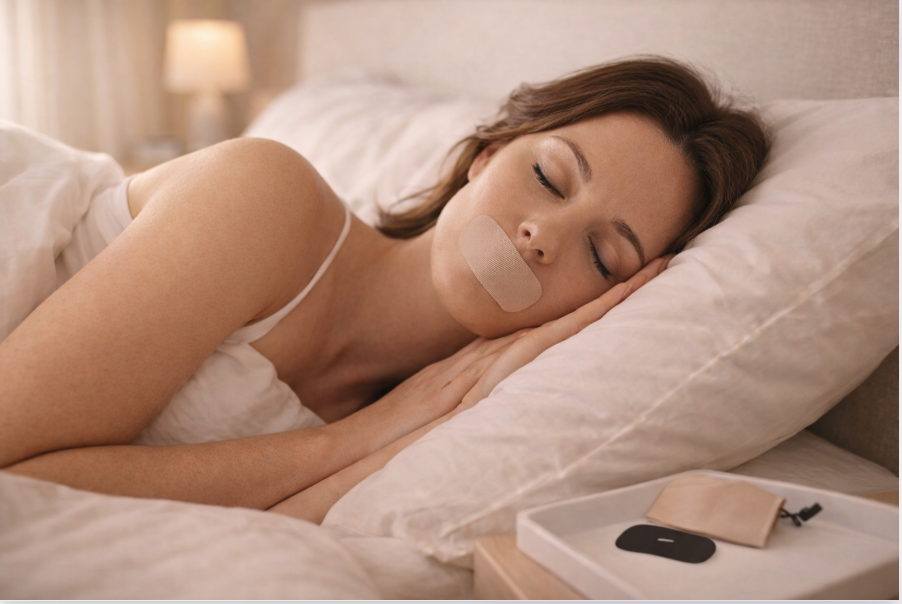
What Is Sleepmaxxing? Where Nasal Strips and Mouth Tape Fit In
Date:2026-08-21
Read:185
source: Athena
Sleepmaxxing is the social media-driven pursuit of better sleep through carefully optimized habits, environments, supplements, trackers, and products. A typical routine might combine a cool dark bedroom, a fixed bedtime, magnesium, a wearable sleep tracker, nasal strips, and mouth tape. The appeal is obvious: sleep matters, and a visible bedtime ritual can make improvement feel actionable.
The problem is that sleepmaxxing bundles sensible sleep hygiene together with viral sleep hacks that have very different levels of evidence and risk. Nasal strips and mouth tape are a good example. Both are promoted as ways to encourage nasal breathing during sleep, but they act on different parts of the breathing pathway and should not be treated as interchangeable—or as treatments for a sleep disorder.
Key Takeaways
01.Sleepmaxxing is an umbrella trend, not a clinically tested sleep protocol.
02.Nasal strips mechanically lift the sides of the nose and may make nasal airflow feel easier when the front of the nose is the bottleneck.
03.Mouth tape holds the lips closed but does not open a blocked nose or treat the underlying cause of snoring.
04.Neither product should be presented as a treatment for obstructive sleep apnea.
05.Loud habitual snoring, gasping, witnessed breathing pauses, morning headaches, or marked daytime sleepiness call for medical evaluation, not a more elaborate viral sleep routine.
What Does Sleepmaxxing Actually Mean?
Sleepmaxxing means trying to “maximize” the duration or quality of sleep through a collection of behaviors and products. The term is new, but much of the useful advice within it is not. Regular sleep and wake times, adequate sleep opportunity, daytime activity, less late caffeine, and a dark, quiet bedroom are established sleep-hygiene ideas with a far stronger foundation than most viral gadgets.
The label became popular because social media turned these habits into a recognizable aesthetic and routine. Videos often show several sleepmaxxing products used together, making the complete stack appear more important than any single habit. Yet sleep is not a score that can always be perfected. Over-monitoring can even make some people anxious about sleeping, a pattern sometimes described as orthosomnia.
For adults aged 18 to 60, the CDC recommends at least seven hours of sleep per night. That basic target is more meaningful than copying a long routine without identifying the real problem. Someone who allows only five hours in bed needs more sleep opportunity; someone who gets eight hours but wakes gasping needs clinical assessment. Neither issue is solved simply by adding tape.
Why Nasal Breathing Became Part of the Trend
Nasal breathing during sleep is attractive to sleepmaxxing followers because the nose filters, warms, and humidifies inhaled air. People who wake with a dry mouth, notice that their lips fall open, or feel congested at night may naturally wonder whether keeping airflow through the nose will improve sleep.
That reasoning contains an important missing step: the nose must be comfortably open. Allergies, a cold, sinus inflammation, nasal valve narrowing, enlarged tissue, or a deviated septum can all make nasal breathing difficult. A product that supports the outer nasal wall may help one of those bottlenecks, while doing little for another. Closing the mouth does not remove nasal obstruction.
This is why nasal strips and mouth tape belong in different positions within the same decision process. One attempts to support nasal airflow mechanically; the other limits mouth opening. Before considering either, the user should understand where the resistance or sleep symptom is coming from.
Where Sleepmaxxing Nasal Strips Fit In
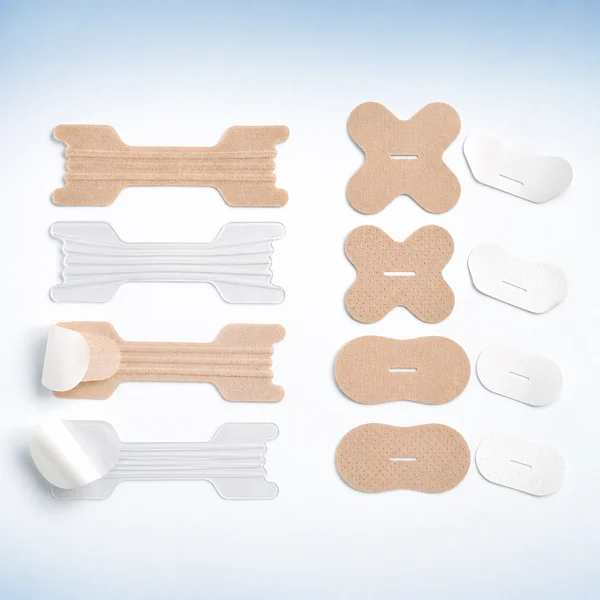
Sleepmaxxing nasal strips fit best as a simple external airflow aid for people who can breathe through the nose but feel mild resistance near the nostrils. They are adhesive strips with flexible spring-like bands. Applied across the lower bridge of the nose, the bands pull outward on the nasal sidewalls and can widen the nasal valve area while the strip is worn.
That mechanism is local and temporary. A nasal strip does not contain a decongestant, reduce deep inflammation, reposition the tongue, or prevent throat collapse. It may make breathing feel easier when mild congestion or narrow nasal valves contribute to discomfort. Some users with nocturnal nasal congestion also report better subjective breathing or sleep. However, the broader evidence does not show that nasal dilators reliably improve apnea severity, oxygen levels, or sleep architecture.
A recent systematic review and meta-analysis covering 17 studies and 496 participants found no significant overall improvement in apnea-hypopnea index, snoring index, oxygen saturation, total sleep time, or sleep architecture. The authors concluded that nasal dilators should not be used alone to manage sleep-disordered breathing, although they may have an adjunctive role for selected people with mild symptoms or nasal congestion.
That evidence supports a measured conclusion: nasal strips can be reasonable to try for comfort when nasal airflow is the likely bottleneck, but they are not a universal sleep upgrade. Athena’s guide to nasal strips for sleep and sports explains the same mechanical distinction and the limits of the product.
Where Sleepmaxxing Mouth Tape Fits In—and Where It Does Not
Sleepmaxxing mouth tape is intended to keep the lips closed and discourage open-mouth breathing. Unlike a nasal strip, it does not increase space inside the nose. Its logic only makes sense when nasal breathing is already easy and the person’s mouth tends to fall open during sleep.
Online claims often go much further, suggesting that mouth taping can stop snoring, deepen sleep, improve oxygenation, prevent dental problems, or reshape the jawline. Those claims are not supported as a package. A 2025 systematic review evaluated 10 studies involving 213 patients. Two studies reported improvement in selected sleep-apnea markers, while others found no difference; the review also highlighted the risk of asphyxiation when nasal obstruction is present. The authors concluded that indiscriminate use could cause serious harm and that more research is needed.
Mouth taping also cannot diagnose why a person breathes through the mouth. Chronic congestion, allergies, anatomical obstruction, medication effects, alcohol, and sleep apnea may all contribute. If the mouth is serving as a backup route because nasal airflow becomes limited during the night, sealing it can create distress rather than better sleep.
Skin irritation, allergic reactions, anxiety, disrupted sleep, and difficulty breathing are among the practical mouth taping risks. Cleveland Clinic advises against mouth taping for people with nasal obstruction or congestion, chronic allergies, sinus infections, enlarged tonsils, a deviated septum, and certain other health issues. It also emphasizes that evidence is not strong enough to use mouth tape as a treatment for a sleep disorder.
For readers evaluating the product rather than seeking treatment, Athena’s overview of how to choose mouth tape for sleeping focuses on fit, skin compatibility, breathability, removal comfort, and the need for clear nasal airflow first. Those design factors improve the wearing experience, but they do not remove the medical limitations.
Nasal Strips vs. Mouth Tape: The Functional Difference
The clearest way to compare nasal strips and mouth tape is by asking what each product physically changes.
| Question | Nasal strips | Mouth tape |
|---|---|---|
| Where does it act? | On the outside of the nose | Across or around the lips |
| What does it do? | Lifts nasal sidewalls to support the front nasal airway | Encourages the lips to remain closed |
| Best-fit scenario | Mild resistance near the nostrils or temporary nasal stuffiness | Mouth falls open despite comfortable nasal breathing |
| What does it not fix? | Throat collapse, central congestion, structural disease, or OSA | Nasal blockage, throat collapse, or OSA |
| Main practical concerns | Adhesion, placement, skin irritation, removal | Breathing restriction, anxiety, skin irritation, unsafe use with obstruction |
The products therefore should not be framed as a mandatory pair. A nasal strip may improve the sensation of nasal airflow without creating any need for mouth tape. Conversely, if someone cannot breathe comfortably through the nose while awake and lying down, adding mouth tape is not a sensible way to force the issue.
Can You Use Nasal Strips and Mouth Tape Together?
Using both products together is popular in sleepmaxxing routines, but the combination has not been established as a universal or clinically validated method for better sleep. A nasal strip may support the front of the nasal airway while mouth tape encourages lip closure, yet the combination still cannot correct deeper nasal obstruction, throat-based snoring, or obstructive sleep apnea.
The safe decision is based on symptoms rather than trend logic. Anyone with chronic nasal blockage, breathing difficulty, severe or irregular snoring, witnessed pauses, choking or gasping, cardiovascular or respiratory disease, or suspected sleep apnea should seek professional guidance before considering mouth tape. Children should not be placed into a social-media-derived mouth-taping routine without medical advice.
People who have no red flags but are considering an adhesive product should still review the manufacturer’s instructions, check ingredient and latex information, and stop immediately if breathing feels restricted or the skin reacts. Household, duct, or other tapes not designed for skin and overnight use are inappropriate.
What Matters More Than a Viral Sleep Hack?
The strongest part of sleepmaxxing is the renewed attention it gives to sleep. The weakest part is the suggestion that more products automatically produce better results. A useful routine begins with a consistent schedule, enough time in bed, a comfortable sleep environment, appropriate light exposure, physical activity, and attention to caffeine and alcohol. It also distinguishes an occasional poor night from persistent insomnia or sleep-disordered breathing.
If snoring is the concern, notice the pattern rather than assuming one cause. Nasal stuffiness that changes with allergy season points in a different direction from loud nightly snoring with breathing pauses. Athena’s guide to when nasal strips make sense for a stuffy nose can help clarify the narrow role of external nasal support. Persistent insomnia is also unlikely to be fixed by an airflow accessory; evidence-based clinical care may be needed.
The best sleep routine is rarely the longest one. It is the one that addresses a real barrier without creating new discomfort, anxiety, or risk.
What the Trend Means for Sleep Product Brands
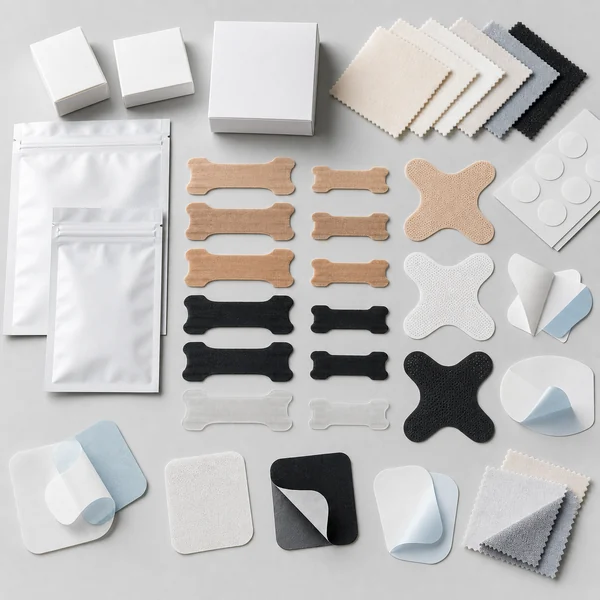
For brands developing sleepmaxxing products, trend visibility is not a substitute for responsible product positioning. Nasal strips should be described around their external lift mechanism, fit, adhesion, materials, and intended airflow-support use. Mouth tape requires especially clear warnings, skin-contact considerations, breathable or release-oriented design choices, and instructions that do not imply treatment for snoring, sleep apnea, or other medical conditions.
The strongest product brief begins with a defined user and use environment. Overnight nasal strips may prioritize soft materials, stable but gentle adhesion, sizing, and comfortable removal. Mouth tape programs must consider lip-area sensitivity, facial hair, hold duration, removal feel, and packaging language. Claims should remain proportionate to product function and the evidence available in the destination market.
Athena develops custom nasal strip solutions and private-label mouth tape with configurable materials, shapes, adhesive characteristics, packaging, and sampling support. For brands responding to TikTok sleep trends, the commercially durable opportunity is not to promise a perfect night. It is to build a well-fitted product with consistent manufacturing, clear instructions, realistic claims, and an experience users can understand.
FAQ
Is sleepmaxxing scientifically proven?
Sleepmaxxing has not been clinically validated as one complete protocol. Some practices grouped under the label, such as keeping a consistent schedule and creating a dark, quiet sleep environment, align with established sleep hygiene. Other viral sleep hacks have limited, mixed, or no supporting evidence.
Do nasal strips improve sleep quality?
Nasal strips may make nasal breathing feel easier for some people with mild nasal resistance or congestion, and some studies report subjective benefits. Current pooled evidence does not show reliable improvements in objective sleep-disordered-breathing outcomes, so they should not be described as a treatment for sleep apnea.
Is mouth tape safer when used with a nasal strip?
Not necessarily. A nasal strip only supports the front portion of the nasal airway and cannot guarantee that the nose will remain unobstructed all night. Using one does not remove the risks of mouth taping in people with congestion, anatomical obstruction, respiratory problems, or suspected sleep apnea.
Can sleepmaxxing mouth tape treat snoring or sleep apnea?
No. Mouth tape is not an established treatment for obstructive sleep apnea and cannot address every cause of snoring. Loud or irregular snoring, gasping, witnessed pauses, morning headaches, and marked daytime sleepiness should prompt medical evaluation.
Are nasal strips and mouth tape medical devices?
Classification depends on the product’s intended use, claims, and the rules of the market where it is sold. A brand should confirm the applicable regulatory pathway before launch and avoid disease-treatment claims that are not supported by authorization and evidence.
What should brands compare when sourcing sleepmaxxing products?
Brands should compare material safety, adhesive consistency, fit and sizing, breathability, wear duration, removal comfort, batch traceability, packaging instructions, warning language, sampling, and quality-control documentation. The right specification depends on whether the product is a nasal strip or mouth tape and on the intended user scenario.
Conclusion
Sleepmaxxing is best understood as a cultural label placed over a mix of familiar sleep hygiene and highly marketable experiments. Nasal strips belong in the trend as external aids that may support easier nasal airflow for selected users. Mouth tape occupies a narrower and more controversial position because closing the lips does not guarantee a safe, open airway.
The practical hierarchy is simple: protect adequate sleep time, use evidence-based habits, identify the source of breathing symptoms, and treat red flags seriously. Products can support a routine, but they should never be allowed to hide the problem the routine is supposed to solve.
External Sources Used for Fact-Checking
- CDC: About Sleep
- Sharp HealthCare: What Is Sleepmaxxing?
- Harvard Health: Should You Be Sleepmaxxing?
- Cleveland Clinic: Is Mouth Tape Safe To Use While Sleeping?
- Rhee et al., 2025: Systematic Review of Mouth Taping
- Clinical Effectiveness of Nasal Dilators in Sleep-Disordered Breathing: Systematic Review and Meta-Analysis
Sections
13 July 2026
The best nasal strips are not always the strongest, the most expensive, or the highest rated option. The right choice depends on how you plan to use them, such as for sleep, snoring, running, daily breathing comfort, sensitive skin, or temporary nasal congestion. A good nasal strip should balance lift, adhesion, comfort, and fit. Stronger adhesive may be useful for sports, while softer materials may be better for sleeping or sensitive skin. Read More