Custom Nasal Strips: A B2B Guide to OEM Manufacturing, Private Label and Sourcing
Date:2026-06-25
Read:154
source: Zoey
Quick Answer
1.Start with the target use case, such as sleep, sports, daily wellness, or travel.
2.Choose an OEM partner that supports materials, adhesive, shape, packaging, and sampling.
3.Test before mass production, including fit, adhesion, removal comfort, and packaging.
4.Use wholesale for market testing, but choose custom development for stronger brand differentiation.
5,Work with Athena if you need private label nasal strip development from sample to scalable supply.
Summary
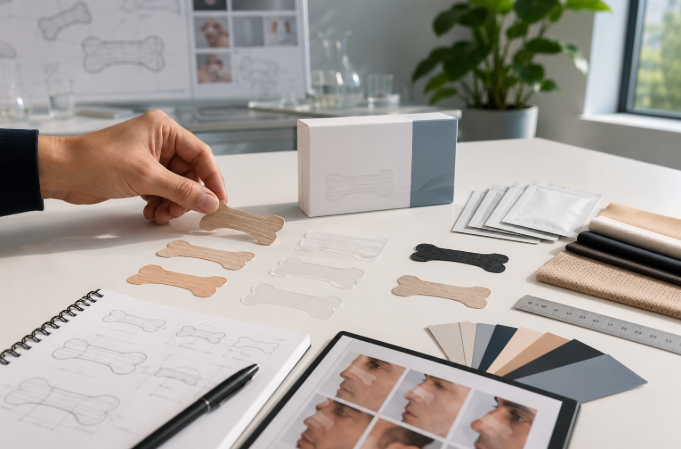
Custom nasal strips are becoming a practical B2B product opportunity for sleep, sports, wellness, travel, and private label retail brands. For buyers, the key is not only finding a nasal strips manufacturer, but choosing a partner that can support product positioning, material selection, adhesive testing, sample development, packaging customization, quality control, and stable supply.
A successful nasal strip line depends on how well the product fits the target user, sales channel, adhesive requirement, packaging format, and long-term supply plan.
Why Are Custom Nasal Strips Becoming a B2B Product Opportunity?
Custom nasal strips are becoming a B2B opportunity because the product category is expanding beyond traditional sleep and snoring use. Many brands now position nasal strips for sports, daily wellness, travel, active lifestyles, sensitive skin users, and low-profile breathing comfort. This creates space for differentiated products instead of one generic strip for every customer.
B2B buyers care about more than whether a nasal strip can be produced. They need to know whether the product can be customized, tested, packaged, shipped, and reordered with stable quality.
The biggest opportunity is product segmentation. A sleep nasal strip, a sports nasal strip, and a daily wellness strip should not always use the same adhesive, shape, material, or packaging message. Brands that understand these differences can build clearer product lines and stronger positioning.
What Should a Nasal Strips Manufacturer Support?
A nasal strips manufacturer should support product development, not only basic production. For B2B brands, the right manufacturing partner should help translate a product idea into a market-ready nasal strip through material selection, adhesive matching, shape design, sampling, packaging, and bulk production.
A qualified manufacturer should understand the full structure of a nasal strip. This includes the surface material, adhesive layer, support structure, release liner, die-cut shape, edge design, and individual packaging. Each part affects how the product feels, how it stays on the skin, and how users perceive the brand.
Athena is positioned as an OEM/ODM custom patch manufacturer for nasal strips, mouth tapes, and related patch products.
How to Define Your Custom Nasal Strip Product Before Sourcing?
Brands should define the product concept before starting nasal strip sourcing. A clear product brief helps the manufacturer choose suitable materials, adhesive strength, shape, packaging, and testing direction.
Who Is the End User?
The end user determines how the nasal strip should be designed. A sleep user may care about overnight comfort and gentle removal, while a sports user may care more about sweat resistance and edge stability. A sensitive-skin user may prefer softer materials and lower-irritation adhesive.
Different end users also respond to different visual styles. A public gym user may prefer a sporty design, while a daily wellness customer may choose a clear or skin-tone strip. A pharmacy customer may care more about simple instructions and a trustworthy appearance.
What Is the Main Use Case?
The main use case determines the product’s adhesive and structure requirements. A strip designed for sleep should stay stable for several hours without feeling harsh on the skin. A strip designed for workouts may need better resistance to sweat, oil, and facial movement.
Use case also affects the product message. For sleep products, the language may focus on nighttime breathing comfort. For sports products, the message may focus on active routines and secure fit. For travel products, convenience and individual pouching may matter more.
What Sales Channel Will You Use?
The sales channel affects packaging, quantity, price point, and product presentation. An e-commerce product may need strong visual packaging and clear usage images. A pharmacy product may need more formal instructions and retail-ready packaging. A distributor product may need bulk formats and stable reorder planning.Brands should decide the channel before finalizing packaging.
What Customization Options Matter for Private Label Nasal Strips?
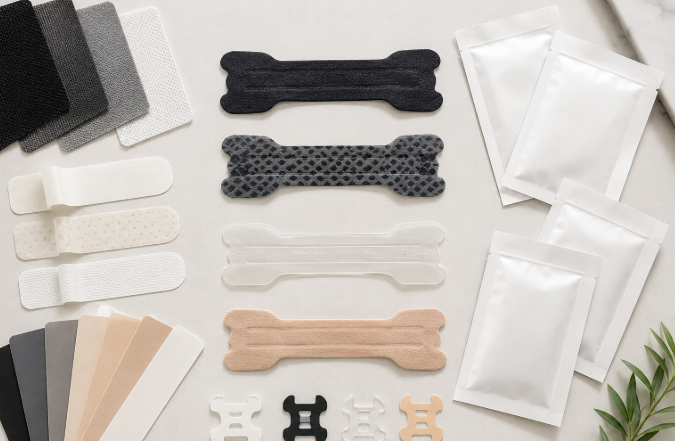
Private label nasal strips should be customized around user comfort, brand positioning, and target market needs. The most important options include material, adhesive strength, strip shape, size, color, scent, support structure, pouching, and retail packaging.
Material Selection for Different Product Positions
Material selection affects comfort, breathability, appearance, and perceived product quality. Common options may include non-woven fabric, cotton, PU material, transparent film, composite materials, or other skin-contact materials depending on the product positioning.
A premium sleep product may need a soft and comfortable surface, while a sports strip may need stronger structure and better sweat tolerance. A daily wellness strip may require a thin and low-profile material.
Adhesive Strength and Removal Comfort
Adhesive design is one of the most important decisions in custom nasal strip development. If the adhesive is too weak, the strip may lift too early. If it is too strong, users may dislike the removal experience. A good product needs a balance between stable wear and comfortable removal.
Different scenarios require different adhesive priorities. Sleep products usually need gentle long-hour hold. Sports products may need better resistance to sweat and oil. Sensitive-skin products should focus on low irritation and clean removal. Daily-use products should feel light and comfortable.
Shape, Size and Lifting Structure
Shape and size influence fit, lifting effect, comfort, and appearance. A standard strip may work for general use, but brands may also need a larger sports shape, a narrow-nose option, a softer sleep version, or a low-profile daily style.
The lifting structure should match the intended use. Some products may need stronger support, while others should feel lighter and more flexible. Edge design also matters because poor edge contact can lead to peeling, discomfort, or user dissatisfaction.
Color, Scent and Functional Add-ons
Color and scent can help brands create differentiated nasal strip lines. Skin-tone or clear designs may suit daily wellness users, while black or custom colors may appeal to sports or lifestyle brands. Unscented versions are often easier for sensitive users, while mint or refreshing scent concepts may support certain wellness positioning.Functional add-ons should be used carefully and clearly.
Private Label Packaging
Packaging should be planned early because it affects user trust, retail presentation, and repeat purchase. Private label packaging may include individual pouches, retail boxes, instruction cards, logo printing, multilingual versions, SKU planning, and sample kit formats.
Good packaging explains the product quickly. A user should understand whether the strip is for sleep, sports, daily breathing comfort, travel, or sensitive skin. Clear packaging can reduce confusion and improve the user’s first experience.
How Can Brands Build Different Nasal Strip Product Lines?
Brands can build stronger nasal strip lines by matching each product version to a clear user scenario. Instead of selling one generic strip, a brand can develop different SKUs for sleep, sports, daily wellness, sensitive skin, travel, or retail channels.
Market Segment | Product Direction | Design Focus |
Sleep | Nighttime nasal strips | Gentle hold, overnight comfort, easy removal |
Sports | Sports nasal strips | Sweat resistance, oil resistance, stronger edge hold |
Daily wellness | Low-profile strips | Lightweight feel, clear or skin-tone appearance |
Sensitive skin | Gentle nasal strips | Soft materials, low-irritation adhesive |
Travel | Trial or travel packs | Individual pouching, compact format |
Retail private label | Branded nasal strips | Shelf-ready packaging, clear instructions, stable supply |
How to Evaluate a Nasal Strips Supplier Before Bulk Orders?
A nasal strips supplier should be evaluated by development capability, sample quality, production stability, and communication efficiency. Price matters, but it should not be the only factor. A low-cost supplier that cannot control adhesive consistency, packaging quality, or delivery timing may create higher long-term risk
Evaluation Point | Why It Matters |
Sample support | Helps test fit, adhesion, and removal before bulk order |
Customization capability | Supports differentiated product lines |
Material traceability | Reduces quality and compliance risk |
Adhesive testing | Protects user experience |
Packaging support | Helps retail and e-commerce launch |
MOQ flexibility | Supports market testing |
Production capacity | Supports future scaling |
Communication speed | Reduces development delays |
For new brands, small-batch testing and quick sample adjustments can be more valuable than the lowest unit price. For growing brands, stable capacity and reorder consistency become more important.
Is Nasal Strips Wholesale Enough for Brand Growth?
Nasal strips wholesale can help brands test demand, but it may not be enough for long-term brand growth. Wholesale products are useful when buyers want quick market entry, simple inventory, or early-stage testing. However, standard wholesale nasal strips often offer limited differentiation.
Private label and OEM development are better when a brand wants stronger positioning. Custom packaging, scenario-specific design, material selection, and adhesive adjustment can help a product feel more intentional. For brands that want repeat customers, product experience and brand presentation matter as much as price.
A practical approach is to start with a small test and then move toward customization. A brand may first validate demand with a simple nasal strip format, then develop custom nose strips for sleep, sports, travel, or sensitive-skin customers based on feedback.
What Is the OEM Nasal Strip Development Process?

The OEM nasal strip development process should move from product positioning to sample testing before mass production. A clear process helps both the brand and manufacturer reduce mistakes, control costs, and shorten launch time.
Step | What Happens |
Product brief | Define target user, use case, sales channel, and price range |
Material selection | Choose surface material, support structure, and release liner |
Adhesive matching | Adjust hold strength, removal feel, and wear duration |
Shape proposal | Confirm size, bridge ratio, edge design, and support layout |
Sample development | Produce physical samples for review |
User testing | Check fit, adhesion, comfort, removal, and appearance |
Packaging design | Develop pouch, box, logo, instructions, and retail format |
Pilot order | Start small-batch production for market testing |
Mass production | Scale with quality control and delivery planning |
Reorder optimization | Improve product line based on sales and user feedback |
Athena can fit into this process as a development and manufacturing partner.
What Quality Checks Matter in Nasal Strip Manufacturing?
Quality checks matter because nasal strips are skin-contact products used repeatedly by consumers. A small issue in adhesive, shape, packaging, or batch consistency can affect comfort, brand trust, and repeat purchase.
Key quality checks should include material appearance, die-cutting accuracy, adhesive consistency, lifting performance, peel strength, residue control, pouch sealing, aging stability, and packaging inspection. These checks help ensure that the final product feels consistent from sample to bulk production.
Batch consistency is especially important for private label brands. If the first order feels different from the second order, users may lose trust. A good nasal strips manufacturer should help maintain stable product feel, appearance, and packaging quality across production runs.
Common Mistakes When Sourcing Custom Nose Strips
The most common sourcing mistake is comparing only unit price before confirming product experience. Nasal strips are small products, but their value depends heavily on comfort, fit, adhesion, removal, and packaging quality.
Another common mistake is using one design for every market. A sports strip, a sleep strip, and a sensitive-skin strip may need different adhesive strength, material feel, and packaging language. Treating them as the same product can reduce user satisfaction.
Brands should also avoid skipping real-use sample tests. A strip may look good on a sample sheet but perform differently on skin during sleep, exercise, travel, or humid weather. Testing fit, edge stability, removal comfort, and residue is more useful than judging only appearance.
Packaging should not be finalized before the product experience is confirmed. If the product changes after testing, instructions, claims, quantity, pouch size, and box layout may also need adjustment. Good development keeps product and packaging aligned.
Why Work with Athena for Custom Nasal Strips?
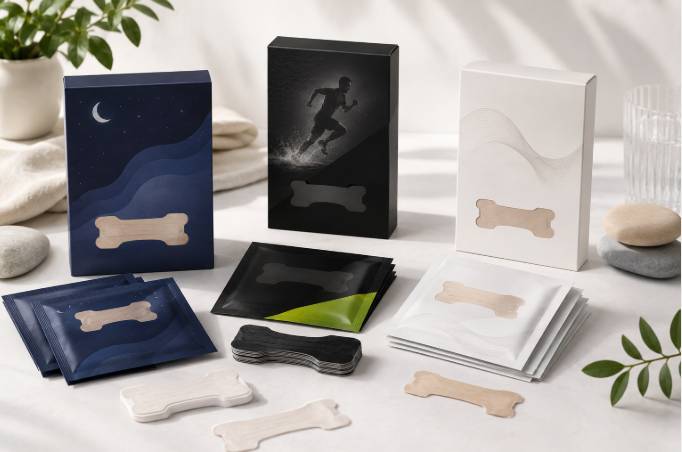
Athena can support brands that need custom nasal strips instead of standard wholesale products only. As an OEM/ODM patch manufacturer, Athena focuses on nasal strips, mouth tapes, and related personal care patches for sleep, sports, wellness, and private label markets.
Athena’s value is in flexible product development. Brands can work with Athena on material selection, adhesive matching, shape customization, color options, scent concepts, sample development, pouching, logo design, and private label packaging. This makes it easier to build products for different customer groups instead of relying on one standard strip.
For B2B buyers, the goal is not just to buy nasal strips, but to build a product line. Athena can help brands move from product idea to sample, from sample to packaging, and from pilot order to scalable supply.
FAQ About Custom Nasal Strips and OEM Manufacturing
1.What is a custom nasal strip?
A custom nasal strip is a nasal strip developed with specific material, adhesive, shape, size, color, packaging, or branding requirements. It is designed to match a brand’s target users and sales channel instead of using only a standard product.
2.How do I choose a nasal strips supplier?
You should choose a nasal strips supplier by checking sample quality, customization capability, material traceability, production capacity, packaging support, and communication speed. Price should be considered, but it should not be the only decision factor.
3.Can I order nasal strips wholesale before private label customization?
Nasal strips wholesale can be useful for early market testing before private label customization. However, brands that want stronger differentiation usually need custom packaging, product positioning, and scenario-based product design.
4.What can be customized for private label nasal strips?
Private label nasal strips can often be customized by material, adhesive strength, shape, size, color, scent, packaging, logo, instruction language, and retail format. The exact options depend on the manufacturer’s capabilities and the target market requirements.
5.What is the difference between sleep nasal strips and sports nasal strips?
Sleep nasal strips usually focus on gentle long-hour comfort, while sports nasal strips focus more on sweat resistance and secure edge hold. The adhesive level, material feel, and packaging message may be different for each product direction.
6.What should brands test before mass production?
Brands should test fit, adhesion, removal comfort, skin response, edge stability, packaging quality, and user instructions before mass production. Testing helps reduce complaints and improves the chance of repeat purchase.
7.How can I start an OEM nasal strip project with Athena?
You can start an OEM nasal strip project with Athena by preparing your target use case, preferred material, packaging idea, quantity plan, and any sample reference. Athena can then help develop a sample proposal, adjust product details, and support private label production.
Conclusion: Build a Nasal Strip Product, Not Just a Purchase Order
Custom nasal strips should be treated as a product development project, not only a sourcing task. A brand needs to define the target user, product scenario, material, adhesive level, shape, packaging, and supplier requirements before moving into mass production.
A good OEM partner helps brands turn product ideas into market-ready nasal strip lines. For buyers who want to move beyond generic nasal strips wholesale, Athena can support custom development, private label packaging, sample testing, and scalable manufacturing for sleep, sports, wellness, and retail markets.
Sections
30 July 2026
Learn why nasal strips may irritate skin or leave marks, including adhesive, material, and wearing factors. Discover how skin-friendly nasal strip designs improve comfort and what brands should consider when developing custom nasal strips.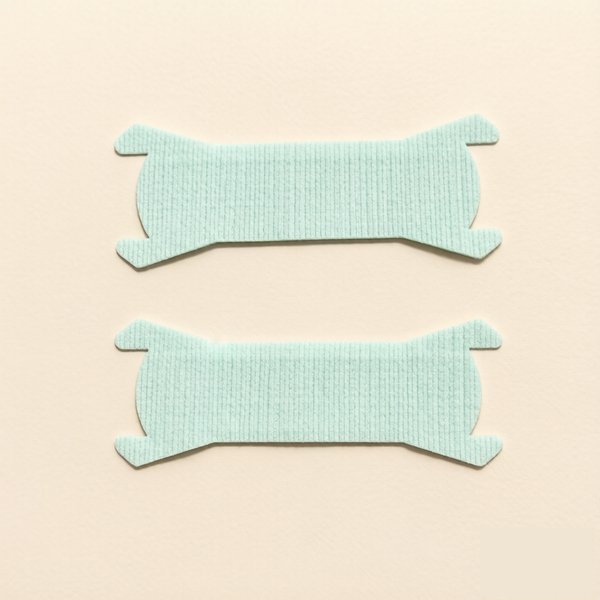 Read More
30 April 2026
Nasal strips for snoring help most when snoring is strongly linked to nasal blockage rather than deeper throat collapse. The people most likely to notice relief are those with bedtime congestion, seasonal allergy flare-ups, mild narrowing near the nasal valve, or snoring that clearly gets worse when the nose feels blocked.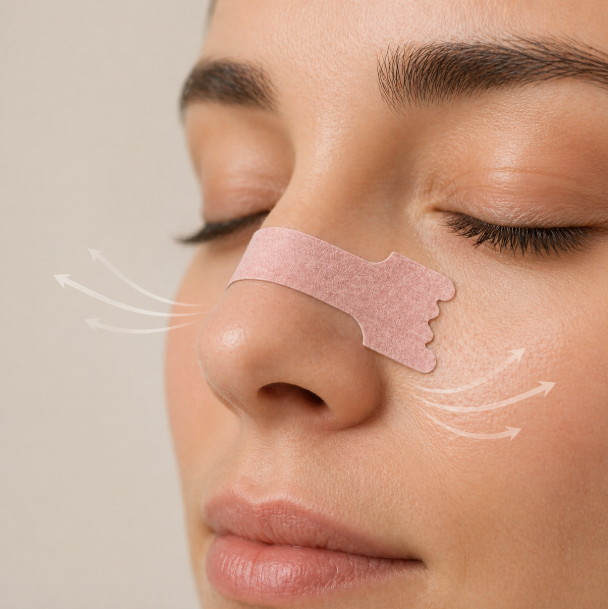 Read More