Nose Strips vs Nasal Dilators: Which One Fits Your Breathing Needs?
Date:2026-06-25
Read:227
source: Zoey
Summary
Nose strips and nasal dilators are both non-drug products used to support nasal airflow, but they work in different ways. Nose strips are usually external adhesive strips placed across the outside of the nose, while nasal dilators are often small devices placed inside the nostrils. The better choice depends on your breathing need, comfort preference, skin sensitivity, use frequency, and whether the problem is temporary or ongoing.
Quick Answer
1.Nose strips are better for simple, external, single-use support.
2.Nasal dilators are better for reusable support without skin adhesive.
3.Both options are temporary aids, not permanent solutions for chronic breathing problems.
4.Recurring blockage, severe snoring, or gasping during sleep should be checked by a professional.
What Breathing Problem Are You Trying to Solve First?
The first step is to understand whether your nasal breathing problem is temporary, recurring, or structural. A person with occasional allergy congestion may need different support from someone with chronic nasal obstruction, a deviated septum, nasal polyps, or repeated nighttime breathing problems. Nasal congestion can be associated with causes such as allergies, colds, chronic sinusitis, dry or cold air, and a deviated septum.
Common Causes of Nasal Breathing Difficulty
Nasal breathing difficulty often comes from swelling, blockage, dryness, or narrowing inside the nose. Short-term causes may include a cold, seasonal allergies, dry indoor air, or temporary congestion. Longer-term causes may include chronic rhinitis, chronic sinus inflammation, nasal valve narrowing, nasal polyps, or structural problems inside the nasal passage.
Temporary Congestion or Long-Term Nasal Obstruction?
Temporary congestion may be suitable for short-term support, while long-term nasal obstruction needs a deeper look. If breathing feels blocked only during a cold, allergy season, or dry weather, external nasal strips or a nasal dilator may be tested as a comfort aid. If the problem happens every night or affects sleep, exercise, or daytime energy, it may point to a more persistent issue.
What Are Nasal Strips and How Do They Work?

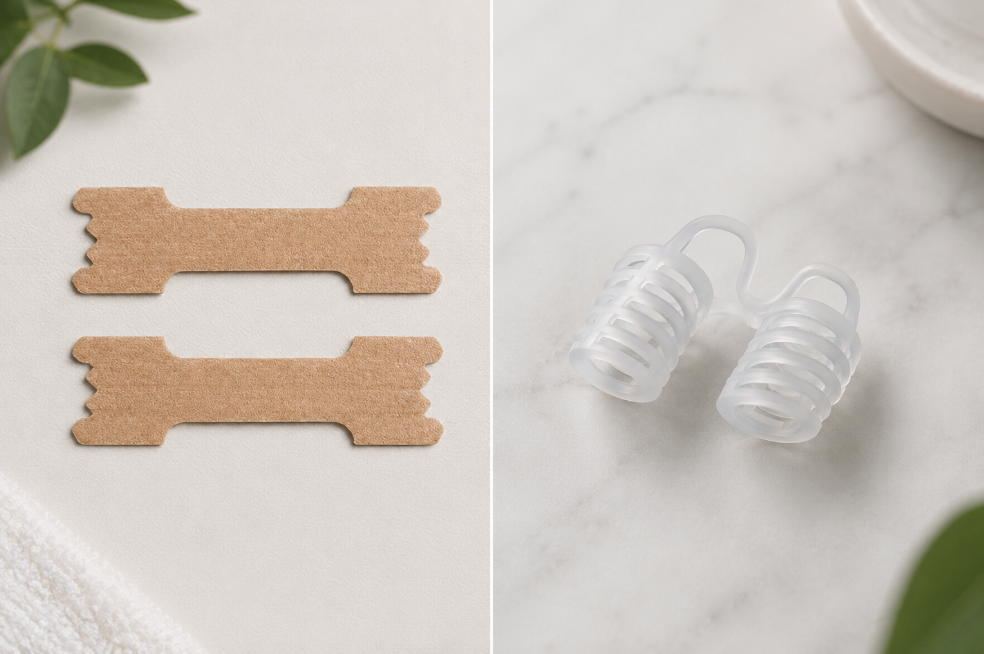
Nasal strips are external adhesive strips designed to gently lift the sides of the nose from the outside. They are usually placed across the bridge of the nose and use a flexible structure to help hold the nasal passages more open while worn. Sleep Foundation describes nasal strips as adhesive fabric strips that help hold the nostrils open so more air can flow through the nose.
How Nasal Breathing Strips Support Airflow from the Outside
Nasal breathing strips support airflow by working externally instead of going inside the nostrils. This makes them easier for users who dislike internal devices. A user applies the strip, checks the fit, wears it during the intended period, and removes it afterward.
External nasal strips are often used for sleep, temporary congestion, daily breathing comfort, or light activity. Their effect can vary depending on nose shape, skin condition, placement accuracy, and how well the adhesive stays on the skin. Oil, sweat, skincare products, or moisture may reduce adhesion.
Pros and Cons of Nasal Strips
Nasal strips are easy to try, but they also have clear limitations. They are usually best for users who want external, drug-free, single-use nasal support without inserting anything into the nose.
Nasal Strips | What It Means for Users |
External application | No device inside the nostrils |
Drug-free support | No medication required |
Easy first trial | Simple for new users |
Single-use format | Needs replacement after each use |
Adhesive-based | May not suit sensitive, oily, or irritated skin |
Placement dependent | Results depend on correct application |
Visible on the face | May not suit users who want a discreet option |
For many first-time users, the biggest advantage is simplicity. A nasal strip does not need sizing, cleaning, storage, or adjustment after use.
What Is a Nasal Dilator?
A nasal dilator is a small device designed to mechanically support the nasal passage, often from inside the nostrils. Unlike an adhesive strip, an internal nasal dilator does not stick to the skin. It usually relies on shape, size, and flexible material to help support the nostril opening.
Internal Nasal Dilators vs External Nasal Dilators
Internal nasal dilators sit inside the nostrils, while external nasal dilators support the nose from the outside. In broad product language, nasal strips can be considered a type of external nasal support because they work from outside the nose. Internal dilators are different because they are inserted into the nostrils and support the nasal passage from within.
Pros and Cons of Internal Nasal Dilators
Internal nasal dilators may suit users who want reusable support and want to avoid adhesive on the skin. They can feel less visible than external nasal strips, but comfort depends heavily on size, material softness, nose shape, and whether the user accepts an internal fit.
Nasal Dilators | What It Means for Users |
Internal support | Supports the nostrils from inside |
Reusable design | Can be used repeatedly with cleaning |
No skin adhesive | Useful for users avoiding adhesive |
Less visible | More discreet than external strips |
Fit-sensitive | Size and comfort matter |
Requires cleaning | Hygiene is important after use |
Internal feeling | Some users dislike objects inside the nose |
A nasal dilator can be practical for repeated use, but it is not automatically more comfortable. Some users like the reusable format, while others find the internal feeling distracting.
Nose Strips vs Nasal Dilators: What Is the Key Difference?
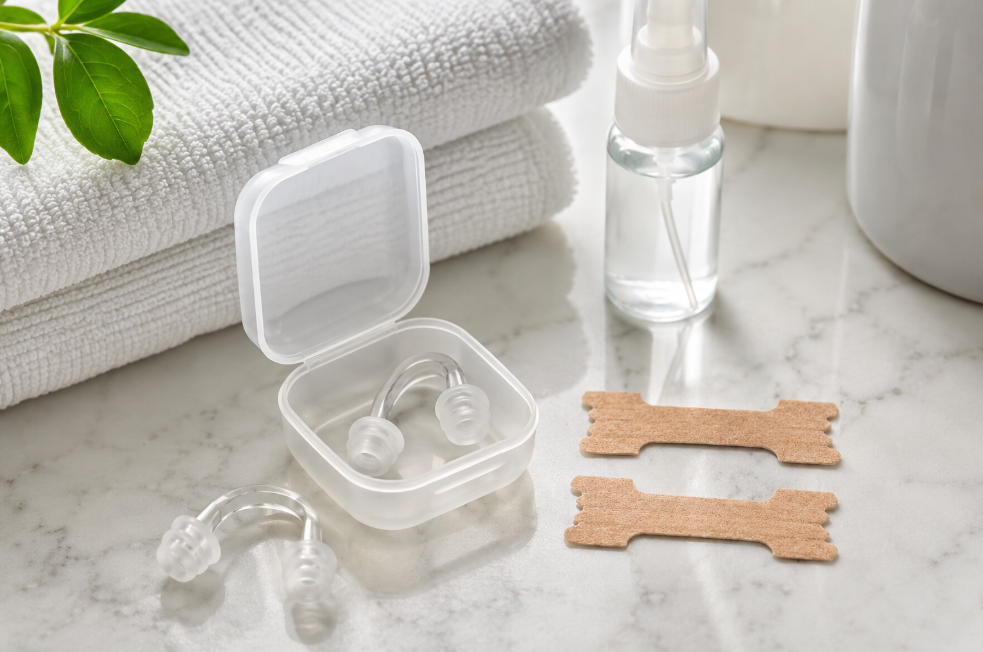
The key difference is placement: nose strips work outside the nose, while most nasal dilators work inside the nostrils. This single difference affects comfort, visibility, maintenance, adhesive contact, reusability, and user preference. Neither option is automatically better for everyone.
External Nasal Strips vs Internal Nasal Dilators Comparison
Factor | External Nasal Strips | Internal Nasal Dilators |
Placement | Outside the nose | Inside the nostrils |
Main mechanism | Lifts the nasal sides externally | Supports the nasal passage internally |
Adhesive | Yes | No |
Reusable | Usually no | Usually yes |
Visibility | More visible | Less visible |
Comfort concern | Skin irritation, peeling, adhesive residue | Internal pressure, sizing, insertion comfort |
Maintenance | Dispose after use | Clean after use |
Best for | First trial, external support, short-term use | Reusable support, no-adhesive preference |
Not ideal for | Sensitive skin, oily skin, heavy sweating | Users who dislike internal devices |
Which Option Feels More Comfortable?
The best daily option is the one a user can wear without irritation or distraction. Skin type, nasal shape, fit, wearing time, cleaning effort, and personal habit all affect the final experience. A product that works well for one person may feel uncomfortable for another.
Which Option Fits Your Breathing Needs?
The right option depends on whether you need external support, internal support, short-term relief, or a reusable breathing aid.
When Nasal Strips May Be the Better Fit
Nasal strips may be the better fit when you want simple external support without inserting anything into the nose. They are often suitable for first-time users, occasional stuffiness, allergy-season discomfort, short-term nighttime use, travel, and people who prefer a drug-free external format.
They may also be easier for users who want a quick trial. A strip can be applied, tested, and removed without cleaning or storing a device. This makes it practical for sleep products, wellness kits, travel packs, sports routines, and everyday breathing comfort products.
When Nasal Dilators May Be the Better Fit
Nasal dilators may be the better fit when users want reusable support without skin adhesive. They may appeal to people who use breathing aids repeatedly, prefer a less visible option, or want to avoid adhesive irritation. Internal nasal dilators can also make sense for users who tolerate an insert-style fit.
Users should pay attention to size, material softness, cleaning routine, and how the dilator feels after several hours of wear. A reusable product only makes sense if the user is willing to clean and store it properly.
Can Nasal Sleep Strips or Nasal Dilators Help with Snoring?
Nasal sleep strips or nasal dilators may help snoring only when nasal airflow restriction is part of the problem. If snoring happens because the nose feels blocked, external nasal strips or internal dilators may help some users breathe more comfortably through the nose. If snoring comes from the soft palate, tongue position, alcohol, sleep position, body weight, or sleep apnea, nasal products alone may not solve it.
When Snoring Is Related to Nasal Airflow
Snoring may be related to nasal airflow when congestion, nasal valve narrowing, or nasal obstruction makes nose breathing harder. In this situation, products that reduce nasal airflow resistance may offer comfort support for some users. Reviews of external nasal dilators describe them as tools that can increase the nasal valve area and reduce nasal resistance while in use.
When Snoring Needs Professional Evaluation
Snoring needs professional evaluation when it is loud, chronic, or linked with poor sleep quality. Warning signs include gasping during sleep, breathing pauses noticed by a partner, daytime sleepiness, morning headaches, high blood pressure, or waking unrefreshed. These symptoms can overlap with obstructive sleep apnea, which should not be managed only with consumer breathing products.
What Other Methods Can Support Better Nasal Breathing?
Other methods may support better nasal breathing by reducing irritation, dryness, allergens, or inflammation triggers. These methods are not replacements for medical care, but they can help users understand whether the issue is related to environment, habits, allergies, or chronic obstruction.
Home Habits That May Support Nasal Breathing
Home habits may support nasal breathing when symptoms are mild or environment-related. Users may consider keeping indoor air comfortably humidified, staying hydrated, cleaning bedding regularly, reducing dust exposure, managing allergy triggers, avoiding smoke or strong irritants, and using saline rinses when appropriate.
Tracking when symptoms happen can also help users choose more responsibly. If congestion appears mostly during allergy season, short-term external support may be enough. If blockage happens every night, a deeper cause should be considered.
Professional Options for Long-Term Problems
Professional evaluation may be needed when nasal blockage is frequent, one-sided, severe, or linked with poor sleep. A clinician may evaluate allergies, chronic rhinitis, sinus inflammation, nasal polyps, a deviated septum, or sleep-related breathing issues depending on the symptoms. Chronic sinusitis may involve inflammation and swelling lasting 12 weeks or longer and can be linked with infection, nasal polyps, or swelling of sinus lining.
Long-term options depend on the cause rather than the product category. Some users may need allergy management, medical guidance, ENT evaluation, sleep testing, or other treatment routes. Nose strips and nasal dilators can support comfort, but they do not replace diagnosis.
Can Nose Strips or Nasal Dilators Become a Permanent Solution?
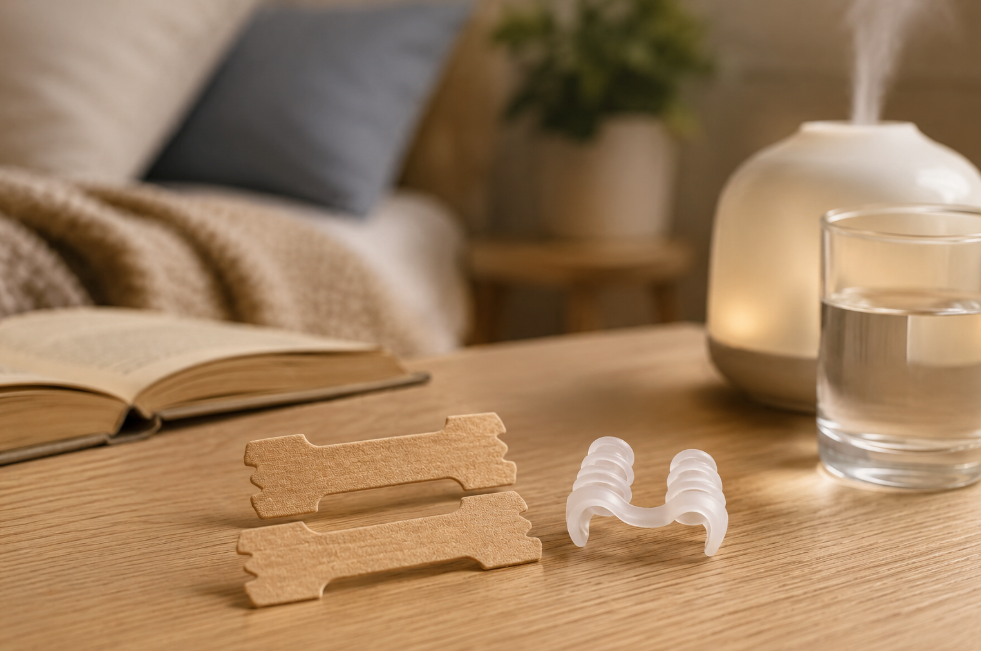
Nose strips and nasal dilators are usually temporary support products, not permanent solutions. They may help users feel better airflow while worn, but they do not correct structural issues, remove nasal polyps, cure chronic rhinitis, or treat sleep apnea.
Why These Products Are Usually Short-Term Support
These products are short-term support because their effect depends on wearing them. Nasal strips lift from the outside only while attached, and internal nasal dilators support the nostrils only while inserted. Once removed, the mechanical support stops.
When Temporary Relief Means You Should Look Deeper
Temporary relief means you should look deeper when the same problem returns every day or every night. If a user cannot sleep comfortably without a product, still wakes tired, or continues to snore loudly, the product may be masking a deeper issue.
A good rule is to separate occasional discomfort from recurring obstruction. Occasional congestion may be managed with temporary support. Persistent nasal blockage, sleep disruption, or breathing symptoms should not be handled only with consumer breathing aids.
How Can Better Breathing Habits Support Long-Term Comfort?
Better breathing habits can support long-term comfort by helping users understand when, where, and why nasal breathing becomes difficult.
Why Nasal Breathing Habits Matter
Nasal breathing habits matter because the nose helps condition incoming air before it moves deeper into the airway. Comfortable nasal breathing can be influenced by indoor air, allergies, inflammation, sleep position, hydration, and the physical structure of the nasal passage.
No consumer product should force nasal breathing when the nose is clearly blocked.
A Simple Routine for Testing Breathing Products
A simple testing routine helps users choose breathing products more responsibly. Users can first test a product during low-pressure situations, such as reading, light activity, or a short nighttime trial. They can then track comfort, skin response, fit, cleaning effort, and whether breathing feels easier.
The most useful routine separates sleep, allergy, exercise, and chronic obstruction scenarios. A product that works for occasional nighttime stuffiness may not be ideal for exercise. A product that feels comfortable for ten minutes may not feel comfortable all night.
How to Choose Between Nasal Strips and Nasal Dilators?
Choosing between nasal strips and nasal dilators is easier when you match the product to your use case, comfort preference, and symptom pattern. The goal is not to find a universal winner, but to choose the option that best fits your breathing needs.
Quick Decision Checklist
If You Need... | Consider... |
A simple first trial | Nasal strips |
No adhesive on skin | Nasal dilators |
No object inside the nose | Nasal strips |
Reusable support | Internal nasal dilators |
Short-term congestion support | Either option may be tested |
Sensitive skin | Nasal dilators may be easier |
Less visible option | Internal nasal dilators |
External nasal support | External nasal strips |
Long-term chronic issue | Professional evaluation first |
Product Details to Check Before Buying
Product details matter because comfort and fit determine whether users keep using the product. For nasal strips, users should check adhesive strength, skin-friendly material, strip size, gentle removal, color options, and whether the strip is designed for the intended use environment.
For nasal dilators, users should check size options, material softness, reusability, cleaning method, ventilation design, and storage case. The practical question is simple: does it fit comfortably and safely for the intended use?
FAQ About Nose Strips vs Nasal Dilators
What is the difference between nose strips and nasal dilators?
The difference is that nose strips usually work from outside the nose, while nasal dilators usually support the nostrils from inside. Nasal strips use adhesive and flexible lift, while internal nasal dilators use an insert-style structure.
Do nasal strips work for breathing?
Nasal strips may work for breathing comfort when nasal airflow restriction is mild and located near the nasal entrance. They may be less useful when the issue comes from deeper inflammation, severe congestion, or structural blockage.
Are nasal dilators better than nasal breathing strips?
Nasal dilators are not always better than nasal breathing strips because comfort depends on the user. Dilators may be better for reusable, no-adhesive support, while strips may be better for users who dislike internal devices.
Can I use nasal strips every night?
Some users may use nasal strips regularly if their skin tolerates the adhesive, but recurring nightly dependence should be watched carefully. If the user needs a strip every night to breathe comfortably, it may be worth checking for a deeper cause.
Are external nasal strips safe for sensitive skin?
External nasal strips may irritate sensitive skin if the adhesive is too strong or the skin is already irritated. Users should avoid applying adhesive strips to broken, sunburned, inflamed, or irritated skin.
Conclusion: Which One Fits Your Breathing Needs?
Nose strips and nasal dilators fit different breathing needs because they support the nose in different ways. Nasal strips are usually easier for first-time users, people who want external support, and users who dislike internal devices. Nasal dilators may suit users who want reusable support, avoid skin adhesive, and can tolerate an internal fit.
The best choice depends on cause, comfort, use case, and symptom pattern. For temporary congestion or occasional breathing discomfort, either option may be worth testing. For chronic nasal blockage, severe snoring, daytime fatigue, or possible sleep apnea signs, nasal strips and nasal dilators should not replace professional evaluation.