Do Pimple Patches Work on Blackheads? A Guide to Choosing the Right Patch
Date:2026-09-30
Read:72
source: Zoey
Plain hydrocolloid pimple patches usually do not remove blackheads. A blackhead is a clogged pore containing oil and dead skin cells, while hydrocolloid works mainly by absorbing accessible surface fluid. Because a blackhead does not normally release this type of fluid, a hydrocolloid patch may cover the area but is unlikely to remove the plug.
The answer changes when the blemish is a surface pustule, a whitehead beneath intact skin, a blind pimple or a deeper painful bump. These blemishes have different structures, so the right product choice begins with identifying what is actually happening at and below the skin surface.
A practical selection rule is:
- Use plain hydrocolloid for surface blemishes with accessible fluid.
- Evaluate medicated patches according to their ingredients, contact time and instructions.
- Consider purpose-designed microdart patches only for their stated early-stage or under-the-skin applications.
- Seek professional care for persistent, painful, widespread, nodular or cystic acne.
Do Pimple Patches Work on Blackheads?
A blackhead forms when a pore fills with oil and dead skin cells but remains open at the surface. The dark color does not mean that the pore contains dirt. It develops when material inside the open pore is exposed to air.
A hydrocolloid patch is designed to interact with moisture. It can absorb fluid from an open or draining surface blemish, but a blackhead usually contains a more solid plug rather than freely available fluid.
For this reason, placing a plain hydrocolloid patch over a blackhead may provide coverage, but it should not be expected to pull out or dissolve the clogged material.
Can Pimple Patches Remove Blackheads?
Standard hydrocolloid patches are not blackhead-removal strips. They do not use the same mechanism as products designed to adhere to and lift material from multiple pores.
A patch containing salicylic acid or another active ingredient represents a different product category. Its relevance depends on the ingredient, concentration, finished patch structure, contact time, skin condition and stated intended use.
The presence of an active ingredient does not prove that the finished patch will remove blackheads. Any performance claim needs to be supported by evidence that applies to the complete formula and patch construction.
Do not repeatedly replace hydrocolloid patches on a blackhead simply because no white area appears on the patch. The absence of a white center is expected when there is little surface fluid to absorb.
Which Pimple Patch Works for Each Type of Blemish?
The following comparison provides a faster way to match the blemish with the appropriate patch direction.
| Blemish type | What it generally looks or feels like | Plain hydrocolloid fit | Other patch considerations |
|---|---|---|---|
| Blackhead | Small dark open pore, usually without fluid | Low | A medicated product must be assessed by its formula and stated use |
| Closed whitehead | Small white or skin-colored bump beneath intact skin | Limited | A plain patch may protect the area but absorb little fluid |
| Surface pustule | Raised blemish with a visible white or yellow fluid-filled center | Higher | Hydrocolloid is better matched when fluid is accessible |
| Open or draining pimple | Surface is open and releasing a small amount of fluid | Higher | Use only after active bleeding stops and instructions permit |
| Early red bump | Inflamed bump without a visible head | Low to limited | Some medicated patches are designed for early-stage use |
| Blind pimple | Sore bump beneath the skin without a visible opening | Low | A purpose-designed microdart patch may be considered according to its instructions |
| Deep nodule or cyst | Large, painful bump located deeper in the skin | Low | Professional assessment is appropriate, especially if it persists or returns |
| Picked or popped spot | Open surface that may release fluid | Potentially suitable | Avoid further squeezing and do not cover active bleeding or suspected infection |
This table supports product selection; it does not provide a diagnosis. Large, very painful or recurring blemishes, widespread breakouts and lesions that leave scars require professional evaluation.
Do Pimple Patches Work on Whiteheads?
The word “whitehead” is often used for two different conditions. This helps explain why online answers about pimple patches and whiteheads can appear inconsistent.
A closed comedone is a small white or skin-colored bump beneath an intact surface. A pustule is an inflamed bump with visible white or yellow fluid near the surface. Although both may be described casually as whiteheads, they do not respond to plain hydrocolloid in the same way.
Closed Whiteheads
A closed whitehead contains material below an intact skin surface. A plain hydrocolloid patch may protect the area from touching, but it may not have enough accessible moisture to absorb.
If the patch remains clear after several hours, that does not mean it should stay on indefinitely. It may indicate that the blemish is not a good match for an absorbent surface patch.
Surface Pustules
A pustule has visible fluid closer to the skin surface. This makes it a more appropriate match for hydrocolloid than a dry, closed comedone.
The patch can absorb accessible fluid and provide a barrier against touching. Users should still avoid squeezing or intentionally opening the blemish to make the patch appear more effective.
Do Pimple Patches Work on Blind Pimples?
A blind pimple develops beneath the surface and has no visible opening or fluid-filled head. It may feel sore, firm or swollen before becoming clearly visible.
A plain hydrocolloid patch has limited access to a blind pimple because its absorbent layer remains on the skin surface. The patch can cover the area and discourage picking, but it should not be expected to draw out material located deeper beneath intact skin.
Some medicated or microdart patches are designed for early-stage or under-the-skin blemishes. Their relevance depends on the finished structure, formula, projection design, instructions and intended use.
The terms “microneedle,” “microdart” and “microcone” are used inconsistently across the market. The name alone does not establish how a patch is constructed or what evidence supports its use.
Athena’s microneedle pimple patch sourcing guide explains how brands can compare projection materials, formulas, samples, packaging, documentation and intended target markets before choosing a supplier.
Do Pimple Patches Work on Deep Pimples?
“Deep pimple” can describe several types of blemishes, from an early inflamed bump to a deeper nodule or cyst. The depth, size, pain level and presence of surface fluid determine whether a patch is relevant.
Plain hydrocolloid has a limited role when the blemish remains beneath intact skin. It may reduce touching and friction, but it cannot directly absorb material that is not available at the surface.
A microdart patch is a separate product format and should be evaluated according to its stated intended use. It should not be presented as a substitute for professional care for nodular or cystic acne.
Seek advice from a qualified healthcare professional when a deep blemish:
- Is large or increasingly painful.
- Persists without improvement.
- Returns repeatedly in the same location.
- Appears alongside multiple similar lesions.
- Produces significant swelling.
- Begins leaving scars or persistent dark marks.
- Develops spreading redness, warmth or other signs of possible infection.
How Different Types of Pimple Patches Work
Choosing a patch requires more than reading the word “acne” on the package. Its material, structure and formula determine what the product can realistically do.
Hydrocolloid Patches
Hydrocolloid is a gel-forming absorbent material. It is better matched to blemishes with accessible surface moisture, including some pustules and draining spots.
The material can absorb available surface fluid while covering the blemish and reducing direct contact with fingers or external friction. When moisture is absorbed, the patch may develop a visible white or cloudy center.
A hydrocolloid patch turning white does not mean that it has removed every substance from the pore. The color change mainly shows that the material has absorbed moisture and formed a gel.
Athena’s custom acne patch solutions cover hydrocolloid, medicated and microdart product directions. The material, thickness, patch size, backing flexibility, adhesive level and intended wearing occasion all influence how the finished product should be positioned and used.
Medicated Patches
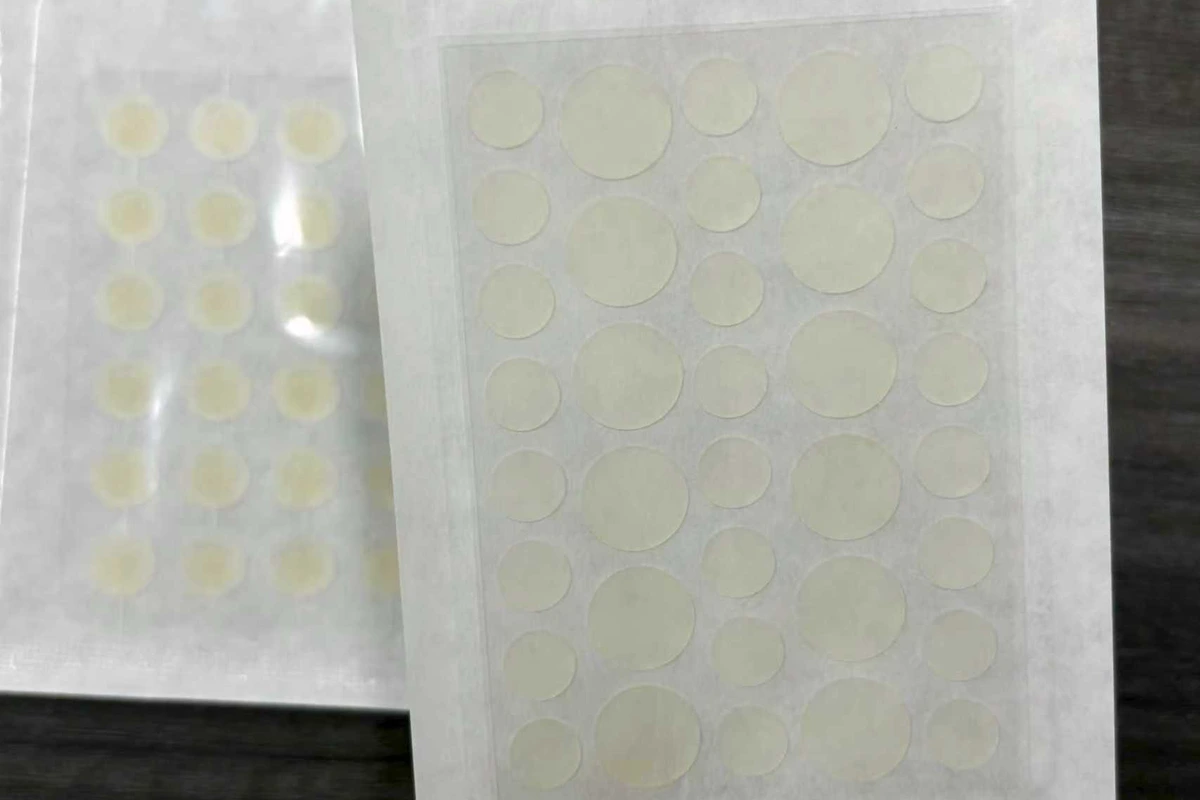
Medicated patches may contain salicylic acid, tea tree oil, niacinamide, centella asiatica or other ingredients. Their intended use depends on the complete formula, ingredient concentration, patch material, contact time and supported product claims.
A medicated patch is not automatically more effective than plain hydrocolloid. It addresses a different product requirement and may create additional irritation considerations for sensitive skin.
Before using one, check the active ingredients, recommended contact time, intended blemish type and warnings for sensitive or irritated skin. The instructions should also clarify whether other skincare products can be placed underneath the patch, because creams, oils and serums can affect adhesion or change ingredient exposure.
Microdart or Microneedle Patches
Microdart patches use small projections to place a formula in close contact with the skin. They are often positioned for early-stage or under-the-skin blemishes, but their construction and intended effects vary.
A finished microdart product should clearly define its projection material, geometry, formula, application pressure, recommended wear time, expected dissolution behavior and intended blemish type. Its storage and packaging conditions also matter because moisture and physical pressure can affect the projections.
The product name alone is not enough to compare two microdart patches. Buyers and users need instructions and specifications that describe the actual finished construction.
How to Identify the Blemish Before Choosing a Patch
A simple inspection can help determine whether a patch is likely to match the immediate need.
Look for Accessible Surface Fluid
Hydrocolloid needs moisture to produce its characteristic white or cloudy center. A visible pustule or a spot releasing a small amount of fluid is a more logical match than a dry blackhead.
Check Whether the Surface Is Open or Closed
An open or draining blemish gives the patch access to surface fluid. A closed bump may contain material below the skin but provide little for plain hydrocolloid to absorb.
Do not intentionally squeeze, puncture or open a closed blemish to create a better surface for a patch.
Consider the Depth
A raised surface blemish is different from a painful bump located deeper beneath the skin. The deeper the blemish, the less relevant a surface-absorbing hydrocolloid patch becomes.
Consider Pain and Inflammation
A blackhead is generally a clogged pore rather than a large painful swelling. A sore, firm or rapidly enlarging bump requires a different decision from a routine blackhead or surface pustule.
Check the Number of Blemishes
Pimple patches are localized spot products. They are not an efficient way to manage numerous blackheads, widespread breakouts or repeated deep lesions across a larger area.
How to Choose the Right Pimple Patch
After identifying the blemish, compare the patch structure with the actual task.
For a Blackhead
Do not select plain hydrocolloid with the expectation that it will pull out the pore plug. If you are considering a medicated patch, check its formula, instructions and supported intended use.
For a Closed Whitehead
A plain patch may protect the area from touching, but absorption can remain limited while the surface is intact. Avoid repeatedly extending wear simply because the patch stays clear.
For a Surface Pustule
Choose a hydrocolloid patch large enough to cover the visible area while leaving an adhesive margin on the surrounding dry skin. Apply it to clean, dry skin and follow the stated wearing time.
For a Blind Pimple
A plain hydrocolloid patch is mainly useful as a protective cover. A product specifically designed for early-stage or under-the-skin blemishes must be assessed according to its construction, formula and directions.
For a Deep or Painful Blemish
Do not rely on a cosmetic patch as the only response. Persistent nodules, cysts and recurring painful bumps require professional evaluation.
For Sensitive Skin
Review both the adhesive and ingredient list. Medicated patches introduce additional ingredients, while every adhesive patch can potentially irritate sensitive skin.
Remove the patch if the skin develops persistent itching, burning, swelling, blistering or redness outside the adhesive area.
Common Pimple Patch Selection Mistakes
Treating Every White Bump as the Same Type of Whitehead
A closed comedone and a fluid-filled pustule may both look white, but only the pustule may provide readily accessible fluid for hydrocolloid absorption.
Expecting a White Patch Center Every Time
Hydrocolloid turns white when it absorbs moisture. A patch placed over a dry blackhead or deep bump may remain clear because there is little surface fluid available.
Choosing the Strongest Ingredient List
More ingredients do not automatically create a better patch. The formula needs to match the intended user, skin condition, contact time and supported product claims.
Assuming Every Microdart Patch Has the Same Function
Projection height, geometry, material, formula and dissolution behavior vary. The word “microdart” does not define the complete product.
Using Patches as a Complete Acne Routine
A patch covers one small area. It does not prevent new clogged pores or replace appropriate care for widespread, recurring or persistent acne.
When Not to Use a Pimple Patch
Do not apply a cosmetic pimple patch to:
- Actively bleeding skin.
- A suspected skin infection.
- A large open wound.
- Skin already showing an allergic reaction.
- An area with significant swelling or spreading redness.
- A blemish that requires professional drainage, diagnosis or treatment.
Stop using the patch if its adhesive or formula causes increasing discomfort. Seek qualified medical advice when symptoms are severe, persistent or worsening.
FAQ About Pimple Patches and Different Blemish Types
Do Hydrocolloid Patches Work on Blackheads?
Plain hydrocolloid patches generally have limited value for blackheads because a blackhead contains a pore plug rather than accessible surface fluid. The patch may cover the area but should not be expected to remove the clog.
Can Pimple Patches Remove Blackheads?
Standard pimple patches are not designed to work like pore strips. A medicated patch may contain ingredients used in acne care, but its suitability depends on the complete formula and intended use.
Do Pimple Patches Work on Whiteheads?
They are more useful when the “whitehead” is a surface pustule containing accessible fluid. A closed comedone beneath intact skin may show little response to plain hydrocolloid.
Do Pimple Patches Work on Blind Pimples?
Plain hydrocolloid cannot readily absorb material from a blind pimple beneath intact skin. It can provide coverage, while a medicated or microdart patch must be evaluated according to its construction and instructions.
Do Pimple Patches Work on Deep Pimples?
Plain hydrocolloid has limited value for deep pimples without surface fluid. Large, painful, recurring, nodular or cystic blemishes require professional assessment.
Which Type of Pimple Is Best for a Hydrocolloid Patch?
A surface-level pustule or draining blemish with accessible fluid is generally a better match than a blackhead, closed comedone or deep bump.
Why Did My Pimple Patch Stay Clear?
The blemish may not have released enough surface fluid for the hydrocolloid to absorb. A clear patch does not necessarily mean that it needs to remain attached longer.
Can I Use the Same Patch Type on Different Pimples?
Use a patch only for the applications stated by its manufacturer. Hydrocolloid, medicated and microdart formats should not be treated as interchangeable.
Final Takeaway
Pimple patches generally do not remove blackheads because ordinary hydrocolloid needs accessible surface fluid, while a blackhead contains a clogged pore plug.
Plain hydrocolloid is better matched to surface pustules and draining blemishes. Closed whiteheads may produce limited absorption, while blind pimples and deep bumps require a different product assessment. Painful, recurrent, nodular or cystic acne should not be managed solely with cosmetic patches.
For brands building an acne-patch range, product selection should begin with the intended blemish type and user need. Athena’s private label patch customization process supports product modeling, material selection, formula direction, sample development, packaging and usage-instruction planning before mass production.
Get Custom Pimple Patches for Your Brand
Athena supports hydrocolloid, medicated and microdart acne patch development for private label brands. Contact our team to discuss patch types, sizes, formulas and packaging for your target market.