Which Nasal Strips Are Best for Snoring?
Date:2026-08-11
Read:139
source: Athena
The best nasal strips for snoring are not simply the strongest strips on the shelf. The right choice is the one that matches why your snoring happens, fits the lower bridge of your nose, stays secure for a full night, and removes without damaging your skin. Nasal strips are most useful when restricted nasal airflow contributes to the noise; they are far less likely to help when the main obstruction is deeper in the throat.
A useful selection rule is simple: first confirm that restricted nasal airflow is part of the problem, then choose for fit and skin—not for the loudest strength claim. Medium-to-strong lift suits many congestion-related snorers; gentler adhesive may be the better choice for reactive skin. Any pattern involving breathing pauses, gasping or marked daytime sleepiness belongs outside a product-selection exercise and needs medical evaluation.
Start With the Snoring Pattern, Not the Product Label
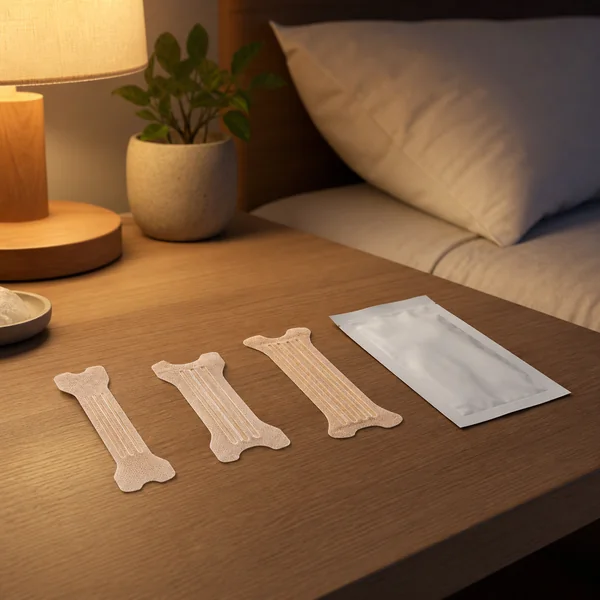
For most adults whose snoring becomes worse with a stuffy or narrow-feeling nose, the best starting point is a one-piece adhesive strip with medium-to-strong lateral support, smooth edges and an adhesive designed for six to eight hours of wear. It should feel supportive within minutes without pinching the skin or causing painful removal in the morning.
This answer is intentionally based on design requirements rather than a universal brand ranking. Nose shape, skin oil, humidity, allergies and the source of the snoring all change the result. A strip that performs well for one sleeper may peel early, feel too rigid or provide too little lift for another.
First Decide Whether Your Snoring Has a Nasal Component
Nasal strips make the most sense when airflow resistance at the front of the nose contributes to snoring. Common clues include snoring that becomes worse during allergy season, on congested nights or when the nostrils visibly narrow during inhalation. If gently pulling the cheek beside a nostril makes nasal breathing feel easier, an external dilator may be worth a controlled trial. This informal check is not a diagnosis.
Athena’s candidate guide for congestion-related snoring explains the difference between a likely nasal contributor and a deeper airway problem. That distinction should come before comparing colors, materials or pack sizes.
Published evidence supports a selective, not universal, benefit. A 14-night study of habitual heavy snorers reported improvements in subjective snoring measures, while a randomized trial in chronic rhinitis found reduced snoring with external nasal dilation. Other controlled work has shown mixed results, particularly for objective sleep outcomes. The practical conclusion is that strips may reduce a nasal contribution to snoring, but cannot address every cause.
Build a Nighttime Fit Profile
The most important features are usable lift, overnight retention, skin compatibility and correct fit. Marketing terms such as “maximum strength” or “professional” mean little unless the construction performs consistently on real skin for the intended wear time.
Balanced Lifting Force
Flexible ribs embedded in an adhesive nasal strip try to return to their original shape after application. This restoring force gently pulls the nasal sidewalls outward. Too little force may feel ineffective; excessive stiffness can create pressure, wrinkle the backing or concentrate stress at the edges.
The ideal lift depends on the width and stiffness of the ribs, their spacing, the strip geometry and where the adhesive transfers force to the skin. Readers who want a closer look at these variables can review how material and adhesive choices change overnight wear.
Overnight Adhesion Without Harsh Removal
A sleep strip must remain attached through skin oil, humidity, pillow contact and facial movement. At the same time, it should remove without prolonged redness or damage. A stronger adhesive can improve retention on oily skin, but it may be uncomfortable for dry, mature or sensitive skin. Adhesive coat weight, contact area and edge design matter as much as the adhesive family itself.
Shape and Size That Match the Nose
A strip should span the lower bridge and reach the sidewalls above the nostril flare. If it is too short, the lifting zones may not reach the area that needs support. If it is too wide or rigid, it may crease on a narrow bridge. Wider butterfly shapes can distribute force differently from straight strips, but neither format is automatically superior.
Comfortable Backing and Smooth Edges
Nighttime wear makes small details noticeable. A soft, conformable backing follows the contours of the nose and moves with facial expression. Rounded, low-profile edges reduce snagging against bedding. Breathability and moisture management can also affect comfort, especially in warm rooms.
Best Nasal Strips for Snoring by Sleeper Profile
| Strip type | Best suited to | Main advantage | Watch for |
|---|---|---|---|
| Standard adhesive strip | First-time users and moderate nasal support | Simple one-piece application | May lift early on oily skin |
| Extra-strength adhesive strip | Broader noses, oily skin or repeated edge lift | Higher hold and often stronger support | May be harsh for sensitive skin |
| Gentle or sensitive-skin strip | Dry, reactive or mature skin | More comfortable removal | Retention may be lower in humid conditions |
| Clear or low-profile strip | Users who prefer discreet wear | Less visible appearance | Material can feel different from fabric-backed strips |
| Magnetic external system | Users wanting reusable bridge hardware | Adjustable-feeling sidewall pull | Requires accurate tab placement and replacement tabs |
The category label alone does not predict performance. Manufacturing consistency is essential: rib force, die-cut alignment, adhesive distribution and release-liner quality must remain stable from strip to strip.
Sensitive Skin Changes the Decision
A gentle, flexible strip with a lower-trauma adhesive and smooth edges is usually the better starting point for sensitive skin. Test it for a shorter period while awake before wearing it all night, and do not apply it to broken, sunburned or actively irritated skin.

Skin preparation should be simple: wash away oil and skincare residue, rinse, and dry completely. Avoid placing the strip over heavy moisturizer. In the morning, loosen an edge slowly and peel it back along the skin rather than pulling sharply upward. If redness, itching, burning or swelling persists, stop using the product.
Run a Three-Night Placement Check
Correct placement often matters more than moving immediately to a stronger product. Clean and dry the nose, remove the release liner without touching most of the adhesive, center the strip across the lower bridge, and press the ends over the nasal sidewalls for several seconds. It should sit above the nostril flare, not high between the eyes.
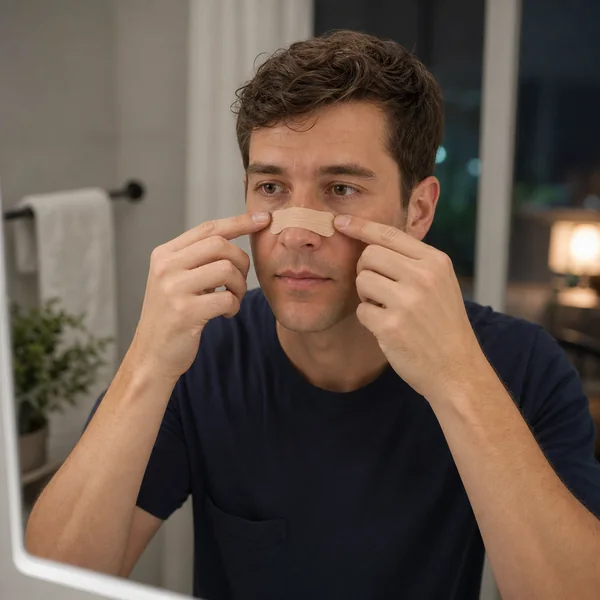
After application, breathe normally through the nose. You should notice whether the front of the nasal passage feels more open within a few minutes. If there is no change, repositioning may help once, but repeated removal and reapplication weakens the adhesive. Athena’s sleep-support product portfolio shows why overnight products need a different balance of lift, adhesion and removal comfort from sports strips.
Judge the Result With a Short Sleep Log
Use the same strip type for several comparable nights rather than judging one unusually good or bad night. Record congestion, sleep position, alcohol intake, partner-reported snoring, morning dry mouth, skin response and whether the strip remained fully attached. A phone recording can identify broad changes, but consumer apps are not diagnostic sleep tests.
If a strip consistently makes nasal breathing easier but snoring does not change, the primary sound source may be farther back in the airway. If the strip repeatedly detaches, test skin preparation and size before increasing adhesive strength. If it stays attached but causes irritation, move toward a gentler construction rather than accepting skin damage as the price of performance.
When Nasal Strips Are Not the Right Snoring Solution
Nasal strips do not treat obstructive sleep apnea and should not delay assessment. Seek professional evaluation when snoring is loud and habitual or occurs with witnessed breathing pauses, choking, gasping, morning headaches, high blood pressure or significant daytime sleepiness. Persistent one-sided nasal blockage, recurrent nosebleeds or substantial structural obstruction also deserve clinical attention.
External strips only support the outer nasal valve. They do not move the jaw, stabilize the tongue or prevent collapse of the throat. They may still improve nasal comfort alongside clinician-directed care, but that is different from treating the underlying sleep disorder.
Turn the Use Case Into a Sleep-Strip Specification
A well-defined sleep strip begins with the user and wear environment, not a generic request for “strong adhesive.” Product developers should define target nose dimensions, required lateral force, expected wear duration, skin type, humidity exposure, backing flexibility, edge geometry, removal target and packaging conditions.
For a sleep-focused brief, Athena can translate wear time, target skin profile, bridge dimensions and removal expectations into material and sampling decisions. Brands can examine private-label nasal strip formats for nighttime use without turning the article into a universal snoring claim. Any finished positioning should remain tied to mechanical nasal support and validated product characteristics.
Questions to Resolve Before Buying
Are extra-strength nasal strips always better for snoring?
No. They may provide better retention or stronger support for some users, but can be uncomfortable for sensitive skin. The best strip provides enough lift and hold without excessive removal force.
Can you reuse adhesive nasal strips?
Conventional adhesive nasal strips are designed for single use. Reapplication reduces adhesion and makes the lifting force less predictable.
How quickly should a nasal strip work?
If the product is correctly positioned and nasal-valve resistance is relevant, easier-feeling nasal breathing should be noticeable within minutes. Snoring results require observation over several nights.
Can nasal strips stop snoring completely?
Sometimes they reduce snoring when nasal obstruction is a meaningful contributor, but they cannot reliably stop snoring from every cause and do not treat sleep apnea.
Choose by Cause, Fit and Skin
The best nasal strips for snoring combine appropriate lateral lift, dependable overnight adhesion, accurate fit and comfortable removal. Start by deciding whether the snoring has a nasal component, then choose the design for the sleeper’s nose, skin and environment. Judge the result across several nights and keep expectations specific: a good strip may improve nasal airflow and reduce nasal-related noise, but it is not a universal anti-snoring treatment.